Best Photography Spots in Venice: 12 Locations With GPS

Tours & experiences disclosure: This guide includes affiliate links to Viator, the world’s largest tour and experiences marketplace. If you book through these links, ShutYourAperture may earn a small commission at no extra cost to you.

Venice photography guide hero imageSave

Amazon Associates disclosure: ShutYourAperture is a participant in the Amazon Services LLC Associates Program. As an Amazon Associate we earn from qualifying purchases. Some links below go to Amazon (Store ID edinchavez01-20). Buying through these links costs you nothing extra and helps fund our free guides.
Skip the planning. Get the Venice PDF. All locations, GPS coordinates, golden-hour times, gear tips. Instant download.

Venice, Italy is one of the most photogenic cities in the world. If you have a camera and the patience to show up before dawn, Venice will give you images that last a career — but only if you know where and when to point it.

This is the definitive field guide to the 12 best photography spots in Venice, with GPS coordinates you can drop straight into Google Maps, exact camera settings tuned to Venice’s unique light, precise timing for every location, and the access notes nobody else bothers to document. It mirrors the intel inside our Venice Ultimate Photographer’s Guide ($47 PDF) — a downloadable field guide with full-page hero images, GPS maps, seasonal tables, a city safety briefing, and a complete photographer’s packing list. Get the guide →

Planning multi-city travel? See also: U.S. cities photography hub and the National Parks Photography Guides.

Venice Ultimate Photographer’s Guide — $47
12 GPS-mapped locations · Exact camera settings · Multi-season shooting calendar · Free annual updates

Download the PDF guide →
Skip the planning

Get the Venice Ultimate Photographer’s Guide

Every location below — pre-mapped with GPS, golden-hour timing, gear recommendations, cultural rules, and a 14-day itinerary. Downloaded by 200+ working photographers.

Get the PDF · $47
Instant download · Lifetime updates

Quick jump to the 12 spots

  1. Piazza San Marco — Basilica & Campanile
  2. Bridge of Sighs (Ponte dei Sospiri) & Doge’s Palace
  3. Rialto Bridge — Grand Canal
  4. Accademia Bridge — Grand Canal View
  5. San Giorgio Maggiore — Bell Tower & Island
  6. Burano Island — Colorful Houses
  7. Murano Island — Glass Furnaces
  8. Squero di San Trovaso — Gondola Workshop
  9. Punta della Dogana & Santa Maria della Salute
  10. Fondaco dei Tedeschi — Rooftop Terrace
  11. Cannaregio Canals — Fondamenta della Misericordia
  12. Campo San Polo — Largest Venice Campo

A look inside the Venice Photographer’s Guide

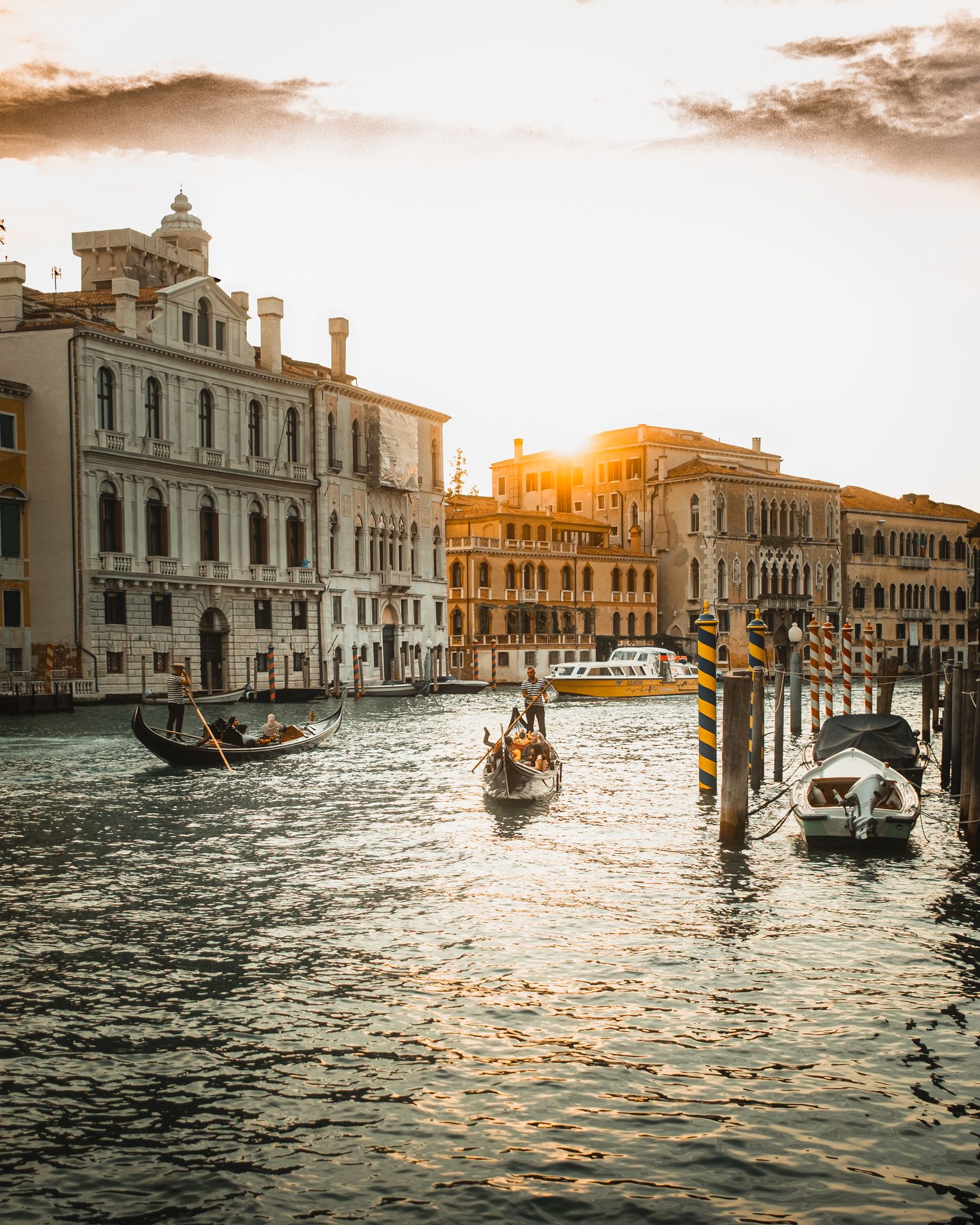
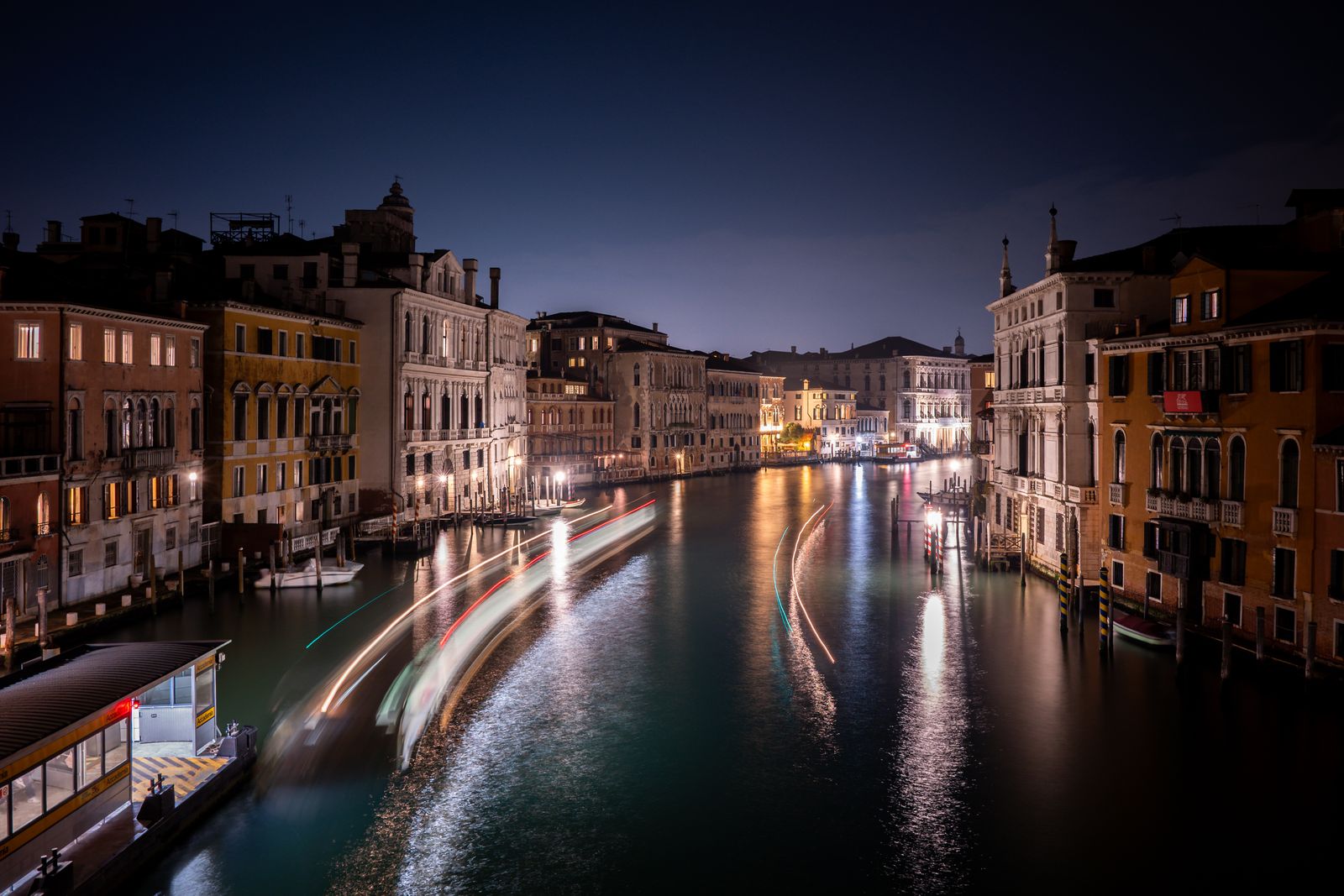
Here are three of the actual shots you’ll find inside the PDF — cinematic full-page references for the exact spots, lenses, and lighting conditions documented in the guide. The full guide includes 12 locations, each with a hero image, GPS map, settings table, and a five-shot list.

Piazza San Marco — Basilica & Campanile — from the Venice Photographer's GuideSave
Piazza San Marco — Basilica & Campanile — sample reference photo from the Venice Photographer’s Guide PDF

Before you shoot Venice: the essentials

  • Free public access: All canals, campi, bridges (including Rialto Bridge walkway, Accademia Bridge, Ponte della Paglia), Riva degli Schiavoni waterfront, Punta della Dogana viewpoint tip, Fondamenta Zattere, Fondamenta della Misericordia in Cannaregio, and all Castello backstreets are free. Fondaco dei Tedeschi rooftop terrace is free (advance online booking required at dfs.com/en/venice). San Giorgio Maggiore basilica interior is free; bell tower elevator ~€6. St Mark’s Basilica basic entry €10 (timed-entry booking required at basilicasanmarco.it). Campanile di San Marco ~€10–15. Doge’s Palace ~€35 adult. Murano glass furnace demonstrations free or low-cost (€0–15 depending on factory).
  • Commercial permits: Personal and tourist photography in all public spaces, bridges, canals, and campi is fully unrestricted at all times. Commercial shoots (advertising campaigns, editorial assignments with crew, fashion films) in public spaces require a permit from the Comune di Venezia — Ufficio Cinema e Comunicazione — typically requiring 15–30 working days advance notice depending on location, crew size, and whether equipment obstructs public right-of-way. Historic landmark areas (Piazza San Marco, Doge’s Palace exterior, Rialto Bridge) involve additional approvals from the Soprintendenza (heritage authority). Drones are prohibited over the historic center (UNESCO World Heritage Site) without special ENAC authorization and prior Comune approval. From April 2024, day-trippers (visitors without overnight hotel registration in Venice) must pay the €5 Venice Access Fee (Contributo d’Accesso) on select high-demand dates in spring and summer (late April through mid-July and weekends in August/September), registerable in advance at cda.veneziaunica.it; pre-registering more than 4 days before incurs €5, while registering within 4 days costs €10. Overnight hotel guests are exempt.
  • Best photography seasons: October–November (autumn mist acqua alta, golden light, manageable crowds, fog adds atmospheric layers) and February–March (Carnival costumes, crisp clear light, fewer tourists before Easter rush); spring (April–May) brings soft light and wisteria but heavier crowds; summer mornings before 7 AM offer golden-hour empty alleys
  • Blue hour notes: Venice sits at 45.44°N — similar latitude to Lyon or Montreal. The sun arc is lower and more southerly than tropical cities. Blue hour lasts 20–35 minutes after sunset (longer in summer due to high latitude). In summer, sunset can be as late as 9:05 PM (late June); in winter as early as 4:30 PM. The Grand Canal, Bacino di San Marco, and Riva degli Schiavoni are at their most magical during blue hour when warm amber lamp-post illumination and gondola lanterns balance against deep cobalt sky and glassy water reflections. In winter, early-morning blue hour (before 7:50 AM sunrise in January) produces fog over the lagoon — a phenomenon unique to Venice that transforms the Salute and San Giorgio into ghostly silhouettes.
  • Drone policy: Drone laws vary widely by country and city — many capital and tourist zones are no-fly. Verify the local civil aviation authority’s current rules before launching.
  • Local resource: Official visitor information

The full-resolution version of every map below — plus seasonal calendars, gear notes per location, sun-angle diagrams, and a complete photographer’s packing checklist — is inside the Venice Photographer’s Guide PDF ($47).

1. Piazza San Marco — Basilica & Campanile

Piazza San Marco is one of the most photographed squares on earth — and for good reason. The Byzantine gold-mosaic façade of the Basilica, the soaring 98.6-m Campanile, the arcaded Procuratie Vecchie and Nuove forming a perfect three-sided frame, and the open southern end facing the lagoon create a composition of almost impossible grandeur. At blue hour, when the polished stone floor reflects the illuminated Basilica like a mirror and the entire square holds perhaps 50 people instead of 50,000, the scene becomes transcendent. The square was declared a UNESCO World Heritage Site as part of Venice’s designation in 1987 and has been called ‘the drawing room of Europe’ by Napoleon.

  • GPS: 45.4341, 12.3388
  • Elevation: 3 ft
  • Best time of day: Blue hour — 20–30 minutes after sunset when the Basilica’s golden mosaics glow and the reflections of lamp-posts shimmer on wet paving stones; or pre-dawn (45 minutes before sunrise) for completely empty piazza with deep blue sky still overhead
  • Sun direction: Venice lies at 45.44°N. The sun rises ENE (azimuth ~60°) in summer and ESE (~120°) in winter, setting WNW (~300°) in summer and WSW (~240°) in winter. Piazza San Marco opens to the south and southeast toward the Bacino. The Basilica façade faces west-southwest, so it receives warm afternoon sidelighting in spring/summer from around 3 PM, and beautiful warm raking light at golden hour year-round from the western end of the piazza. The Campanile is best frontally lit in the morning (east face) and sidelit in the afternoon. At sunrise in summer the piazza is in open shade but the tower tip catches early gold. In winter, the low sun tracks along the southern sky, grazing the Basilica façade all day for dramatic architectural texture.
  • Access: Piazza San Marco is a public space open 24 hours, no entry fee. Vaporetto lines 1 and 2 stop at San Marco–San Zaccaria (5-min walk east of the piazza) or San Marco–Vallaresso (western entrance). Single vaporetto ticket €9.50 (75 min); 24-hour day pass €25 (ACTV). Basilica entry: basic €10 (advance booking mandatory at basilicasanmarco.it); full ticket (Basilica + Pala d’Oro + Museum/Loggia) €30. Campanile di San Marco (bell tower): ~€10–15; open 9:30 AM–7 PM summer, 9:30 AM–3:45 PM winter.
  • Difficulty: easy
  • Recommended settings: Blue Hour Long Exposure: f/11, 15 sec, ISO 100, 16mm, tripod — smooth lagoon reflections on wet pavement  ·  Golden Hour Facade: f/8, 1/250 sec, ISO 200, 35mm — warm light raking across Byzantine mosaics  ·  Pre Dawn Empty Piazza: f/8, 6 sec, ISO 400, 24mm, tripod — lamp-posts creating star bursts in still air  ·  Campanile Aerial View: f/11, 1/500 sec, ISO 200, 24mm — wide-angle from bell tower platform looking straight down over red rooftops

Shots to chase:

  • Symmetrical blue-hour long exposure with the Basilica centered, lamp-posts reflected in the wet stone floor, and the Campanile rising to the right
  • Low-angle pre-dawn shot lying on the piazza pavement with the Basilica’s arches framing the sky above and reflections stretching toward the camera
  • Telephoto compression from the western arcade (Ala Napoleonica) at 200mm, flattening the Campanile, Basilica, and San Giorgio Maggiore across the lagoon into one dense composition
  • From the Campanile top (€10–15 ticket): bird’s-eye view looking straight north over Venice’s red-tile rooftops, canals and islands stretching to the mainland
  • Acqua alta flood scene (November–February): when the piazza floods to ankle depth, a wide-angle shot with the Basilica glowing in blue hour reflected perfectly in the still flooded paving creates one of the most iconic possible Venice images

Pro tip: Arrive 45 minutes before sunrise on a weekday — tour groups do not begin until 8:30–9 AM. The MOSE flood barrier (completed 2020) now limits but does not eliminate acqua alta; check ISPRA Venice tide forecasts at comune.venezia.it for flood dates, as an ankle-deep flood at blue hour is arguably the most iconic Venetian image possible. Tripods are allowed in the piazza (it is a public space) but expect crowds from 9 AM onward. Position yourself at the central axis of the piazza between the two columns for perfect symmetry. The Basilica’s gilded façade is best photographed in afternoon sidelight; avoid flat midday overhead light.

Common mistake to avoid: Shooting at midday when harsh overhead light bleaches the mosaics and crowd density makes clean compositions nearly impossible. Using very wide lenses (10–14mm) that introduce extreme converging verticals on the Campanile. Not staying for blue hour — the square is most magical 20 minutes after sunset. Photographing from the crowded central axis when the arcades offer cleaner, more intimate framing angles.

2. Bridge of Sighs (Ponte dei Sospiri) & Doge’s Palace

The Bridge of Sighs — named after the sighs of prisoners being led from the Doge’s Palace courtrooms to the adjacent prison — is the most recognizable single bridge in Venice. Its enclosed white Istrian stone passageway with ornate baroque carvings, the reflection in the narrow Rio di Palazzo below, and the Doge’s Palace’s Gothic tracery columns on one side create one of the most reproduced architectural images in the world. The Doge’s Palace itself is arguably the finest example of Venetian Gothic architecture in existence: the lower colonnade, the pink-and-white diamond-pattern stonework of the upper wall, and the Piazzetta dei Leoni make every angle photogenic. Photographing from the water (gondola or vaporetto) gives a unique close perspective of the bridge from below.

  • GPS: 45.4338, 12.3414
  • Elevation: 3 ft
  • Best time of day: Blue hour — 15–25 minutes after sunset when the Bridge of Sighs glows with warm stone illumination against a deep indigo sky; or early morning pre-dawn for crowd-free exterior from Ponte della Paglia with gondola posts in foreground
  • Sun direction: The Bridge of Sighs runs east–west over the Rio di Palazzo. The classic view from Ponte della Paglia faces north-northeast (azimuth ~20°). The bridge’s white Istrian stone catches warm sidelight from the southeast in morning and from the southwest in afternoon. In summer, morning sun (azimuths 60–90°) sidelights the bridge’s ornate carved facade beautifully from around 7–9 AM. The Doge’s Palace facade on the Molo faces south-southwest and receives direct golden-hour light in late afternoon (3–5 PM in summer) from the west.
  • Access: Ponte della Paglia (the public bridge with the classic view of the Bridge of Sighs) is free and open 24 hours. Vaporetto lines 1 and 2 to San Marco–San Zaccaria stop, 2-min walk west. Single ticket €9.50. Doge’s Palace interior (Palazzo Ducale): adult €35; open daily 9:00–19:00 (Apr–Oct), 9:00–18:00 (Nov–Mar); last entry 1 hour before closing; closed Dec 25 and Jan 1. Interior access includes passage through the Bridge of Sighs itself to the old prison.
  • Difficulty: easy
  • Recommended settings: Blue Hour Bridge: f/8, 4 sec, ISO 200, 50mm, tripod — stone glow against dark canal water  ·  Morning Golden Light: f/8, 1/250 sec, ISO 200, 85mm — telephoto isolating bridge arch and reflection  ·  Doges Palace Facade: f/11, 1/250 sec, ISO 200, 24mm — full facade with colonnade foreground  ·  Canal Level Angle: f/8, 1/125 sec, ISO 400, 35mm — from fondamenta at canal level looking up at bridge arch

Shots to chase:

  • Classic view from Ponte della Paglia: the Bridge of Sighs centered in the frame with gondola posts and the darker prison facade on the right, at blue hour with warm stone illumination
  • Alternative view from the bridge north of the Bridge of Sighs (Ponte del Vin): looking south through both bridges creates a tunnel-of-bridges layered composition rarely photographed
  • Low-angle from the fondamenta directly beneath Ponte della Paglia at canal level, looking up at the bridge silhouette against a golden or blue sky
  • From inside the Doge’s Palace (€35 ticket): photograph through the narrow barred windows of the Bridge of Sighs itself looking out over the canal — the view prisoners once had
  • The Doge’s Palace arcade at ground level: rhythmic Gothic columns creating leading-lines perspective with the Campanile visible at the end of the arcade

Pro tip: The classic Ponte della Paglia viewpoint is extremely congested from 9 AM to 7 PM — arrive before sunrise to have the bridge to yourself. The less-photographed north-side view (from Ponte del Vin over the Rio di Palazzo) gives a deeper layered perspective through two bridges and is rarely crowded even midday. For the interior walk through the Bridge of Sighs, book Doge’s Palace tickets online at palazzoducale.visitmuve.it well in advance — summer queues can be 90 minutes long without pre-booking. Photographing from a gondola gives a unique low canal-level perspective of the bridge arch that is impossible from the fondamenta.

Common mistake to avoid: Visiting at midday in summer when the bridge is surrounded by hundreds of selfie-stick tourists on Ponte della Paglia — the image is physically impossible to clean. Using a very wide angle lens from Ponte della Paglia distorts the elegant curve of the bridge. Ignoring the Doge’s Palace’s equally stunning Gothic facade from the Molo waterfront — it receives beautiful late afternoon light from the west.

3. Rialto Bridge — Grand Canal

The Rialto Bridge is Venice’s oldest and most iconic Grand Canal crossing, built 1588–1591 by Antonio da Ponte. Its single white Istrian stone arch — 28 meters wide, 7.5 meters high — with two rows of shops and central passageway creates a uniquely inhabited bridge. The Grand Canal bends here, giving dramatic diagonal perspectives from the canal-side fondamenta with the Baroque and Gothic palazzi lining both banks. Vaporettos and gondolas passing beneath create motion blur in long exposures. The S-curve of the Grand Canal from the summit offers Venice’s most famous ‘grand canal sweep’ view with the Salute dome visible in the far distance. The adjacent Rialto Market (in operation since the 10th century) adds vibrant morning scenes.

  • GPS: 45.438, 12.3354
  • Elevation: 10 ft
  • Best time of day: Sunset and blue hour — the Grand Canal bends to the south of the bridge, so the western sky illuminates vaporettos and gondolas passing below; or pre-dawn from the canal banks for completely empty bridges with still-water reflections
  • Sun direction: The Rialto Bridge spans the Grand Canal NW–SE, with the classic shooting positions on the canal banks facing north (from the San Polo side looking toward Cannaregio/Santa Croce bank). From Fondamenta del Vin (southeast bank), the camera faces NNW toward the bridge. The bridge faces southeast, so it is frontally lit in morning and sidelit in afternoon. The Grand Canal curves gently south of the bridge — the famous downstream S-bend view from the bridge’s summit looks southwest toward the Salute in the distance. At sunset in summer (sun setting ~300° NW), the bridge’s east face is in shadow while the canal water glows orange-pink from reflected sky.
  • Access: The Rialto Bridge walkway is free and open 24 hours. Vaporetto line 1 (stops: Rialto on the San Marco side or Rialto Mercato on the San Polo side) or line 2 (Rialto). Single ticket €9.50, 24-hour pass €25. Best shooting positions: Fondamenta del Vin (east bank, San Marco sestiere) and Fondamenta Riva del Carbon (west bank, San Polo sestiere) — both free public fondamenta open 24 hours. Rialto Market (north side) open weekday mornings from 7 AM.
  • Difficulty: easy
  • Recommended settings: Blue Hour Long Exposure: f/11, 20 sec, ISO 100, 16mm, tripod — canal water as glass, bridge illuminated amber  ·  Golden Hour Canal: f/8, 1/250 sec, ISO 200, 35mm — warm light on palazzo facades and gondolas  ·  Summit S Bend View: f/11, 1/500 sec, ISO 200, 24mm — from bridge apex looking SW toward Salute  ·  Market Morning: f/4, 1/500 sec, ISO 400, 85mm — telephoto compression of market stalls with bridge arch above

Shots to chase:

  • Long-exposure blue-hour shot from Fondamenta del Vin (east bank) with the Rialto Bridge arch reflected in still canal water, vaporetto trails as ghost lines of light
  • From the bridge summit looking southwest: the Grand Canal S-curve with receding Gothic and Baroque palazzi on both banks and the Salute dome visible 1.5 km in the distance
  • Pre-dawn from Fondamenta Riva del Carbon (west bank): the bridge arch lit against a pre-dawn deep blue sky with gondola posts as foreground verticals
  • Morning market scene: 85mm telephoto from the bridge walkway shooting down at the Rialto fish and vegetable market stalls with vendors and locals
  • Night long exposure from the canal level: 30-second exposure capturing the bridge lit amber-gold against deep cobalt sky with gondola lanterns drifting through the frame as orbs of light

Pro tip: The Fondamenta del Vin (east bank, San Marco side) gives a slightly better angle to the bridge than the west bank because the curve of the canal makes the arch more frontal from this side. Arrive at 5:30–6 AM on a weekday to photograph an empty bridge and calm canal — by 9 AM both the bridge and fondamenta fill with tourists. ND filters (6-stop) during golden hour allow long exposures that smooth the canal water to a glassy mirror even when vaporettos are running. The bridge summit at dusk (after 7 PM in summer) has fewer people than midday and offers the best light for the S-bend view.

Common mistake to avoid: Photographing the bridge from above (looking down from the summit toward the arch) — the arch can only be seen from the canal banks below. Visiting at midday when harsh light creates strong shadows under the arch and crowd density makes the fondamenta unusable. Not using a tripod at blue hour when critical sharpness at f/11 requires exposures of 10–30 seconds.

4. Accademia Bridge — Grand Canal View

The Accademia Bridge offers arguably the single most iconic Grand Canal photography composition in Venice: a wooden pedestrian bridge (rebuilt in the 1930s) with the Grand Canal sweeping south toward the massive Baroque dome of Santa Maria della Salute 600 meters distant, lined on both sides by a parade of Renaissance, Gothic, and Baroque palazzi. Gondolas and vaporettos pass beneath creating motion blur in long exposures. At sunset the Salute dome turns gold, then orange, then pink as the sky behind it transitions to deep cobalt. No other viewpoint in Venice simultaneously frames the Grand Canal, the Salute, and the living traffic of the waterway so cleanly.

  • GPS: 45.4313, 12.3279
  • Elevation: 10 ft
  • Best time of day: Sunrise (south-facing view toward Salute gets warm morning backlight) and sunset (the western sky illuminates the Salute dome in orange-pink; blue hour follows for long-exposure canal reflections); arrive by 6:30 AM — photographers with tripods appear by this time
  • Sun direction: The Accademia Bridge faces roughly south. From the bridge summit, looking south toward Santa Maria della Salute, the Salute dome faces northeast and catches morning sun on its east face from approximately 7 AM. At sunset (sun setting NW in summer ~300°), the Salute’s white Istrian stone dome glows orange-gold as the last light skims across the lagoon from the west. Blue hour follows quickly, with the dome and canal both illuminated by ambient city light and the fading cobalt sky. Looking north from the bridge, the Grand Canal bends NW toward Rialto — this direction is best photographed in morning when backlit golden light comes from the east.
  • Access: Accademia Bridge is a free public bridge open 24 hours. Vaporetto line 1 and 2 stop at Accademia (directly at the bridge south end) and Academia (Dorsoduro side). Single ticket €9.50, 24-hour pass €25. The bridge deck is narrow — only 5–6 photographers can comfortably set up tripods on each side simultaneously, so arrive early. Gallerie dell’Accademia museum (adjacent): adult ~€15, Tue–Sun 8:15 AM–7:15 PM.
  • Difficulty: easy
  • Recommended settings: Sunset Salute: f/11, 1/250 sec, ISO 200, 35mm — golden Salute dome against warm sky, palazzo reflections in canal  ·  Blue Hour Long Exposure: f/11, 25 sec, ISO 100, 16mm, tripod — vaporetto light trails, glassy canal, illuminated dome  ·  Sunrise Looking North: f/8, 1/500 sec, ISO 200, 50mm — looking north toward Rialto, backlit golden canal water  ·  Overcast Moody: f/8, 1/125 sec, ISO 400, 24mm — diffused flat light on palazzi facades, muted canal colors

Shots to chase:

  • Classic sunset composition: from the right (east) side of the bridge, the Grand Canal curving south toward the Salute with gondolas as foreground elements and warm light catching the dome
  • Blue-hour long exposure: 20–30 seconds with vaporettos creating continuous light ribbons along the canal beneath the bridge, Salute dome glowing amber against deep cobalt sky
  • Looking north from the bridge at sunrise: the canal bends NW toward Rialto, the warm backlit water acts as a golden ribbon between dark palazzo facades
  • From the canal-level fondamenta below the bridge (Dorsoduro bank): looking up through the bridge arch with the Salute dome visible in the gap beyond
  • Rainy or foggy day composition: mist hanging above the canal surface blurring distant palazzi into impressionistic watercolor shapes while the bridge foreground remains sharp

Pro tip: Position yourself on the right (east) side of the bridge deck for the best Salute alignment — from the left side the dome is partially obscured by a palazzo. The bridge is narrow and tripods must be set at the very edge to avoid blocking pedestrians; arrive 45 minutes before sunset to claim a position. A 6-stop ND filter during golden hour allows 15–30 second exposures that smooth canal water beautifully while retaining warm sky color. Autumn evenings (October–November) when sunset is at 6–7 PM and acqua alta fog drifts up the canal produce the most ethereal long-exposure results.

Common mistake to avoid: Setting up tripod on the left (west) side of the bridge, which misaligns the Salute dome. Arriving just at sunset and leaving before blue hour — the best light at Accademia is actually 15–25 minutes after the sun sets. Forgetting that the bridge is a heavy pedestrian thoroughfare; vibrations from foot traffic will blur long exposures unless the tripod is rock-solid with a cable release.

Want this in your pocket on the street?
The full-resolution version of every spot above — with full-page hero photography, GPS maps with gold location pins, sun direction diagrams, multi-season tables, and a complete safety + packing checklist — is inside the Venice Ultimate Photographer’s Guide PDF ($47). Print it, save it offline, take it on the walk. Get the guide →

5. San Giorgio Maggiore — Bell Tower & Island

San Giorgio Maggiore — Bell Tower & Island Venice photography sampleSave
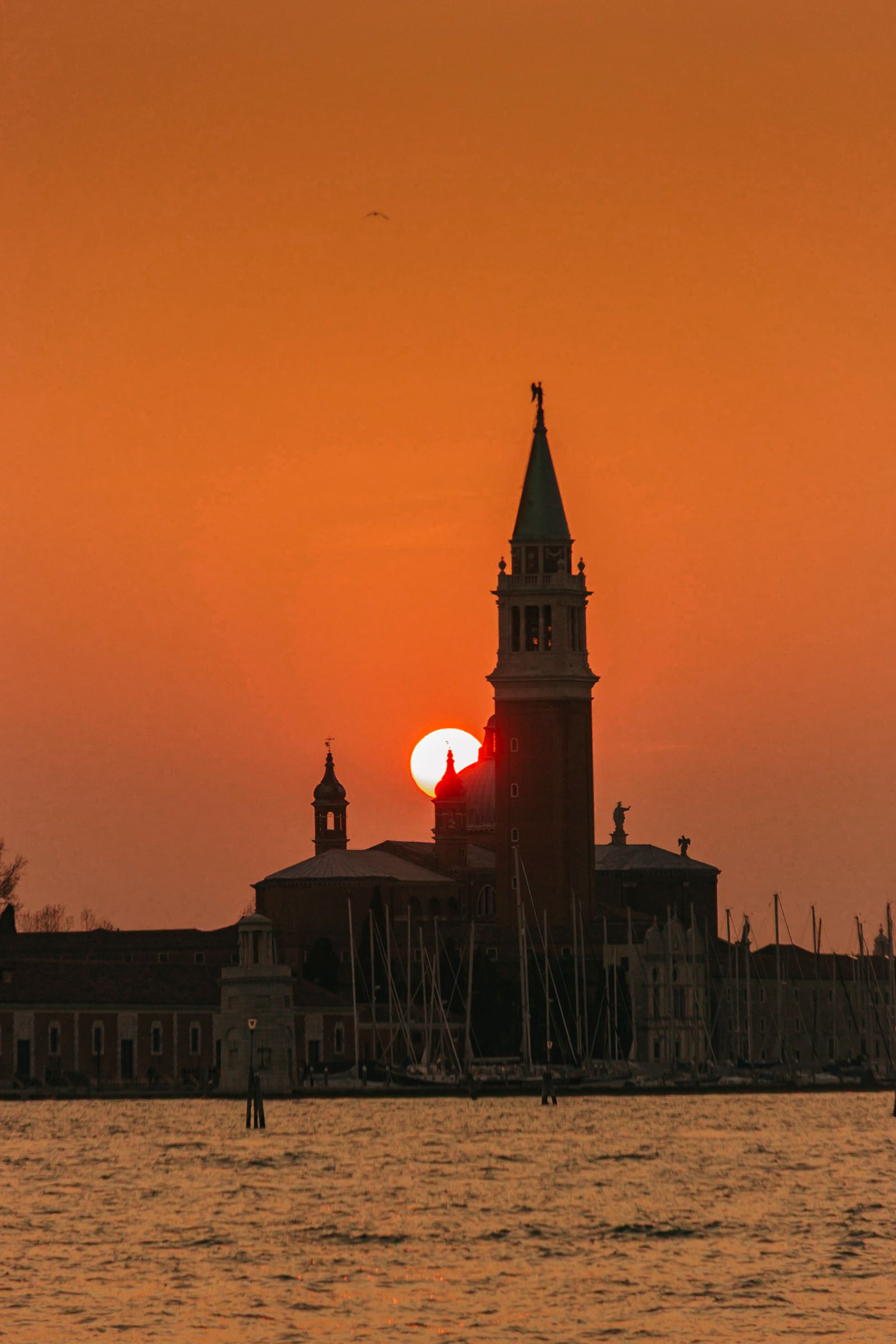
San Giorgio Maggiore — Bell Tower & Island — cinematic reference from the Venice Photographer’s Guide PDF

San Giorgio Maggiore’s bell tower (63 meters, accessible by elevator for ~€6) delivers the only unobstructed 360-degree panorama looking back at the complete Venetian skyline — St Mark’s Campanile, the Doge’s Palace, the Salute, Punta della Dogana, the Giudecca Canal, Murano, and the Lido all visible simultaneously. This is Venice’s best skyline view, superior to St Mark’s Campanile (which cannot see itself). The island church is also Venice’s most dramatic sunrise silhouette when photographed from Riva degli Schiavoni: the Palladian façade with its tall bell tower turns deep amber at dawn, reflected in the Bacino’s still water. No other viewpoint provides both the panoramic tower experience and the iconic silhouette-from-water composition.

  • GPS: 45.429, 12.3428
  • Elevation: 207 ft
  • Best time of day: Afternoon and late afternoon (1–5 PM) for shooting from the bell tower across the lagoon back toward Venice — the entire Venetian skyline is frontally lit from the west-southwest; or shoot from Riva degli Schiavoni looking toward San Giorgio at sunrise when the island church silhouettes against a peach-gold sky over the lagoon
  • Sun direction: The San Giorgio Maggiore island lies south-southeast of Piazza San Marco across the Bacino. The church façade (designed by Palladio, completed 1610) faces north-northwest toward the Molo. From Riva degli Schiavoni (shooting toward San Giorgio), the camera faces south-southeast. At sunrise in summer (sun rising NNE ~60°), the church and bell tower are side-lit from the east, creating dramatic modeling on the Palladian columns. In deep winter, the low sun actually backlights the church from behind at dawn, creating silhouettes. From the bell tower looking back at Venice: the westward view toward St Mark’s is frontally lit in afternoon. Golden-hour light (1–2 hours before sunset) from the west illuminates the Doge’s Palace, Campanile di San Marco, and Salute facade most beautifully as seen from the tower.
  • Access: Take vaporetto line 2 from San Zaccaria stop (150m east of Doge’s Palace) to the San Giorgio Maggiore stop — journey ~5 minutes, single ticket €9.50 (covers 75-minute transfer). Basilica di San Giorgio Maggiore: free entry. Bell tower elevator: ~€6 per person; open Mon–Sat 9:30 AM–12:30 PM and 2:30–6:30 PM (May–Sep), 9:30 AM–12:30 PM and 2:30–5:00 PM (Oct–Apr); Sun 8:30–11 AM and 2:30–6:30 PM (May–Sep). Last entry 30 minutes before closing.
  • Difficulty: easy
  • Recommended settings: Tower Panorama: f/11, 1/500 sec, ISO 200, 16mm — wide-angle panorama capturing full Venetian skyline  ·  Sunrise Silhouette: f/8, 1/500 sec, ISO 400, 135mm — telephoto from Riva degli Schiavoni, church silhouetted against dawn sky  ·  Tower Blue Hour: f/8, 4 sec, ISO 400, 24mm, tripod — Venice skyline illuminated at dusk from tower platform  ·  Church Reflection: f/11, 1/125 sec, ISO 200, 50mm — still morning Bacino reflecting Palladian façade in glassy water

Shots to chase:

  • From the bell tower: wide-angle panorama encompassing the entire Venetian lagoon skyline from Murano in the north to the Lido in the south, with the Doge’s Palace and St Mark’s Campanile directly across the Bacino
  • From Riva degli Schiavoni at sunrise (pre-dawn arrival): the church and tower silhouette against a peach-to-gold sky with gondola posts as vertical foreground elements and mirror-still Bacino water
  • From the bell tower at dusk: Venice’s rooftop skyline illuminated by warm lamp-posts against a deep cobalt post-sunset sky, the lagoon as a dark mirror
  • From a gondola or water taxi in the Bacino at dawn: low-level shot looking east-southeast at the island with the façade reflected perfectly in flat calm water
  • Interior of San Giorgio basilica (free): long-exposure of Tintoretto’s ‘Last Supper’ (1594) lit by amber lamp-light — rare opportunity to photograph a masterpiece in situ

Pro tip: The bell tower closes for a midday break (12:30–2:30 PM) and on certain religious feast days — check the Fondazione Giorgio Cini schedule at cini.it before visiting. Afternoon visits (2:30–5 PM) offer the best light on the Venetian skyline from the tower as the western sun illuminates the St Mark’s façade. For the classic sunrise silhouette from Riva degli Schiavoni, arrive 30 minutes before sunrise and shoot from the stone ledge near the gondola mooring poles (bricole). A 200mm+ telephoto flattens the perspective and makes the church tower loom large against the sky.

Common mistake to avoid: Visiting at midday when harsh overhead light creates flat, unattractive tones on both the church facade and the lagoon. Missing the bell tower midday closure and having no alternative activity planned. Not photographing the church from the water — its reflection in the Bacino is as important as the tower view it gives. Photographing the tower from the wrong direction: the best view from the tower is westward toward St Mark’s, not eastward toward open lagoon.

6. Burano Island — Colorful Houses

Burano is Europe’s most vividly colored fishing village — every house is painted in a different saturated hue (red, turquoise, yellow, violet, cobalt, lime green) according to a tradition regulated by the local municipality, which requires homeowners to submit color choice requests for official approval to maintain the island’s distinctive palette. The narrow canals with their colorful reflections, the tightly packed facades creating abstract color patchwork compositions, and the complete absence of cars create a photographic environment unlike anywhere else in the Venetian lagoon. The leaning campanile of San Martino adds a surreal architectural counterpoint.

  • GPS: 45.4855, 12.4174
  • Elevation: 3 ft
  • Best time of day: Morning (9 AM–noon) for soft overcast or mild sun sidelighting the house facades; overcast days produce the most saturated color results without harsh shadows; avoid midday flat-top light in summer; golden hour adds warmth to already vivid facades
  • Sun direction: Burano’s main canal (Via Baldassare Galuppi side) runs roughly north-south. The canal-facing house facades face east and west, receiving alternating morning and afternoon direct sun. The narrow fondamenta along the main canal (shooting west) is best in the morning when the east-facing facades are frontally lit. The famous colorful houses of Via S. Mauro and Fondamenta Pescheria face south and west — afternoon light (post-noon) side-lights the facades most dramatically. Overcast conditions produce the most vivid color saturation because diffused light eliminates harsh shadow patterns across the irregularly shaped multi-colored facades.
  • Access: Take vaporetto line 12 from Fondamente Nove (Cannaregio, northeast Venice) to Burano — journey approximately 40 minutes. Single ticket €9.50 (75-min), or day pass €25 which covers all vaporetto lines. Line 12 frequency: every 30 minutes approximately. Burano itself is a free public island with no entry fee. Vaporetto from Burano back to Venice: lines 12 (direct to Fondamente Nove) or via Torcello.
  • Difficulty: easy
  • Recommended settings: Overcast Color Saturation: f/8, 1/250 sec, ISO 200, 35mm — diffused light maximizes color saturation  ·  Canal Reflections: f/11, 1/60 sec, ISO 400, 50mm — still canal water doubling facade colors  ·  Detail Compression: f/5.6, 1/500 sec, ISO 200, 135mm — telephoto isolating adjacent facade color contrasts  ·  Golden Hour Warmth: f/8, 1/250 sec, ISO 200, 35mm — warm light adding golden cast to cooler blues and greens

Shots to chase:

  • Looking down the narrow main canal (Fondamenta Pescheria) with brightly colored facades reflected perfectly in still water, a wooden fishing boat in the foreground
  • Abstract color-block composition: telephoto 135mm compressing multiple adjacent house facades into a patchwork of pure saturated color filling the frame
  • The leaning campanile of San Martino framed by bright red or yellow house facades — the tower leans noticeably and creates a surreal counterpoint to the vertical building lines
  • Laundry day: when lines of colorful laundry are strung between houses (common on weekday mornings), a wide-angle shot incorporating washing against the painted facades adds authentic life
  • From a gondola or rowing boat on the outer canal: low-level shot looking along the island’s waterfront with the entire facade parade of colors reflected in the lagoon at dawn before tourists arrive

Pro tip: Take the earliest vaporetto (first departure from Fondamente Nove around 7 AM) to arrive at Burano by 7:45 AM — the island is almost deserted before 10 AM and is overwhelmed with day-trippers from 11 AM onward. Overcast spring and autumn days yield the most saturated colors because diffused light eliminates harsh shadows between facade irregularities. The most photogenic street is Fondamenta di Cao di Rio on the island’s quiet outer edge — far fewer tourists than the main canal. Bring a circular polarizing filter to eliminate water surface reflections and deepen canal reflection colors.

Common mistake to avoid: Visiting in the middle of a summer day when harsh overhead light bleaches colors and crowds make composed shots nearly impossible. Staying only on the main tourist canal and missing the quieter outer fondamenta with better light and fewer people. Under-exposing to preserve sky detail, which makes house colors appear muddy — expose for the facades and recover the sky in post. Shooting in RAW makes color grading significantly easier for Burano’s extreme saturation range.

7. Murano Island — Glass Furnaces

Murano has been Venice’s glassmaking center since 1291 when the Republic mandated moving glassmakers from the main island to reduce fire risk. The island’s furnaces (fornaci) remain active today, producing hand-blown glass in traditions unchanged for 700 years. Photographing molten glass blown by masters at 1400°C, pulled and shaped with iron rods, produces some of the most dramatic artisan documentary images possible. Furnace interiors glow orange-gold from the heat, creating natural chiaroscuro lighting. The island also has its own quiet canals, the Romanesque Basilica dei Santi Maria e Donato (1140 AD), and colorful campo, offering Venice-like compositions without Venice-level crowds.

  • GPS: 45.4575, 12.3536
  • Elevation: 3 ft
  • Best time of day: Morning 9:30 AM–12:30 PM when furnace demonstrations are active and ambient exterior light is soft; overcast days work well for exteriors; for interior furnace photography the glowing molten glass is most dramatic in low ambient light — any time of day inside works if you expose for the glow
  • Sun direction: Murano’s main canal (Canal Grande di Murano) runs roughly east-west. The island’s primary bridges and fondamenta line faces northeast and southwest. Morning sun (from the east) lights the north-facing facades along the canal from around 8–11 AM in summer. The Ponte Lungo and canal waterfront offer classic Venetian canal compositions. Exterior glass furnace buildings (many face south on the Fondamenta dei Vetrai) receive full-day southern exposure — even, consistent light from noon onward.
  • Access: Take vaporetto line 3 (express, weekdays) or lines 4.1/4.2 (circular) from Fondamente Nove or from Piazzale Roma/Santa Lucia station to Murano stops (Murano Colonna, Murano Museo, Murano Faro). Journey ~15–20 minutes from Fondamente Nove. Single ticket €9.50 (75-min) — but note that Murano island transit counts as a separate Venezia destination so a 75-min ticket may not be enough; use a day pass (€25) which covers unlimited trips. Glass furnace demonstrations: most are free entry with showroom viewing; private in-depth tours range €0–€17. Museo del Vetro (Glass Museum): adult ~€10.
  • Difficulty: easy
  • Recommended settings: Furnace Interior Glow: f/2.8, 1/500 sec, ISO 3200, 85mm — freeze molten glass motion, expose for orange glow  ·  Blowing Action: f/4, 1/1000 sec, ISO 6400, 135mm — freeze glass blowing movement with telephoto  ·  Canal Exterior: f/8, 1/250 sec, ISO 200, 35mm — Murano canal with fondamenta reflections  ·  Basilica Romanesque: f/11, 1/125 sec, ISO 400, 24mm — full facade of Santi Maria e Donato basilica

Shots to chase:

  • Inside a furnace: the master glassblower silhouetted against the blazing orange furnace mouth, iron blowpipe and glowing molten blob the only bright elements in the dark workshop
  • Close-up series: sequential macro shots of molten glass being shaped — the amber glow cooling to red as the gather is worked, shaping tools pressing into softening material
  • Canal de Mezo: the main canal of Murano with its smaller, less-crowded fondamenta compared to Venice — evening light on painted palazzo facades and water reflections
  • Basilica dei Santi Maria e Donato (1140 AD): the apse exterior — a remarkable example of Venetian-Byzantine Romanesque architecture with ornate blind arcading
  • Furnace display shelves: artful compositions of finished Murano glass objects — chandeliers, vases, animals — lit by warm workshop light, using shallow depth of field to isolate individual pieces

Pro tip: The best furnace demonstrations run on weekday mornings (9:30 AM–noon) — many factories reduce or stop demonstrations on weekends and in the afternoon. Book a private factory tour (€15–20) to get closer to the furnace mouth and have more freedom to position your camera. High ISO (3200–6400) is essential inside dark furnaces — bring a fast prime lens (f/1.8 or f/2.8 at 85mm+) to freeze glass-working motion. The Fondamenta dei Vetrai (main fondamenta) has the most authentic canal-side furnace storefronts, but walk further to Fondamenta Manin and Fondamenta Cavour for quieter canal compositions.

Common mistake to avoid: Under-exposing furnace interiors by metering on the bright orange glow rather than the master’s face — expose for the midtones of the craftsman’s hands and the glass will be appropriately bright. Not bringing a fast lens (visiting with only a slow zoom makes interior furnace photography nearly impossible). Spending all time in glassblowing demonstrations and missing the island’s excellent canal and Romanesque church compositions.

8. Squero di San Trovaso — Gondola Workshop

The Squero di San Trovaso, established in the 17th century, is one of only three remaining operational gondola squeri (boatyards) in Venice. What makes it uniquely photogenic is its architecture: unlike the brick Venetian buildings surrounding it, the squero’s main workshop and dormitory are built in a Alpine chalet style (tiralelassi) brought by the Cadore mountain craftsmen from the Dolomites who traditionally built and maintained gondolas. This incongruous structure — wooden, chalet-like, with steep roof and shuttered windows — reflected in the dark canal water with black gondolas in various stages of construction and repair creates one of the most authentically Venetian and least-touristy scenes in the city. Gondolas require 280 hours of work to build from 8 species of wood.

  • GPS: 45.4303, 12.3259
  • Elevation: 3 ft
  • Best time of day: Early morning weekdays (8–11 AM) when gondola craftsmen (squeraroli) are actively working on repairs and construction in natural morning sidelight; overcast mornings produce clean, even illumination on the wooden boats; avoid weekends when the workshop is often closed or inactive
  • Sun direction: The squero faces north across the Rio San Trovaso canal, so the best viewing fondamenta (Fondamenta Nani on the north bank) faces south toward the workshop. In morning, the workshop receives direct frontal sunlight from the southeast from around 8–10 AM in summer. By afternoon, the workshop is in shade. Morning is strongly preferred for photographing the workshop, boats, and craftsmen in warm sidelight. The canal runs roughly east-west, creating strong reflections of the Alpine-style wooden workshop buildings in the morning calm.
  • Access: The squero exterior can be viewed for free from Fondamenta Nani on the north bank of Rio San Trovaso — a 3-minute walk from the Accademia vaporetto stop (lines 1, 2) heading southwest through Dorsoduro. Free and open 24 hours (exterior viewing only). Interior visits require advance group booking (minimum 25 people, weekdays only); private tours available via email enquiry (squeroditrovaso.com). A nearby bar (on Fondamenta Nani) offers outdoor seating with direct view of the workshop — ideal for long waits.
  • Difficulty: easy
  • Recommended settings: Morning Workshop: f/8, 1/250 sec, ISO 200, 85mm — telephoto isolating craftsman working on gondola hull  ·  Wide Workshop Scene: f/11, 1/125 sec, ISO 400, 24mm — full workshop facade with canal reflection  ·  Canal Reflection: f/11, 15 sec, ISO 100, 24mm, tripod — blue-hour reflection of chalet buildings in still canal  ·  Detail Documentary: f/4, 1/500 sec, ISO 400, 135mm — close detail of gondola hull curves, tools, and hands

Shots to chase:

  • Classic composition from Fondamenta Nani: the Alpine-chalet squero facade reflected in the Rio San Trovaso canal, a black gondola hull propped on supports in the foreground
  • Long telephoto (200mm+) isolating a craftsman at work — the gondola’s distinctive asymmetrical hull shape visible as he planes, sands, or applies paint
  • Blue-hour long exposure: the wooden chalet buildings lit amber by interior light and street lamps, perfectly reflected in the still canal, deep cobalt sky above
  • From the Rio San Trovaso canal south end: looking north with the squero on the left bank, the campanile of San Trovaso church visible above the rooftops at the end of the canal
  • Documentary series: three-shot sequence of gondola construction stages — hull framing, planking, black bitumen coating — framed consistently from Fondamenta Nani

Pro tip: The squero operates Monday through Friday; arrive before 9 AM to see craftsmen at work before lunch. The canal is narrow (approximately 15 meters wide) so a 50–135mm focal length is ideal from Fondamenta Nani — too wide and the workshop appears small and loses detail. The bar on Fondamenta Nani (Cantinone già Schiavi wine bar, at 992 Fondamenta Nani) is Venice’s best cicchetti spot and opens at 8:30 AM — a perfect base for waiting for activity in the workshop. Note that the bridge over Rio San Trovaso just north of the squero is also a shooting position but gives a less frontal view than the fondamenta.

Common mistake to avoid: Visiting on weekends when the squero is typically quiet or closed. Using a wide lens from the opposite bank and making the small workshop appear insignificant within a landscape view. Staying only 5 minutes — gondola work is slow and the best active shots require 20–30 minutes of patient observation. Missing the adjacent Church of San Trovaso, which backs directly onto the squero and adds context to compositions looking south.

Want this in your pocket on the street?
The full-resolution version of every spot above — with full-page hero photography, GPS maps with gold location pins, sun direction diagrams, multi-season tables, and a complete safety + packing checklist — is inside the Venice Ultimate Photographer’s Guide PDF ($47). Print it, save it offline, take it on the walk. Get the guide →

9. Punta della Dogana & Santa Maria della Salute

Punta della Dogana & Santa Maria della Salute Venice photography sampleSave
Punta della Dogana & Santa Maria della Salute — cinematic reference from the Venice Photographer’s Guide PDF

The Punta della Dogana (the old customs house, now Pinault Foundation contemporary art museum) offers a uniquely panoramic position at the exact confluence of the Grand Canal and Giudecca Canal — looking in one direction toward Piazza San Marco and San Giorgio across the Bacino, and in the other direction along the Grand Canal toward Rialto. The massive Baroque dome of Santa Maria della Salute rises directly behind, creating a stunning vertical counterpoint to the horizontal water plane. The Fortune statue on the Dogana’s golden globe rotates with the wind. This location allows a 270-degree photographic sweep of Venice’s most famous waterways without moving. At blue hour, the Salute is illuminated and the Bacino acts as a perfect mirror.

  • GPS: 45.4307, 12.3363
  • Elevation: 3 ft
  • Best time of day: Sunset to blue hour — standing at the Punta della Dogana tip (looking NW toward Rialto and NE toward San Marco) you catch the last rays on the Salute’s white dome and then the full blue-hour illumination of the Grand Canal mouth; also magnificent at pre-dawn for fog over the Bacino
  • Sun direction: Punta della Dogana is the narrow triangular tip of the Dorsoduro sestiere where the Grand Canal meets the Giudecca Canal. The Salute church stands 100 meters north of the Punta, facing NW. From the Punta tip, looking northeast toward the Bacino di San Marco, the camera faces the open lagoon. Sunrise from this position (facing ENE in summer) illuminates San Giorgio Maggiore and lights the eastern sky behind Castello. Looking northwest from the Punta, the Grand Canal sweeps away toward Rialto in afternoon golden light. The Salute dome faces north-northeast and catches morning light from the east-southeast from about 8 AM. At sunset, the low western sun creates warm golden backlight on the Salute and brilliant orange highlights on the Bacino water.
  • Access: Punta della Dogana is a free public outdoor space, open 24 hours. Take vaporetto line 1 to Salute stop (Dorsoduro) — directly at the foot of the Salute church, a 3-minute walk to the Punta tip. Single ticket €9.50, 24-hour pass €25. Alternatively, walk from the Accademia Bridge (~10 minutes). Punta della Dogana art museum (Pinault Foundation): adult ~€18, open Wed–Mon 10 AM–7 PM.
  • Difficulty: easy
  • Recommended settings: Blue Hour Panorama: f/11, 20 sec, ISO 100, 16mm, tripod — 270° sweep capturing Salute, Bacino, and Grand Canal  ·  Sunset Salute Backlight: f/8, 1/500 sec, ISO 200, 35mm — Salute dome in golden backlight from the west  ·  Foggy Dawn: f/8, 1/125 sec, ISO 800, 50mm — mist hanging over Bacino, San Giorgio silhouetted  ·  Fortune Statue Detail: f/5.6, 1/1000 sec, ISO 200, 200mm — telephoto of the golden Fortune statue against blue sky

Shots to chase:

  • Panoramic blue-hour composition from the very tip of the Punta: 16mm wide-angle capturing the Salute dome on the left, the Bacino stretching right, and San Giorgio Maggiore in the far distance
  • Looking west along the Giudecca Canal at sunset: the silhouetted domes of the Redentore church on Giudecca island with brilliant orange sky behind and reflected in flat water
  • Dawn fog composition: pre-sunrise when lagoon fog reduces San Giorgio and St Mark’s Campanile to ghost shapes above the water surface, moored gondolas as dark foreground verticals
  • The Fortune statue (Dogana golden ball): telephoto shot from the Punta tip isolating the gilded female figure against the morning blue sky, backlit by rising sun
  • Vertical panorama stitch: standing below the Salute, shooting upward at the church facade and dome against a dramatic cloud sky — use a 24mm lens and stitch 3–4 overlapping verticals

Pro tip: The best single viewpoint in Venice for a ‘comprehensive’ shoot — you can rotate 270° and capture five different iconic compositions without moving more than 10 meters. Pre-dawn arrivals (30 minutes before sunrise) give fog over the lagoon, which is most common October–February. A tripod is essential here as the fondamenta is wide enough to set up without obstructing pedestrians. The Salute’s south facade (visible from the Punta) is actually the rear; the main ceremonial façade faces north toward the Grand Canal — walk around to shoot the frontal view from the Grand Canal bank.

Common mistake to avoid: Focusing only on the Salute and missing the full 270-degree photographic potential of the Punta tip. Shooting at midday when flat overhead light makes the white dome appear bleached. Not returning for blue hour after a golden-hour session — the second light window is more dramatic for long-exposure canal work.

10. Fondaco dei Tedeschi — Rooftop Terrace

The Fondaco dei Tedeschi rooftop offers the best free elevated view over the Grand Canal from a relatively modest height — high enough to see the full S-curve of the canal from Rialto toward Ca’ Foscari and the Salute in the southwest, yet low enough that the palazzo facades retain their architectural scale and human detail. The building’s 16th-century origins (it was Venice’s German merchants’ trading house, frescoed by Titian and Giorgione) add historical weight. The rooftop itself is architecturally elegant with simple white railings creating clean frames for canal views. No other free elevated vantage point in central Venice combines this quality of Grand Canal panorama.

  • GPS: 45.4383, 12.3366
  • Elevation: 52 ft
  • Best time of day: Late afternoon (3–5 PM, terrace open until 6 PM) when the low western sun illuminates Grand Canal palazzi in warm directional light; blue hour not accessible from the terrace as it closes at 6 PM, but the terrace offers daytime views impossible to get from ground level
  • Sun direction: The Fondaco dei Tedeschi rooftop sits at the foot of the Rialto Bridge’s north end, directly above the Grand Canal bend. Looking southwest from the rooftop (toward Ca’ Foscari and the Accademia), the camera faces into the afternoon sun — ideal for backlit canal scenes in late afternoon. Looking northeast (toward Cannaregio and the railway station), morning light illuminates palazzi facades. The rooftop is oriented to give the best view of the Grand Canal S-curve to the southwest. Late afternoon (2–5 PM) is optimal when the sun is in the western sky and rakes light along palazzo facades.
  • Access: Free rooftop terrace — advance online booking is required (dfs.com/en/venice, ‘Rooftop Terrace’ section). 15-minute time slots during peak season; booking opens 30 days in advance and fills quickly for desirable time slots. Address: Calle del Fontego dei Tedeschi (next to Rialto Bridge, San Marco side). Vaporetto line 1 or 2 to Rialto stop. Open daily 10:15 AM–6:00 PM (last booking typically at 5:45 PM). Entry into the luxury shopping center (DFS) is free; rooftop access via elevator inside.
  • Difficulty: easy
  • Recommended settings: Afternoon Canal Panorama: f/11, 1/500 sec, ISO 200, 24mm — Grand Canal S-curve with warm afternoon light on palazzo facades  ·  Rialto Bridge Detail: f/8, 1/500 sec, ISO 200, 85mm — telephoto looking down at Rialto Bridge arch and canal traffic  ·  Palazzo Facades Warm Light: f/8, 1/500 sec, ISO 200, 50mm — late afternoon sun raking across Renaissance facade details  ·  Canal Activity: f/5.6, 1/1000 sec, ISO 400, 135mm — vaporetto, gondola, and delivery boat traffic from above

Shots to chase:

  • Wide-angle sweep (16–24mm): the full Grand Canal S-curve from Rialto southwest toward the Salute dome in the distance — the definitive ‘bird’s-eye Venice canal’ composition
  • Looking straight down at Rialto Bridge from above: the bridge’s white arch and two rows of shops from an aerial perspective — impossible to achieve from ground level
  • Telephoto compression (135–200mm): looking southwest down the canal, the parade of palazzo facades compressed into a dense wall of Gothic and Renaissance architecture
  • Late afternoon people and traffic study: looking down at the canal from the rooftop, vaporetto wakes, gondola movements, and delivery boats create dynamic diagonal compositions at 1/1000 sec
  • Architectural detail: the terrace railing as foreground framing element with the distant Salute dome and campanile visible between railing uprights at 50mm

Pro tip: Book the last available time slot of the day (typically 5:30–5:45 PM) for the warmest directional light — afternoon sun at 3–5 PM from the west creates deep shadows on palazzo balconies and warm honey light on canal-facing facades. The booking system is online-only at dfs.com/en/venice and slots fill 1–2 weeks ahead in summer — book the moment your Venice dates are confirmed. Each slot is 15 minutes, which is enough for 3–4 carefully composed views but requires knowing your shots in advance. Bring a polarizing filter to cut water surface glare on the canal.

Common mistake to avoid: Booking a morning slot when the low angle of light creates harsh shadows on the south-facing palazzo facades visible from the west-oriented terrace. Not booking in advance and arriving to find all slots full for the day. Shooting only in the southwest direction (toward Salute) and missing the northeast view toward the railway station and Cannaregio, which has attractive light in morning slots.

11. Cannaregio Canals — Fondamenta della Misericordia

Cannaregio is Venice’s most authentically residential sestiere — the largest by area and least tourism-dominated. The Fondamenta della Misericordia and adjacent Rio della Sensa are lined with working-class osterie, lace shops, small vegetable boats, and laundry-strung windows that represent the daily life of the actual 48,000 Venetians who still live in the historic center. The narrow canals here are too shallow and small for vaporettos, so they carry only small gondolas, rowing boats, and delivery craft — preserving a pre-industrial quiet. The Venetian Jewish Ghetto (first ghetto in the world, established 1516), Madonna dell’Orto church (Tintoretto’s parish church), and the Ponte dei Tre Archi (the only three-arched bridge in Venice) are all within walking distance.

  • GPS: 45.4432, 12.3343
  • Elevation: 3 ft
  • Best time of day: Early morning (6–8 AM on weekdays) for entirely empty canals with perfect mirror reflections; overcast autumn and winter mornings for atmospheric mist effects; the Fondamenta della Misericordia’s bars and restaurants begin filling from 7 PM for evening scenes with warm lamp-light reflections
  • Sun direction: Cannaregio’s canals run in multiple orientations. The Rio della Misericordia runs roughly north-south; the main Cannaregio Canal (Canal di Cannaregio) runs east-west. From the Fondamenta della Misericordia (shooting south along the rio), morning light from the east (summer azimuth ~60–90°) sidelights the west-facing facades along the canal. The Madonna dell’Orto canal to the northwest has east-facing facades best lit in morning. The Canal di Cannaregio is best photographed in late afternoon (2–5 PM) when the sun comes from the west and lights the north-facing facades that line the canal.
  • Access: Cannaregio is a public residential neighborhood — all fondamenta and bridges are free and open 24 hours. Vaporetto line 1 stops along the Grand Canal at various Cannaregio points; for Fondamenta della Misericordia walk ~10 minutes north from Ca’ d’Oro stop. Vaporetto line 4.1/4.2 (Fondamente Nove stop) is 5 minutes’ walk east. No entry fees anywhere in the sestiere.
  • Difficulty: easy
  • Recommended settings: Dawn Mirror Reflection: f/11, 4 sec, ISO 100, 24mm, tripod — perfectly still canal as mirror of facades and sky  ·  Evening Osteria Scene: f/2.8, 1/60 sec, ISO 1600, 50mm — warm window light, locals at bar, ambient atmosphere  ·  Canal Fog Atmosphere: f/8, 1/125 sec, ISO 800, 50mm — autumn mist reducing distant bridge to soft impression  ·  Ponte Dei Tre Archi: f/11, 1/250 sec, ISO 200, 35mm — unique three-arch bridge with canal and sky framing

Shots to chase:

  • Pre-dawn long exposure on Fondamenta della Misericordia: the canal perfectly still, apartment facades and street lamps reflected in unbroken mirror water, not a person in sight
  • The Ponte dei Tre Archi (only three-arch bridge in Venice, GPS: 45.447, 12.320) from the canal-level fondamenta below: three receding arches creating a tunnel-of-arches perspective
  • Madonna dell’Orto canal view: from Ponte Brazzo looking west toward the Gothic church campanile rising above canal-side houses
  • Jewish Ghetto (Ghetto Vecchio): the tall, narrow, multi-story buildings (some 7 stories — the tallest in Venice, built up not out due to overcrowding) create dramatic canyon-light alley compositions
  • Evening local life: wide-aperture candid portraits and scenes of Venetians at cicchetti bars, grocery boats, and foot traffic on fondamenta — the Cannaregio that tourists rarely see

Pro tip: The Fondamenta della Misericordia is Venice’s most authentic working-class canal — arrive on a weekday before 7:30 AM to photograph it in complete solitude. By 10 AM, even this area begins seeing tourists following Instagram posts. The Canale di Cannaregio near the railway station is interesting at early morning with delivery barges loading produce. The Jewish Ghetto (Campo del Ghetto Nuovo) is at its most atmospheric and empty at dawn — the tall ghetto buildings create narrow canyons where morning light penetrates only briefly. Bring a fast 50mm f/1.8 or f/1.4 prime for evening low-light fondamenta scenes.

Common mistake to avoid: Visiting at midday when the narrow canals are in partial shadow and any local atmosphere is interrupted by tourist foot traffic. Staying only on the main fondamenta and missing the smaller cross-canals (rii) that branch off every 50 meters — these side canals offer the most intimate compositions. Not staying into evening when the osterie and bars glow warmly and locals spill onto the fondamenta with wine glasses.

12. Campo San Polo — Largest Venice Campo

Campo San Polo is Venice’s most authentic ‘living campo’ — the largest public square in Venice outside Piazza San Marco, it functions as a genuine neighborhood hub: children playing football in the mornings, weekend markets, summer outdoor cinema (Arena di Campo San Polo, July–August), Carnival gatherings in February. Unlike Piazza San Marco, it is not dominated by tourists and retains genuine Venetian daily life at all hours. The campo’s irregular trapezoidal shape, the Gothic church at one end, the monumental Gothic Ca’ Corner Mocenigo palace, and the rows of Renaissance palazzi give varied architectural backgrounds. The uneven, ancient paving stones catch raking light beautifully.

  • GPS: 45.4376, 12.3299
  • Elevation: 7 ft
  • Best time of day: Early morning (6–8 AM) for empty campo with no market stalls, golden light raking across the campo’s uneven paving stones; winter evenings for warm lamp-light and long shadows; summer evening outdoor cinema screenings (July–August) create dramatic crowd-and-screen compositions
  • Sun direction: Campo San Polo is Venice’s second-largest public square (after Piazza San Marco), roughly rectangular and oriented NE-SW. The long axis runs from the Church of San Polo in the east to the Palazzo Soranzo in the west. Morning sun (ENE azimuth ~60° in summer) enters the campo from the east, sidelighting the Church of San Polo’s Gothic facade. By afternoon, the west-facing buildings receive direct golden-hour light. The campo is relatively open overhead, allowing full-sky compositions difficult in narrower Venetian alleys. In winter, the low sun barely clears the surrounding palace rooftops, creating dramatic near-horizontal raking light across the entire campo.
  • Access: Campo San Polo is a free public space open 24 hours. Take vaporetto line 1 to San Silvestro stop (San Marco side of Grand Canal, 5-minute walk west through Ponte di Rialto and across San Polo) or vaporetto line 1/2 to San Tomà (Dorsoduro side, 5-minute walk). No entry fees. Church of San Polo (adjacent): ~€3 entry.
  • Difficulty: easy
  • Recommended settings: Dawn Raking Light: f/8, 1/250 sec, ISO 200, 24mm — low sun raking across paving stones, church facade in warm light  ·  Outdoor Cinema Night: f/2.8, 1/60 sec, ISO 3200, 35mm — summer evening crowd under stars with projection screen glow  ·  Carnival Crowd: f/5.6, 1/500 sec, ISO 400, 85mm — costumed Carnival figures with campo architecture behind  ·  Morning Empty Campo: f/11, 1/250 sec, ISO 200, 16mm — wide-angle of entire empty campo, church on right, palazzi arcade on left

Shots to chase:

  • Summer evening outdoor cinema: wide-angle 16mm capturing the entire campo filled with Venetians watching films under the night sky, projection screen glowing, surrounding palace facades amber in lamp-light
  • Dawn portrait of an empty campo: low-angle wide-angle from the south end looking north toward the Gothic church facade, the campo’s vast paving stones filling the foreground, first morning light
  • Carnival February: costumed Venetians in baroque masks and 18th-century dress using the campo as gathering point — telephoto 135mm compressing multiple masked figures against Gothic palace facade
  • Children playing calcio: candid action shot at 85mm f/2 of local children playing football against the backdrop of the Gothic church and weathered palazzo facades
  • The Gothic bell tower: isolate the church’s separate campanile (one of Venice’s most elegant pointed Gothic towers) with a 200mm telephoto against afternoon sky

Pro tip: Visit in winter when the campo is lit by genuinely local life and Carnival season brings costumes and atmosphere. The Campo is used for the summer outdoor cinema season (Arena di Campo San Polo) from mid-July to late August — evening sessions start at 9 PM and offer dramatic people-and-architecture compositions. The adjacent Scuola Grande di San Rocco (a 5-minute walk southeast) has one of Venice’s most extraordinary interiors (Tintoretto cycle) and a photogenic exterior in Gothic-Renaissance transition style.

Common mistake to avoid: Visiting at midday when the campo is used by market stalls and is at its least photogenic. Not waiting for winter months when Carnival transforms the campo into a stage set for baroque costume photography. Ignoring the campo’s human life — what makes San Polo special versus other locations is authentic Venetian quotidian activity, not architecture alone.

When to photograph Venice: a year-round breakdown

Venice is photogenic every month of the year — but the conditions differ radically by season. Here is what to expect:

October–November (autumn mist acqua alta, golden light, manageable crowds, fog adds atmospheric layers) and February–March (Carnival costumes, crisp clear light, fewer tourists before Easter rush); spring (April–May) brings soft light and wisteria but heavier crowds; summer mornings before 7 AM offer golden-hour empty alleys

Photographer safety in Venice: read this

City photography has its own risks: gear visibility, neighborhood timing, traffic, weather. Read the briefing before you go.

  • Gear visibility: Use a discreet bag with no obvious camera branding. Keep a body strapped under a jacket on transit.
  • Neighborhood timing: Pre-dawn and post-sunset shoots reward early scouting. Cross-reference each location with current local guidance and choose well-lit transit routes.
  • Situational awareness: Headphones out. One eye in the viewfinder, one on the street.
  • Traffic: Bridges, medians, and bike lanes are not setup zones. Shoot from sidewalks and pedestrian areas only.
  • Weather: Summer storms move quickly; winter cold drains batteries. Layer up, keep gear dry, watch for ice on cobblestones at blue hour.

The complete safety briefing is inside the Venice Photographer’s Guide PDF.

Take this guide into the city

This post is the complete field reference. The Venice Ultimate Photographer’s Guide PDF is the field-deployable version: full-page resolution hero photography, GPS maps with gold pins for every location, multi-season shooting calendars, gear notes per location, sun-angle diagrams, the full city safety briefing, and a print-ready editorial layout in Framehaus black and gold. Save it offline. Print it. Take it on the walk.

Venice Ultimate Photographer’s Guide
Downloadable PDF · 12 GPS-mapped locations · Multi-season calendar · City safety briefing · Packing checklist

Get the Venice guide — $47

Combo Deal

Get the Venice Guide + Preset Pack

Photograph it. Edit it. Done.

$66
$54
Save $12
PDF Guide Every spot, GPS, golden hour
Preset Pack 20 Lightroom presets
Book your tours & experiences in Venice

All links go to Viator (a TripAdvisor company), the world’s largest marketplace for guided experiences. Tagged as affiliate per FTC.

Also on Amazon: gear that helps with this technique

Quick Amazon shortcuts to the gear most useful for this kind of shot. Use them if Prime shipping or Amazon credit makes more sense than B&H. As an Amazon Associate ShutYourAperture earns from qualifying purchases.

Take Venice home in your pocket.

Every shot location, every angle, every time of day worth shooting. Printable PDF + GPS-tagged map.

Instant download. Works on phone, tablet, and printed.

Continue reading

← Back to International Cities Photography Guides

Related guides nearby

Three more photography guides within striking distance — perfect for combining into one trip.

Browse all 78 guides → · Open the map

Save your trip-planning hours

The complete Venice guide is $47

All vantage points above + 5 bonus secret spots, printable map, gear pack list, and editing recipes. One-time payment, instant download, lifetime updates.

Buy Venice PDF →

Common questions about the Venice guide

Is the Venice photography guide worth $47?

For most photographers, yes. The guide saves 8-12 hours of trip-planning research and prevents the most common mistake of Venice photography: shooting at the wrong time of day. If a single better frame is worth $47 to you, the guide pays for itself on day one. Buyers get every GPS coordinate, every golden-hour window, every cultural rule, and a printable shot list.

Does the Venice guide include GPS coordinates?

Yes — every vantage point in the guide has Google Maps-ready GPS coordinates so you can pin them before you fly. The guide also includes a printable map showing all locations clustered by walking distance, so you can build efficient half-day routes.

What's in the Venice PDF that isn't in this article?

The article shows the highlights. The PDF includes: 5 additional secret spots not published online, a 14-day itinerary with daily routes, the full camera-settings cheat sheet for every scenario in Venice, a printable gear packing list, post-processing recipes with screenshot examples, and a list of local guides we trust for portrait commissions.

Do I get the Lightroom presets too?

The $47 guide is the PDF only. The matching Venice preset pack is a separate $19 download — most buyers grab both as a bundle and save the editing time. Both are instant download, both work on Lightroom Classic and Lightroom Mobile.

Will the guide work for a Venice trip in 2026?

Yes. The guide is updated annually as fees, restrictions, and new vantage points change. All buyers get free lifetime updates. The 2026 edition includes the latest drone rules, museum photography policies, and seasonal light data for the year.

Get the Venice guide · $47