Best Photography Spots in Vienna: 11 Locations With GPS
shutyouraperture-20). Buying through these links costs you nothing extra and helps fund our free guides.
Vienna, Austria is one of the most photogenic cities in the world. If you have a camera and the patience to show up before dawn, Vienna will give you images that last a career — but only if you know where and when to point it.
This is the definitive field guide to the 11 best photography spots in Vienna, with GPS coordinates you can drop straight into Google Maps, exact camera settings tuned to Vienna’s unique light, precise timing for every location, and the access notes nobody else bothers to document. It mirrors the intel inside our Vienna Ultimate Photographer’s Guide ($47 PDF) — a downloadable field guide with full-page hero images, GPS maps, seasonal tables, a city safety briefing, and a complete photographer’s packing list. Get the guide →
Planning multi-city travel? See also: U.S. cities photography hub and the National Parks Photography Guides.
11 GPS-mapped locations · Exact camera settings · Multi-season shooting calendar · Free annual updates
Download the PDF guide →
Get the Vienna Ultimate Photographer’s Guide
Every location below — pre-mapped with GPS, golden-hour timing, gear recommendations, cultural rules, and a 14-day itinerary. Downloaded by 200+ working photographers.
Quick jump to the 11 spots
- Schönbrunn Palace + Gloriette
- St. Stephen’s Cathedral (Stephansdom)
- Belvedere Palace — Upper Belvedere + Gardens
- Hofburg Imperial Palace — Michaelerplatz
- Vienna State Opera (Wiener Staatsoper)
- Karlskirche (St. Charles’s Church)
- Naschmarkt
- Hundertwasserhaus
- Donauturm + Donau City
- Prater — Wiener Riesenrad (Giant Ferris Wheel)
- Stadtpark — Johann Strauss Statue
A look inside the Vienna Photographer’s Guide
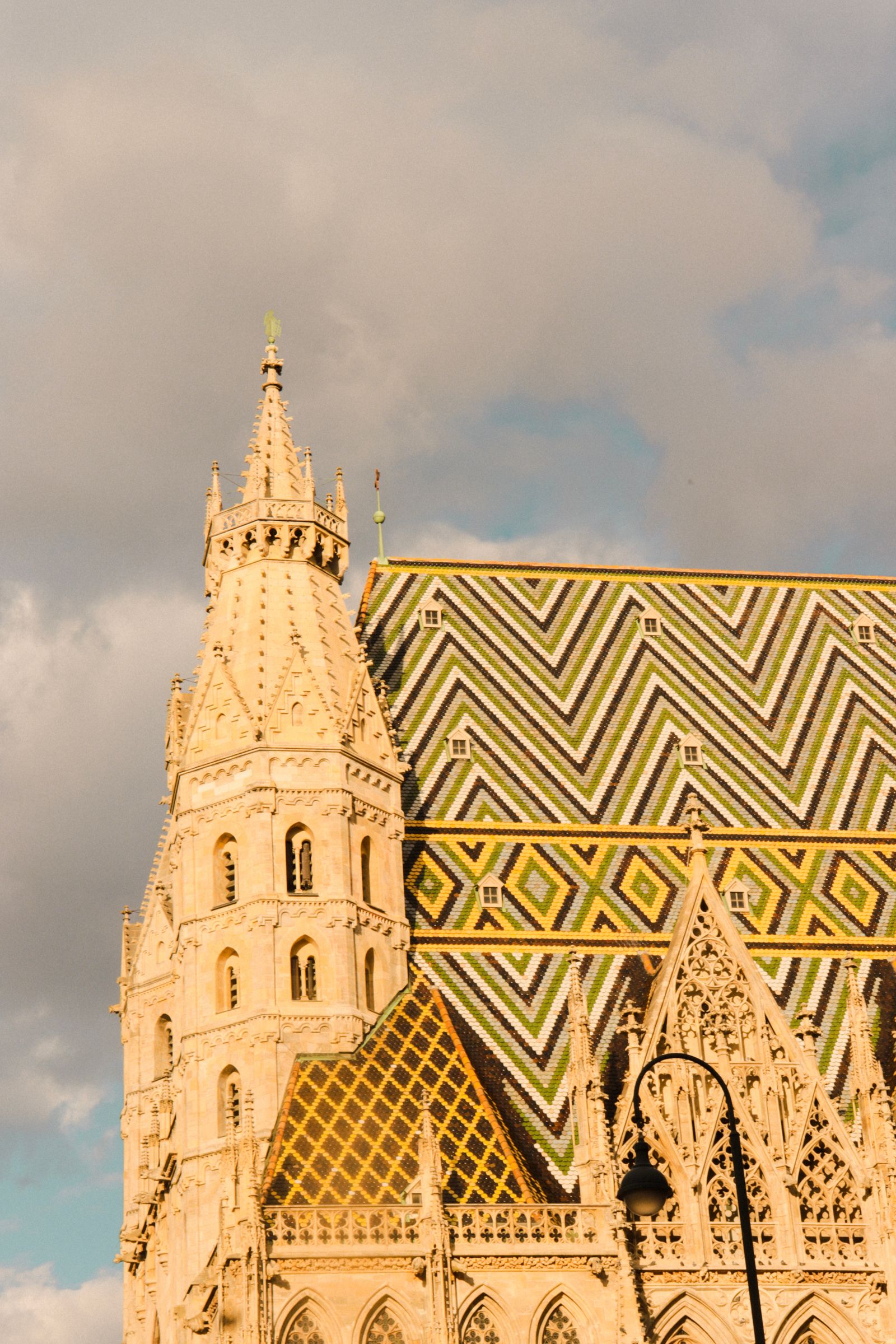
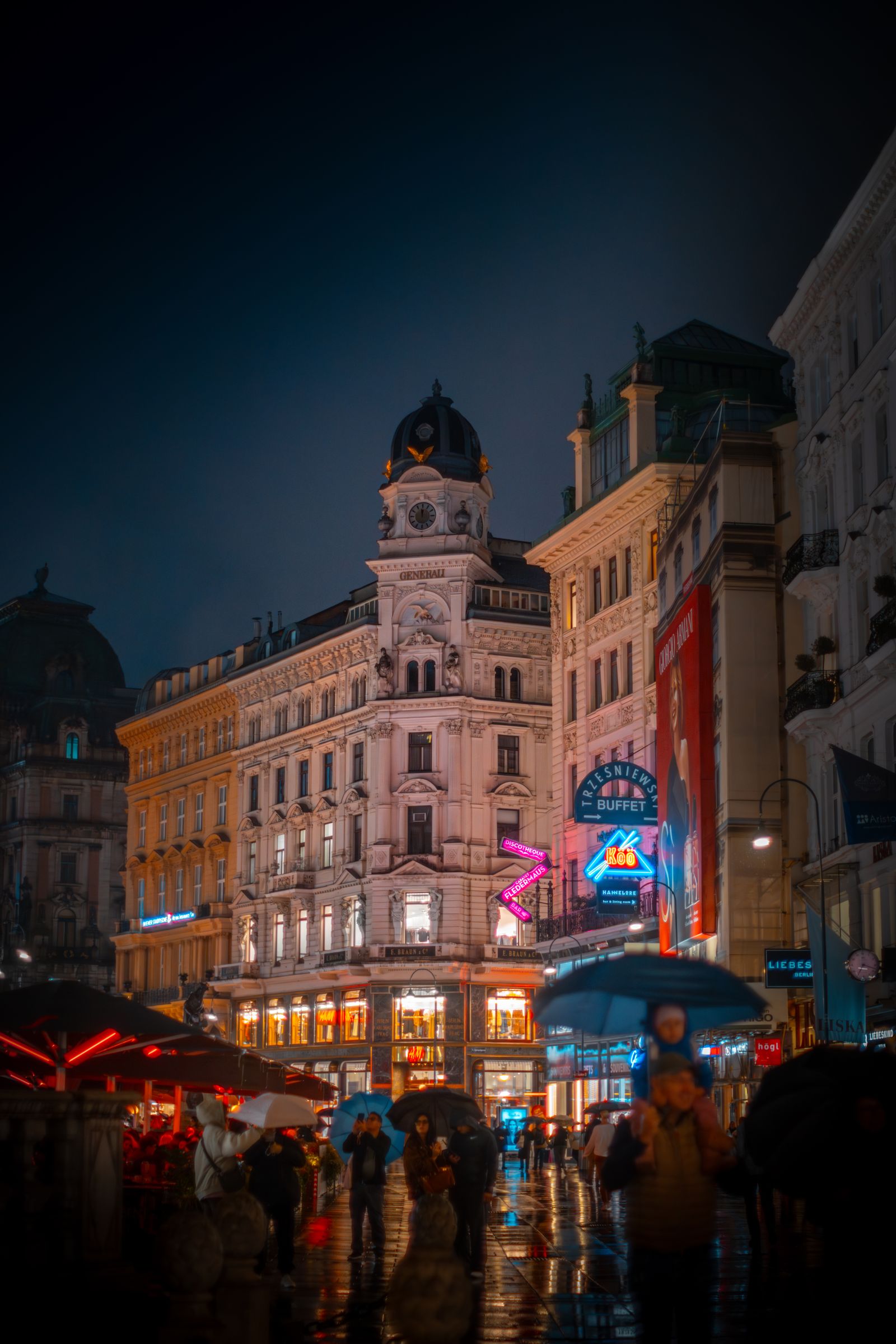
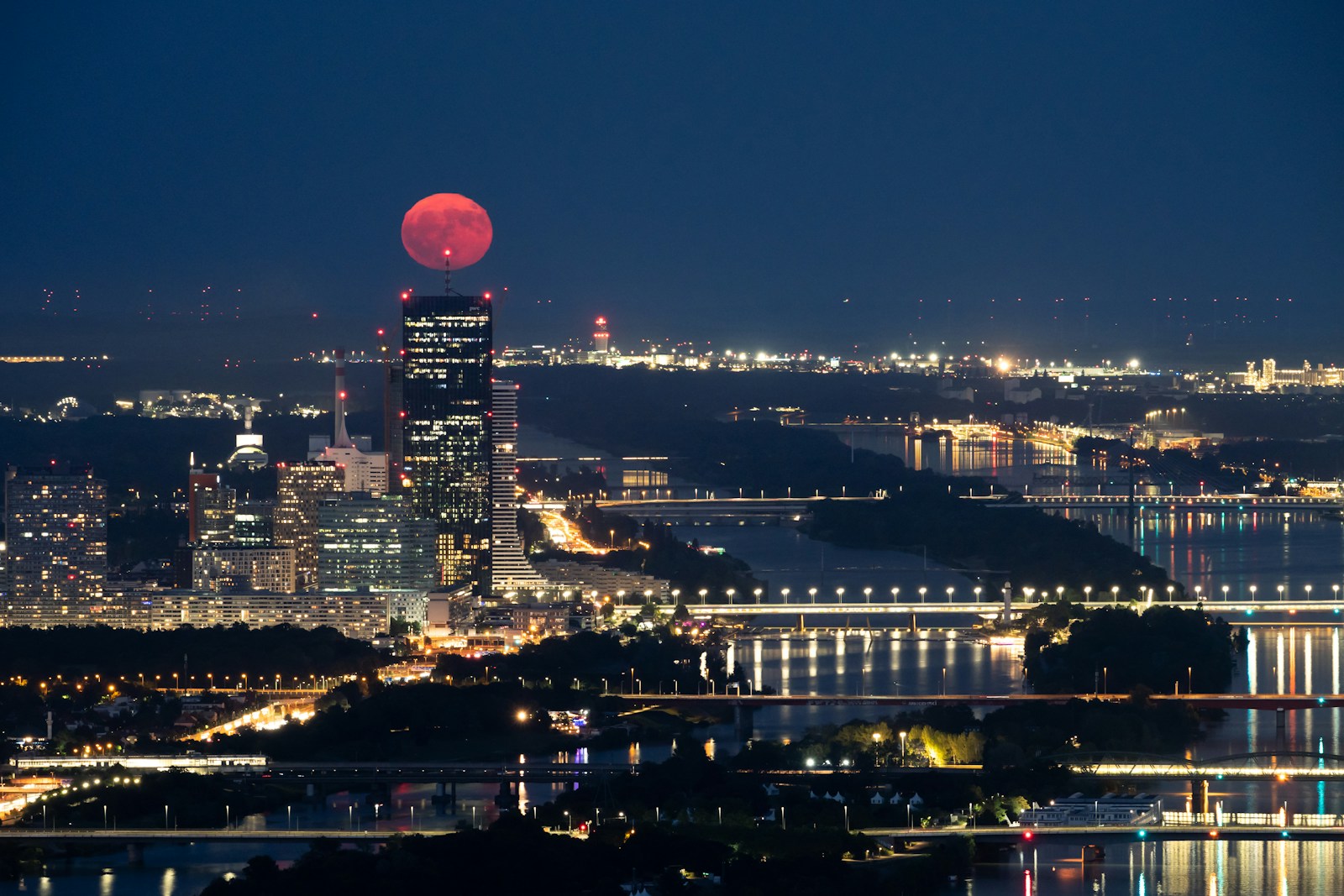
Here are three of the actual shots you’ll find inside the PDF — cinematic full-page references for the exact spots, lenses, and lighting conditions documented in the guide. The full guide includes 11 locations, each with a hero image, GPS map, settings table, and a five-shot list.
Save
Before you shoot Vienna: the essentials
- Free public access: Schönbrunn Palace park gardens open free 6:30 AM year-round; palace interior €28–€38/adult (State Apartments/Palace Ticket 2025); Gloriette rooftop €5.50/adult (summer season only); Schönbrunn Classic Pass €44/adult. Upper Belvedere museum €23/adult; Lower Belvedere €20/adult (belvedere.at, 2025). Belvedere gardens free. Hofburg exterior and inner courtyards free; Sisi Museum/Imperial Apartments charge separately. Stephansdom main nave free; South Tower €5, catacombs €6. Karlskirche interior/lift €9.50. Donauturm observation deck €19.90 on-site / €18 online (2024/2025). Wiener Riesenrad ride €14.50/adult (wienerriesenrad.com, 2025). Hundertwasserhaus exterior and street viewing free. Naschmarkt free. Stadtpark free.
- Commercial permits: Personal and tourist photography in all public spaces is unrestricted. Commercial shoots on public streets require notification to the MA 28 (Road Construction and Maintenance) or relevant district authority. Shoots inside Schönbrunn palace rooms: no photography permitted in the 40 state rooms. Inside Belvedere galleries: no flash, tripods require written permission. Drone flights are strictly regulated in central Vienna — the historic centre (UNESCO buffer zone) is a no-fly zone without CAA (Austro Control) special dispensation.
- Best photography seasons: April–May (spring blossoms on Ringstraße, soft golden light, moderate crowds) and September–October (warm autumn tones on palace façades, clear skies, fewer tour buses than July–August peak)
- Blue hour notes: Vienna sits at 48.21°N, giving a low sun arc similar to Paris. Blue hour after sunset lasts 20–30 minutes, with very gradual civil twilight transitions. In summer, sunset approaches 9:00 PM; in winter, as early as 3:55 PM. The Ringstraße boulevard, the Belvedere garden pool, and the Karlskirche reflecting pond are at their most photogenic during the blue-hour window when warm building illumination is balanced against a deep cobalt sky.
- Drone policy: Drone laws vary widely by country and city — many capital and tourist zones are no-fly. Verify the local civil aviation authority’s current rules before launching.
- Local resource: Official visitor information
The full-resolution version of every map below — plus seasonal calendars, gear notes per location, sun-angle diagrams, and a complete photographer’s packing checklist — is inside the Vienna Photographer’s Guide PDF ($47).
1. Schönbrunn Palace + Gloriette
Schönbrunn is the most complete Baroque palace-and-garden composition in Central Europe. The 1,441-room palace, its symmetrical French-style parterre gardens, and the 1775 Gloriette triumphal arch on the hilltop create a telescoping axis that no other viewpoint in Vienna matches. The Gloriette rooftop is the only public vantage from which you can simultaneously frame the entire palace, its formal gardens, and the Vienna basin stretching to the Alps — a 360-degree view from a listed UNESCO World Heritage site. The palace’s distinctive Maria Theresien Gelb (Schönbrunn Yellow) paintwork turns to polished gold at sunrise.
- GPS: 48.1845, 16.3119
- Elevation: 564 ft
- Best time of day: Gloriette terrace: early morning at opening (9:30 AM) on a clear day for the definitive northward panorama of the palace and Vienna; palace façade courtyard (Ehrenhof): golden hour before sunset when the yellow Habsburg Schönbrunn yellow façade glows warmly; winter evenings for Christmas market illumination
- Sun direction: The palace faces north from the photographer’s viewpoint at the Gloriette hill. At Vienna’s latitude of 48.21°N the sun rises northeast in summer (azimuth ~55°) and far southeast in winter (~120°), arcing low across the southern sky. From the Gloriette looking north-northwest toward the palace, the sun is always behind or to the side of the camera — ideal morning side-lighting in spring/summer. The Ehrenhof (front courtyard, facing north) receives direct morning sun from the east on the east wing and flat frontal light at midday, while afternoon/golden-hour light from the west warms the western wing and façade uniformly. Winter sunrise at ~120° azimuth catches the east façade at a low flattering angle.
- Access: Schönbrunner Schloßstraße 47, 1130 Vienna. U4 metro (Schönbrunn station, 5-min walk to palace; or Hietzing station for rear park entry). Palace park gates open free at 6:30 AM. Gloriette rooftop ticket: €5.50/adult, open April–October, 9:30 AM–5:30 PM (6:30 PM July–August); purchase at Gloriette kiosk or online via schoenbrunn.at. Palace interior (State Apartments): adults €28–€38 depending on tour; Classic Pass (palace + Gloriette + Maze + gardens) €44/adult, 2025 season. Advance online booking strongly recommended to secure timed entry. Photography not allowed inside the 40 state rooms.
- Difficulty: easy
- Recommended settings: Gloriette Panorama Morning: f/8, 1/250 sec, ISO 200, 24mm (palace-to-city axis composition from terrace railing) · Palace Facade Golden Hour: f/11, 1/125 sec, ISO 100, 35mm (frontal courtyard, symmetrical) · Garden Leading Lines Overcast: f/11, 1/60 sec, ISO 400, 16mm (wide-angle from Neptune Fountain axis looking up toward Gloriette) · Winter Christmas Market Night: f/5.6, 4 sec, ISO 400, 24mm, tripod (palace exterior illuminated, market stalls foreground)
Shots to chase:
- From the Gloriette rooftop terrace: telephoto compression (70–200mm) looking north over the formal parterre gardens toward the palace and the Vienna skyline dissolving into the Wienerwald hills, with morning haze adding atmosphere
- From the Neptune Fountain looking south-upward along the central garden axis: ultra-wide (16mm) captures the Gloriette crowning the hill as the vanishing-point of a perfectly symmetrical allee
- Low-angle dawn shot from the Ehrenhof (front courtyard) with the gates still closed and the Schönbrunn Yellow façade catching the first eastern light, long shadows from the wrought-iron gates creating graphic foreground geometry
- Roman Ruin folly (northwest corner of the garden): bracketed exposures to preserve shadow detail in the intentionally ruined arches against the sky — a unique ‘ruin photography’ opportunity within a world heritage garden
- Winter evening with Christmas market: wide-angle at blue hour with stall lanterns in the foreground and the illuminated palace as the backdrop, tripod required to balance warm stall light against the deep sky
Pro tip: Enter the park from the rear (Hietzing gate, near the zoo parking) to start at the top of the hill near the Gloriette and descend — this avoids the long uphill climb from the main entrance and lets you shoot the palace from above while the early light is best. The rooftop terrace opens at 9:30 AM; arrive at the Gloriette base by 9:15 AM on weekdays to be first on the terrace. A polarizer filter dramatically cuts haze in the Vienna basin view and saturates the Habsburg Yellow. From the Gloriette, a 70–200mm lens lets you isolate the palace facade from 750 m away with beautiful background compression.
Common mistake to avoid: Shooting only from ground level in the courtyard and missing the unparalleled Gloriette elevated viewpoint entirely. Arriving at midday when harsh overhead light flattens the façade detail and crowds peak. Using a very wide-angle lens (14mm) from close to the palace creates severe converging verticals — 24–35mm from the far end of the courtyard is more architecturally faithful. Overlooking the Roman Ruin folly in the northwest garden quadrant, one of the most photogenic and least-visited garden features.
2. St. Stephen’s Cathedral (Stephansdom)
Stephansdom is the undisputed symbol of Vienna: the 136-meter Gothic South Tower has anchored the city’s skyline since the 14th century, and the 230,000 glazed Habsburg double-eagle tiles on the roof are unlike any other cathedral roofscape in the world. At street level, the compressed Gothic West Façade with its Riesentor (Giant Gate) Romanesque portal creates a powerful foreground against the tower. The elevated South Tower rooftop gives a 360° view of the old city impossible from any other free vantage.
- GPS: 48.2085, 16.3731
- Elevation: 561 ft
- Best time of day: Sunrise and early morning (7–9 AM) for golden light on the South Tower and the multi-colored Chevron tile roof with minimal crowds; also excellent at blue hour after sunset when the cathedral is illuminated and the pedestrian Stephansplatz is still active
- Sun direction: The cathedral’s main axis runs roughly east–west; the iconic South Tower (Steffl) and the patterned tile roof face south-southeast. At sunrise (summer azimuth ~55°, winter ~120°), warm light strikes the south-facing tiles and the South Tower’s upper Gothic stonework beautifully. By mid-morning, frontal light illuminates the full south façade. Sunset falls on the north façade and the lower western entrance; the Stephansplatz plaza directly to the west receives warm late-afternoon fill light year-round. From the South Tower summit (343 steps), the sun arc and shadow patterns on the tile roof are a photographic subject in themselves — best captured in winter when the lower sun angle emphasises the tile geometry.
- Access: Stephansplatz 3, 1010 Vienna. U1/U3 metro (Stephansplatz station, direct surface access to the square). Cathedral nave: free, open Mon–Sat 6 AM–10 PM, Sun 7 AM–10 PM. South Tower climb: €5/adult (343 steps, no elevator); open daily 9 AM–7 PM. North Tower elevator (Pummerin bell): €6/adult; Jan–Mar 9 AM–5:30 PM, Apr–Dec 9 AM–8:30 PM. Catacombs guided tour: €6/adult. Stephansdomplatz is a public pedestrian plaza — free access 24 hours.
- Difficulty: easy
- Recommended settings: Sunrise Facade Golden Light: f/8, 1/500 sec, ISO 100, 24mm (south-facing tile roof lit by low morning sun) · Tower Summit Wide Panorama: f/11, 1/250 sec, ISO 200, 16mm (fisheye-free wide panorama of the Vienna basin) · Night Illuminated Exterior: f/5.6, 8 sec, ISO 200, 24mm, tripod (illuminated façade, Stephansplatz foreground) · Tile Roof Telephoto: f/8, 1/500 sec, ISO 200, 200mm (compressed tile pattern from street level to the south)
Shots to chase:
- Low-angle wide-shot from directly in front of the Riesentor (Giant Gate) on the west façade at dusk, with the Schottengasse street lamp in the foreground and the South Tower vanishing into a dark sky
- From the South Tower terrace: telephoto shot (200mm) looking south toward the Belvedere Palace and the Alps on clear autumn mornings, framing the tile roof’s chevron pattern as the foreground
- Narrow Blutgasse alley (one block south): the Gothic South Tower framed through the compressed 18th-century street buildings creates a classic Vienna street-photography composition
- Fiaker horse-drawn carriage at Stephansplatz with the full south façade behind: telephoto compression places the gilded carriage against the Gothic stonework
- Christmas market twilight at Stephansplatz: blue-hour long exposure with market stalls lit in warm amber, the illuminated tower rising behind
Pro tip: For the tile-roof shot, the best angle is from the south side of the cathedral looking north along the ridge — stand on the pavement of Stephansplatz angled southeast to capture the full chevron tile pattern with the spire behind. The Haas Haus (modern glass building) directly opposite provides reflective foreground interest showing the cathedral’s mirror image. Pre-dawn visits (6 AM weekdays) let you shoot the empty plaza with a tripod — tourist groups start arriving by 9 AM. From the South Tower in winter, the sun is low enough that the tile pattern casts clear textural shadows even at midday.
Common mistake to avoid: Shooting the cathedral from the main Stephansplatz axis with a wide-angle lens only — the best patterns are found from oblique angles along the sides and from the tower itself. Visiting at midday in summer when crowds make the plaza unmanageable and flat overhead light kills the tile texture. Neglecting the east apse and choir end of the cathedral, which is quieter and shows the full Gothic flying buttresses against sky.
3. Belvedere Palace — Upper Belvedere + Gardens
The Upper Belvedere is the finest Baroque palace garden complex in Vienna, built 1717–1723 by Johann Lukas von Hildebrandt for Prince Eugene of Savoy. The 300-meter-long formal garden between the Upper and Lower Belvedere palaces — with its tiered terraces, cascading fountains, and central reflecting pool — creates a composition that simultaneously shows both palaces in a single frame. The Upper Belvedere houses Klimt’s ‘The Kiss’ and is a UNESCO World Heritage site. The north-facing reflecting pool at blue hour is arguably Vienna’s single most reproduced photographic image.
- GPS: 48.1916, 16.3809
- Elevation: 574 ft
- Best time of day: Blue hour after sunset — the Upper Belvedere’s illuminated Baroque façade reflects in the long central reflecting pool; also ideal at dawn (30 minutes before sunrise) when the pool is mirror-still, the palace is pink-lit from the east, and the gardens are empty
- Sun direction: The Upper Belvedere faces north; the main garden axis runs north–south. The long reflecting pool lies directly in front of the palace, facing south toward the Lower Belvedere. At sunrise in summer (azimuth ~55°) the sun rises to the northeast, backlighting the north-facing façade initially and then side-lighting it from the east — creating dramatic angled shadows on the Baroque sculptural details by 8 AM. At sunset (summer azimuth ~305°), the sun illuminates the palace from the west-northwest, and the warm glow reflects perfectly in the still pool. In autumn and winter, the lower sun angle in the southeast–southwest arc produces warmer, more dramatic light on the façade for a longer daily window.
- Access: Prinz-Eugen-Straße 27, 1030 Vienna. Tram line D to ‘Schloss Belvedere’ stop; or tram 18/O to ‘Quartier Belvedere’. Upper Belvedere museum: €23/adult (2025, belvedere.at). Lower Belvedere: €20/adult. Belvedere gardens (terrace, reflecting pool, sculpture garden): free, open daily. Advance tickets at belvedere.at. Photography inside galleries: permitted without flash; tripods require written permission.
- Difficulty: easy
- Recommended settings: Reflecting Pool Blue Hour: f/11, 15 sec, ISO 100, 24mm, tripod (palace + reflection symmetric composition) · Garden Golden Hour Wide: f/8, 1/250 sec, ISO 200, 24mm (full garden axis from gate, both palaces visible) · Facade Architectural Detail: f/8, 1/500 sec, ISO 100, 70mm (Baroque sculptural portal detail in morning light) · Winter Snow Scene: f/11, 1/250 sec, ISO 200, 35mm (snow-dusted hedgerows with illuminated yellow façade)
Shots to chase:
- Standing at the wrought-iron garden gate (southern end of the formal garden) at blue hour: 24mm composition with the Lower Belvedere receding into the middle distance and the Upper Belvedere dominating the background, symmetrical reflecting pool centered in the frame
- From the central upper terrace looking south down the garden axis at golden hour: the tiered cascade fountains, box hedgerows, and the Lower Belvedere create a perfectly symmetric receding perspective
- Low-angle pool edge shot at dawn: position the camera 15 cm above the water surface to maximise the reflection of the orange-pink sky and palace in the still water
- Autumn morning with mist rising from the pool: the Upper Belvedere emerging from a soft-focus foreground of steam creates atmospheric shots in October–November
- Detail shot of the Atlas sculptures flanking the main palace gate — 70–200mm compression from the garden shows the ornate Baroque stone figures against the sky
Pro tip: The garden gates open free before the museum opens — arrive at first light for the pool reflection shots without tripod restrictions. Wind is the enemy of reflections: check the forecast and prioritise calm mornings (often early weekdays). A circular polariser placed at Brewster’s angle (~53°) eliminates the sky glare and makes the reflection pop. The Schwarzenberg gate (south end) gives the two-palace-in-one frame; the north terrace adjacent to the Upper Belvedere gives the south-garden composition with the Alps visible on clear days.
Common mistake to avoid: Arriving only to visit the museum interior and missing the garden and reflecting pool entirely. Shooting at midday when the pool is shadow-crossed by the garden hedgerows and tourists block the foreground. Using a polariser at the wrong angle and eliminating the reflection rather than enhancing it. In summer, the Upper Belvedere faces north so morning sun won’t warm the façade until the sun swings east-northeast — the reflection in the pool is more useful than direct light on the north face.
Want this in your pocket on the street?
The full-resolution version of every spot above — with full-page hero photography, GPS maps with gold location pins, sun direction diagrams, multi-season tables, and a complete safety + packing checklist — is inside the Vienna Ultimate Photographer’s Guide PDF ($47). Print it, save it offline, take it on the walk. Get the guide →
4. Hofburg Imperial Palace — Michaelerplatz
The Hofburg is one of the largest palace complexes in the world and was the Habsburg seat of power for seven centuries. The Michaelertor — the 1893 Neo-Baroque domed gate at Michaelerplatz — is the single most photogenic entrance in Vienna, with its twin fountains, flanking curved wings, and the dome crowned by ornate bronze figures. The Looshaus directly opposite (Adolf Loos, 1912) creates an extraordinary architectural juxtaposition: hyper-decorated Baroque facing radical modernist minimalism across an ancient cobblestone plaza.
- GPS: 48.2074, 16.3657
- Elevation: 561 ft
- Best time of day: Blue hour and evening — the Michaelertor dome and its flanking wings are brilliantly illuminated, and the adjacent Café Griensteidl café lights add warm foreground glow; also at dawn for empty cobblestone compositions
- Sun direction: Michaelerplatz opens to the east toward the Kohlmarkt shopping street. The Michaelertor (St. Michael’s Gate) dome faces east-northeast. At sunrise in summer (azimuth ~55°), direct golden light enters the circular plaza and strikes the dome and its flanking wings with dramatic low-angle warmth. By mid-morning, the high buildings surrounding the small plaza cast the square into partial shadow. The north-facing Heldenplatz wing receives late-afternoon light from the west in summer. At night, floodlighting illuminates the dome in warm amber — a night photographer’s ideal subject.
- Access: Michaelerplatz 1, 1010 Vienna. U3 metro (Herrengasse station, 2-min walk). The exterior courtyard (In der Burg), Michaelerplatz, and Heldenplatz are public spaces, open 24 hours, free. Interior attractions (Sisi Museum, Imperial Apartments): €19–€23/adult, hofburg-wien.at. Spanish Riding School performances: €32–€170, lipizzaner.at. Fiaker carriages depart from Michaelerplatz.
- Difficulty: easy
- Recommended settings: Dome Night Illumination: f/8, 6 sec, ISO 200, 24mm, tripod (dome and plaza cobblestones, blue-hour sky) · Dawn Empty Courtyard: f/8, 1/60 sec, ISO 400, 16mm (In der Burg inner courtyard, no tourists) · Fiaker Street Scene: f/5.6, 1/500 sec, ISO 800, 70mm (horse-drawn carriage passing the Michaelertor) · Loohaus Juxtaposition: f/11, 1/250 sec, ISO 200, 35mm (Looshaus modern façade vs Baroque dome framed together)
Shots to chase:
- From Kohlmarkt street looking west toward the Michaelertor: a long 150m-equivalent telephoto shot compresses the shopping arcade pedestrians and the dome into a dense urban layer
- From inside the Michaelertor looking outward: the curved arch frames Michaelerplatz and the Looshaus in a dramatic circular vignette
- Heldenplatz at golden hour: the equestrian statue of Archduke Karl backlit by the low western sun with the curved Neue Burg wing behind — a classic silhouette shot
- In der Burg inner courtyard at dawn: wide-angle shows the full four-wing composition with the Schweizerhof and Amalienburg wings around the silent cobblestone court
- Long exposure at blue hour from the Ringstraße: the Neue Burg’s curved colonnade illuminated against a deep blue sky, tram light trails on the ring road in the foreground
Pro tip: The small Michaelerplatz circular plaza is surrounded by buildings, limiting wide-angle shots — use a 35–50mm lens to compose the dome with the flanking wings without perspective distortion. The best dome-plus-sky composition is from the Kohlmarkt end looking west: a 100–135mm lens captures the entire portal with clean sky above. For the horse-drawn Fiaker shot, position along the cobblestone curve with the camera low (knee height), anticipate the carriage’s line, and shoot at 1/500 sec with a 70mm lens. Visit In der Burg at 7 AM on weekdays for completely crowd-free courtyard shots.
Common mistake to avoid: Attempting a full wide-angle composition of the Michaelertor from directly in front — the dome fills the sky and the surrounding buildings intrude at the edges; back up to Kohlmarkt and use a longer lens. Missing the Heldenplatz Neue Burg at blue hour, which is one of the city’s best illuminated architectural night shots. Forgetting to check the schedule for Fiaker carriage traffic — they operate primarily 10 AM–8 PM, heaviest near Stephansplatz.
5. Vienna State Opera (Wiener Staatsoper)
Save
Opened in 1869, the Wiener Staatsoper is one of the most prestigious opera houses in the world and one of the finest examples of Ringstraße-era neo-Renaissance architecture. Its location at the intersection of the Ringstraße and Kärntner Straße — Vienna’s main shopping axis — places it at the busiest pedestrian corner in the city, making it the ultimate urban-architecture subject. The building’s loggia arcades, bronze equestrian relief panels, and the rusticated rusticated base give rich textural material for architectural photographers. At night, the warm floodlighting against the Ring’s lamp-lit boulevard is iconic.
- GPS: 48.203, 16.3689
- Elevation: 561 ft
- Best time of day: Early evening at blue hour — the Opera House is illuminated in warm golden floodlighting and the Opernring traffic creates light-trail arcs in long exposure; also at sunrise for empty Ringstraße compositions before tram and car traffic builds
- Sun direction: The Opera faces north-northwest toward the Ringstraße. The sun rises to the east-northeast in summer (azimuth ~55°) and strikes the east lateral façade in the morning; direct frontal light on the north-facing main façade occurs only in the highest-sun summer months around midday. At sunset (summer azimuth ~305°, winter ~240°), the western side receives warm directional light. The most dramatic photography is at night when the neo-Renaissance façade is floodlit uniformly. The traffic light trails from the Opernring are best captured from the pavement opposite at dusk when both natural and artificial light balance.
- Access: Opernring 2, 1010 Vienna. U1/U2/U4 metro (Karlsplatz station) or U1/U2 (Stephansplatz); also tram lines 1, 2, 62, D at Oper/Karlsplatz stop. Exterior: public pavement, 24 hours, free. Guided backstage tours: approx. €9–€13/adult, book at wiener-staatsoper.at. Performance tickets: €5–€350+, same source. Photography during performances: prohibited. Photography in foyer/lobby spaces during non-performance hours: permitted for personal use.
- Difficulty: easy
- Recommended settings: Blue Hour Light Trails: f/11, 15 sec, ISO 100, 24mm, tripod (Opernring traffic trails, illuminated façade) · Facade Detail Day: f/8, 1/500 sec, ISO 100, 70mm (loggia arches and relief panels in morning side-light) · Dusk Wide Panorama: f/8, 1/30 sec, ISO 400, 16mm (full building from Kärntner Straße corner) · Pre Performance Crowd: f/2.8, 1/250 sec, ISO 1600, 50mm (concert-goers under the arcade at dusk)
Shots to chase:
- Stand at the corner of Opernring and Kärntner Straße at blue hour with a 24mm lens on a tripod: a 15-second exposure captures the Opera’s full north and west façades plus curved tram and car light trails from both busy roads simultaneously
- From the Burggarten side (south of the building): a 70mm shot through the park trees at autumn golden hour, with fallen leaves in the foreground and the southern mansard roofline behind
- The Albertina rooftop (adjacent building to the northwest): an elevated angle looking slightly down on the Opera’s roof and copper mansard cupolas against the Ringstraße
- Pre-performance street shot at dusk: formal evening dress crowd under the loggia arcade, shot with a wide aperture (f/2.8) against the warm interior glowing through the arched windows
- Winter snow morning from the Opernring median strip: wide-angle composition with snow-dusted cobblestones receding toward the illuminated building in dawn light
Pro tip: The best light-trail position is at the pedestrian island in the middle of Opernring directly in front of the building — wait for the traffic lights to cycle and use a remote shutter. Arrive 90 minutes before any evening performance to capture the pre-opera crowd atmosphere. On Sundays at 7 AM, the Ringstraße has virtually no traffic — ideal for clean architectural compositions without light trails. The Opera interior is best seen on the inexpensive midday guided tour (approx. €9); interior foyer with its grand staircase and Schwind frescoes in the loggia is a worthwhile interior photography location.
Common mistake to avoid: Shooting from too close with a wide-angle lens creates strong barrel distortion on the arcade columns. Arriving in the middle of the day when crowds at the Kärntner Straße crosswalk block foreground access and harsh overhead light kills all shadow detail on the neo-Renaissance reliefs. Underestimating how early the prime evening spot (pavement median) fills with other photographers before a major performance night.
6. Karlskirche (St. Charles’s Church)
Karlskirche (1737) is the finest Baroque church in Vienna and one of the most architecturally distinctive in Europe: its central elliptical dome is flanked by two towering spiral columns modelled on Trajan’s Column in Rome — a combination that exists nowhere else in Austrian architecture. The rectangular reflecting pool in Resselpark, added in the 20th century, provides a mirror-perfect water reflection of the whole composition. The church’s interior features a glass lift to the cupola where you can photograph Johann Michael Rottmayr’s 17th-century ceiling frescoes from close up — a unique opportunity unavailable in any other church in Vienna.
- GPS: 48.1983, 16.3719
- Elevation: 561 ft
- Best time of day: Sunrise and golden hour — the copper dome and the two flanking ceremonial columns catch warm low-angle light beautifully; also blue hour for the reflecting pool mirror image; the interior panoramic lift (to the dome frescoes) is best photographed in midday natural light through the dome lantern
- Sun direction: Karlskirche faces north-northeast toward the Resselpark reflecting pool. At sunrise in summer (azimuth ~55°), direct warm light strikes the east-facing main portal and the right-side Trajan-style column; in winter (azimuth ~120°), sunrise light falls more evenly across the full portal. By mid-morning, the dome catches flat light; from late afternoon through sunset (azimuth ~240°–305°), dramatic westerly side-light textures the dome’s copper ribbing. Reflections in the elliptical pool directly in front are most perfect on calm mornings and at blue hour.
- Access: Karlsplatz 10, 1040 Vienna. U1/U2/U4 metro (Karlsplatz station, Resselpark exit). Church entry including dome lift: €9.50/adult; Mon–Sat 9 AM–6 PM, Sun noon–7 PM. Reflecting pool (Resselpark) and exterior: public park, free, 24 hours. Photography inside the church: permitted, no flash on sacred art. Tripods for the exterior pool area require no permit.
- Difficulty: easy
- Recommended settings: Reflecting Pool Blue Hour: f/11, 10 sec, ISO 100, 24mm, tripod (symmetric reflection of dome and columns) · Golden Hour Side Light: f/8, 1/500 sec, ISO 100, 50mm (east column and dome in morning sun) · Interior Dome Lift: f/4, 1/60 sec, ISO 800, 24mm (frescoes at close range from glass lift) · Night Illumination: f/5.6, 8 sec, ISO 200, 35mm, tripod (full illuminated façade, dark sky)
Shots to chase:
- From the northern edge of the reflecting pool at blue hour: 24mm symmetric composition with the dome and two Trajan-column flanks perfectly mirrored in the still water — Vienna’s most dramatic reflection shot
- At sunrise from the southeast corner of the pool: a low-angle shot with the east column in warm golden light and the Wien Museum (modernist glass building) to the right as architectural contrast
- From inside the church on the panoramic glass lift looking up: telephoto shot (35mm) straight up at the 72-meter high fresco ceiling with the gilt stucco framework and cupola lantern
- Street-level composition from the south side of Karlsplatz: include the U-Bahn Karlsplatz Jugendstil kiosk (Otto Wagner, 1899) in the foreground with the Baroque church behind — a 100-year architectural juxtaposition
- Winter Christmas market evening: the Karlskirche Christmas market is set up at the reflecting pool with illuminated wooden huts; blue-hour long exposure with market lights reflected in the pool
Pro tip: Wind on the reflecting pool is the key variable — check a wind forecast and arrive on calm mornings (typically before 8 AM in summer). A ND64 filter in bright conditions allows long exposures on the pool even in midday. The church interior dome lift (€9.50 entry) is one of Vienna’s most underrated photography experiences; buy online tickets in advance and go on weekdays when the lift is less crowded. At night, the church is illuminated until midnight — use the pool reflection for a 10-second exposure that smooths any surface ripple.
Common mistake to avoid: Arriving when wind chops the reflecting pool and the mirror image is lost — rescue with a 30-second exposure to smooth the surface. Shooting from the pool’s long-side midpoint produces a symmetrical but slightly distorted view; move to the pool’s north end for a wider perspective including the dome and both columns in the same frame. Skipping the interior entirely and missing the extraordinary close-up fresco access via the lift.
7. Naschmarkt
Naschmarkt is Austria’s largest open-air market and one of Europe’s most colourful, spanning 1.5 km between Karlsplatz and Kettenbrückengasse. The juxtaposition of extraordinary Otto Wagner Jugendstil apartment buildings (Linke and Rechte Wienzeile, 1898) towering above the market stalls creates an architectural backdrop unavailable in any other market in the world. The market’s diversity — Turkish, Persian, Greek, Italian, and Austrian vendors side by side — gives a rich street-photography palette of faces, produce colours, and cultural layering.
- GPS: 48.1984, 16.3669
- Elevation: 561 ft
- Best time of day: Tuesday–Friday at opening (7 AM) for the most active vendor setup, rich colour, and low morning directional light along the market aisles; Saturday from 8–10 AM to photograph both the regular market and the Flohmarkt (flea market) at Kettenbrückengasse before the major crowds arrive
- Sun direction: The Naschmarkt runs roughly east–west along the Wienzeile for 1.5 km, parallel to the Wien river channel. Morning sun (summer azimuth ~55°) comes from the east, illuminating the market façades, produce stalls, and vendor faces from behind the Kettenbrückengasse end — ideal for backlit produce shots and silhouetted vendor portraits. By midday, overhead light flattens the market. Afternoon sun from the west (azimuth ~255°–305°) creates warm directional light from the Karlsplatz end — best for the colourful spice, cheese, and olive stalls in the western section. The covered stall rows create natural diffused light between the permanent stands at all times.
- Access: Wienzeile, 1040 Vienna. U4 metro (Kettenbrückengasse station for west end; Karlsplatz station for east end). Market open Mon–Fri 6 AM–7:30 PM, Sat 6 AM–5 PM. Closed Sundays. Flea market (Flohmarkt): every Saturday along the west end from 6:30 AM. Free to enter and browse. Photography of vendors is courteous — ask permission for close portraits; most vendors at this international market are accustomed to tourists photographing produce.
- Difficulty: easy
- Recommended settings: Produce Close Up Morning: f/2.8, 1/500 sec, ISO 200, 85mm (backlit spices, olives, or cheese in morning sun) · Market Alley Wide: f/8, 1/125 sec, ISO 400, 24mm (full stall row perspective with Otto Wagner building) · Vendor Portrait: f/2.8, 1/250 sec, ISO 400, 85mm (available light, eye contact, market background) · Saturday Flea Market: f/5.6, 1/250 sec, ISO 400, 35mm (antique stalls, early morning with low raking light)
Shots to chase:
- From the Kettenbrückengasse end (west), looking east down the market aisle at 7 AM: early light creates a golden tunnel through the stall canopies with Otto Wagner’s tiled apartment block looming above the roofline
- Backlit produce close-up: position at 45° to the stall with the sun behind the display — olive jars, spice pyramids, or hanging dried chilli peppers glow translucently when backlit at f/4 with a 100mm macro
- Street portrait of a Turkish doner vendor or Persian spice merchant at work: 85mm at f/2.8 blurs the stall background while keeping the face sharp in natural stall shade
- Saturday Flohmarkt: wide-angle composition at 16mm from the elevated U4 metro viaduct looking down on the flea market chaos below — the viaduct itself is a structural curiosity as it runs directly over the market
- Otto Wagner Jugendstil apartment on Linke Wienzeile: telephoto shot (200mm) from across the market compresses the building’s golden majolica tile façade above the colourful market awnings
Pro tip: The best produce-photography light is in the permanent stall rows in the middle section of the market (between U4 Pilgramgasse and Kettenbrückengasse) where vendors cluster closest together and canopy shade creates diffused, directional light. Ask before pointing a camera at individual vendors — most are very friendly if you buy something first. On Saturdays, arrive at 6:30 AM when the Flohmarkt vendors are setting up; the ‘unboxing’ of antiques, paintings, and bric-à-brac makes for compelling reportage sequences.
Common mistake to avoid: Arriving after 10 AM on a Saturday when crowds make the market aisles nearly impassable. Only shooting produce close-ups and missing the broader architectural context — stepping back to include the Otto Wagner Jugendstil building in the background creates far more distinctive images. Using flash on produce shots (makes colours harsh and unnatural) — available morning backlight is always superior.
Want this in your pocket on the street?
The full-resolution version of every spot above — with full-page hero photography, GPS maps with gold location pins, sun direction diagrams, multi-season tables, and a complete safety + packing checklist — is inside the Vienna Ultimate Photographer’s Guide PDF ($47). Print it, save it offline, take it on the walk. Get the guide →
8. Hundertwasserhaus
Designed by artist Friedensreich Hundertwasser and architect Joseph Krawina and completed in 1986, Hundertwasserhaus is the most visually distinctive residential building in Austria: an apartment block covered in uneven, undulating floors, six different exterior colours of render, onion domes, ceramic tile fragments, and 250 trees growing directly from the building’s terraces and window boxes. It is the physical embodiment of Hundertwasser’s philosophical manifesto against straight lines, making it unlike any other building in Europe and one of the most photographed residential structures in the world.
- GPS: 48.207, 16.394
- Elevation: 548 ft
- Best time of day: Overcast or soft-light days eliminate harsh shadows in the undulating façade’s deep recesses; early morning weekdays (8–9 AM) before tour buses arrive; spring for surrounding tree foliage that frames the building and complements the façade colours
- Sun direction: The main façade of Hundertwasserhaus faces north-northwest onto Kegelgasse. Direct sun hits the façade in the morning from the east-northeast in summer (rotating around by late morning), and in winter remains oblique across the façade most of the day. The irregular, undulating surface creates deep shadows in the window recesses — overcast conditions actually produce more even colour across the entire façade than harsh direct sun. At blue hour the warm interior lights glow through windows against the deep sky, creating a painterly illumination of the colorful ceramic-tile exterior.
- Access: Kegelgasse 34–38, 1030 Vienna. Tram line N or 1 to ‘Hetzgasse’ stop (3 min walk); or U3 metro (Rochusgasse) then 10-min walk. Exterior viewing from the public street: free, 24 hours. The building is a private residence — interior access is not available. Hundertwasser Village (across the street at Kegelgasse 37–39): free to enter, daily 9 AM–7 PM (gifts, café, and gallery in a related Hundertwasser building).
- Difficulty: easy
- Recommended settings: Full Facade Overcast: f/8, 1/125 sec, ISO 400, 35mm (full façade, even diffuse light, saturate +15 in post) · Detail Colour Pattern: f/5.6, 1/500 sec, ISO 100, 70mm (mosaic tile and window recess detail in morning side-light) · Low Angle Upward: f/8, 1/250 sec, ISO 200, 24mm (low angle exaggerating the undulating roofline and onion dome against sky) · Window Illumination Night: f/2.8, 6 sec, ISO 400, 50mm, tripod (warm apartment lights glow against the blue-hour sky)
Shots to chase:
- From across Kegelgasse at pavement level: a 35mm composition fits the entire façade and includes the tree branches framing both sides for natural visual containment
- Framing technique using the trees on the Löwengasse corner: position a trunk or major branch as a strong foreground frame element at 24mm, using shallow depth of field (f/4) to blur the bark while keeping the building sharp
- Mosaic tile detail at 100mm: pick out a single window surround with its individual ceramic tile fragments — each tile was reportedly sourced from demolished or renovated buildings, giving a mosaic surface that rewards macro-level scrutiny
- Look upward at a 45° angle from the building’s base corner: the undulating roofline, rooftop trees, and onion dome create a surreal architectural skyline composition
- After rain, the street reflects the coloured façade: low angle with a 35mm lens captures the inverted colour reflection in the wet pavement, giving an abstract double image
Pro tip: This is a residential building and the street in front is narrow — a 35–50mm lens from the opposite pavement is ideal. An ultra-wide (16mm) creates severe barrel distortion on such an irregular façade. Post-processing: increase saturation +10–15 and add slight clarity to bring out the mosaic tile texture; the building’s colours can appear muted on overcast days without this adjustment. Weekday mornings before 9 AM offer the emptiest street for clean compositions; by 11 AM a near-constant flow of tour groups crowds the narrow pavement.
Common mistake to avoid: Using a very wide-angle lens from close proximity which distorts the building’s proportions and makes the façade appear to lean away. Arriving at midday when direct overhead sun bleaches the lighter-coloured sections of façade and deep window recesses go almost black. Forgetting to cross the street to the Hundertwasser Village for a closer look at the matching decorative elements and a café courtyard with similarly decorated interior elements.
9. Donauturm + Donau City
Save
The Donauturm (252 m) is the tallest structure in Austria and provides the only true 360° elevated panorama of Vienna available to the public — St. Stephen’s Cathedral, the Ringstraße, Schönbrunn, the Alps, Bratislava in Slovakia (80 km away), and the full Danube river bend are simultaneously visible on clear days. Unlike the St. Stephen’s Tower, it offers unobstructed glass viewing at 150 m and 155 m with no mesh or wire on the windows. The juxtaposition of the Donau City glass-and-steel skyline (Vienna’s only modern high-rise district) directly below against the Baroque city centre behind it creates Vienna’s most dramatic architectural contrast photograph.
- GPS: 48.2403, 16.4099
- Elevation: 534 ft
- Best time of day: Clear evenings from 1 hour before sunset through blue hour — the 360° panorama includes the illuminated inner city, the Danube, the Alps in the far west, and the Donau City glass towers below; also dawn on clear mornings for the Wienerwald hills glowing pink to the west
- Sun direction: The Donauturm stands in Donaupark at 48.24°N, north of the city centre. From the 150 m observation deck, the sun at Vienna’s latitude arcs from northeast (summer sunrise ~55°) through due south at noon to northwest at sunset (~305°). The historic inner city with St. Stephen’s spire lies to the south-southwest; the Danube river bends to the south and east; the Kahlenberg/Wienerwald hills are due west. For the best ‘inner-city golden hour’ shot, position at the south-facing window of the observation deck 30 minutes before sunset: the low western sun backlights the Cathedral and Ringstraße in warm amber. The Donau City towers (UN Campus) directly below and to the south catch reflected sunset light in their glass curtain walls.
- Access: Donauturmplatz 1, 1220 Vienna. U1 metro (Kaisermühlen VIC station, ~10-min walk through Donaupark); or Bus 20A to ‘Donauturm’ stop. Observation deck admission: €19.90/adult at the door; €18 online with priority express-lift access (donauturm.at, 2024/2025). Children under 3 free. Open daily 10 AM–10 PM; last lift 9:15 PM. Rotating restaurant (Turmrestaurant): reservations at donauturm.at, ticket included with restaurant reservation.
- Difficulty: easy
- Recommended settings: Sunset Panorama: f/8, 1/500 sec, ISO 200, 24mm (inner city in golden light, Alps silhouette in distance) · Blue Hour Cityscape: f/11, 15 sec, ISO 200, 35mm, tripod permitted (full 180° south sweep with city illumination) · Donau City Towers: f/8, 1/500 sec, ISO 100, 50mm (glass DC Tower catching reflected sunset from below) · Night City Grid: f/5.6, 4 sec, ISO 400, 50mm, tripod (full city light grid with Danube river dark reflection)
Shots to chase:
- South-facing window at sunset: 24mm composition with Stephansdom silhouetted against the warm sky horizon and the Donau City glass towers in the middle ground
- North-facing window toward the Danube: the river’s twin channels (Alte Donau and Neue Donau) create silver curves disappearing toward Bratislava — ideal with a ND filter for a smooth water effect through the glass
- Looking straight down (nadir shot) through the glass floor panel at the base of the observation section: the Donaupark trees, paths, and miniature visitors 150 m below create a vertiginous abstract composition
- Dawn: wide panorama with the Kahlenberg vineyard hills glowing pink-orange in the first light to the west while the city is still in blue shadow — a two-toned cityscape
- Long exposure at night: 20-second exposure at f/11 turns the city lights into a glowing carpet grid, with the Danube as a dark inky ribbon bisecting the composition
Pro tip: Buy tickets online in advance (€18 vs €19.90 at door) and arrive at the opening time of 10 AM on weekdays for the fewest visitors on the observation level. Bring a circular polariser to cut internal glass reflections on the observation deck windows — hold the filter against the glass and shoot through it. A tripod is permitted on the observation level; use a mini tripod or bean bag against the railing for the steady shots needed at night. The rotating restaurant makes one revolution per 75 minutes — a meal provides a 360° ambient-light panorama over dinner.
Common mistake to avoid: Coming on a hazy midsummer day — the Alps and Bratislava are only visible in clear conditions typically in autumn or early spring after rainfall clears the air. Trying to photograph through the window glass with a polariser held wrong (axis perpendicular to the reflection rather than parallel to it). Not accounting for the internal glass reflection — turn off all room lights behind you and press the lens close to the glass for cleaner shots.
10. Prater — Wiener Riesenrad (Giant Ferris Wheel)
Built in 1897 for Emperor Franz Joseph I’s Golden Jubilee, the Wiener Riesenrad is one of the oldest surviving Ferris wheels in the world and a UNESCO World Heritage candidate as part of the Vienna ensemble. Its giant red wooden gondolas are unique in the world — flat-sided viewing cars rather than modern enclosed pods — giving a sense of genuine height exposure. It was immortalised in the 1949 film noir ‘The Third Man’ (Orson Welles meets Joseph Cotten in a gondola). The wheel’s silhouette at dusk, rising above the Prater chestnut trees, is one of Vienna’s most distinctive skyline images.
- GPS: 48.2167, 16.396
- Elevation: 541 ft
- Best time of day: Dusk and evening — the wheel is illuminated with coloured lights and rides against the dark sky; also late spring and autumn afternoons for golden-hour shots of the wheel against warm sky with park foliage; Christmas season for the Prater Christmas market at the base
- Sun direction: The Riesenrad is oriented with its axle running roughly east–west. At sunrise and sunset, the rim of the wheel faces the sun squarely, backlighting the gondolas and creating rim-lighting on the spoke framework. In summer, sunset falls at ~305° — the Riesenrad wheel facing west catches the final low western light on its gondolas and spokes. After sunset, the wheel’s own illumination (multicoloured LEDs) creates its own light source. Long-exposure night photography of the slowly rotating wheel produces circular light-trail arcs.
- Access: Prater 90, 1020 Vienna. U1 metro (Praterstern station, 5-min walk through the amusement park). Wiener Riesenrad ticket: €14.50/adult, €6.50/child 3–14 years (wienerriesenrad.com, 2025). Open daily: summer season 9 AM–11:30 PM, winter 10 AM–10 PM. Buy at the cashdesk at the wheel base; online tickets valid for one year from purchase. 15-gondola wheel carries up to 4–5 persons per gondola; one revolution takes ~15 minutes reaching 65 m (213 ft) altitude.
- Difficulty: easy
- Recommended settings: Dusk Silhouette: f/11, 1/60 sec, ISO 200, 35mm (wheel silhouetted against gradient dusk sky, trees below) · Illuminated Night Spin: f/11, 30 sec, ISO 100, 24mm, tripod (full 30-sec rotation creates circular light trails) · Gondola View Cityscape: f/8, 1/500 sec, ISO 200, 24mm (cityscape through the gondola’s large windows at apex) · Ground Level Upward: f/5.6, 1/500 sec, ISO 200, 24mm (wide-angle looking up at the spoke framework against sky)
Shots to chase:
- From the northern edge of the amusement park alley (Prater Hauptallee direction), looking south at dusk: the full 65-meter wheel silhouetted against an orange-pink sky with the park’s chestnut trees flanking the composition
- Long exposure from a tripod 50 m north of the wheel at night: a 30-second exposure captures one full revolution of the illuminated gondola lights as a complete circular trail
- From inside the gondola at the wheel’s apex: 24mm wide-angle through the large glass windows captures the Ringstraße, Stephansdom spire, and the Donau City towers in a single 180° sweep
- Close-up shot of the wheel’s red wooden gondola detail at the loading platform: 50mm captures the vintage riveted timber construction and the 1897 engineering aesthetic
- Christmas season: from the midway funfair alley at night, the illuminated Riesenrad in the background and foreground carousel lights create a layered festive light composition
Pro tip: For the circular light-trail shot, plant the tripod at the northeast corner of the adjacent parking area where the wheel is framed cleanly against dark sky. Use a remote shutter release and set a 30-second exposure at f/11, ISO 100 — the LED gondola lights trace a perfect 65-metre diameter circle. The gondolas run very slowly, so a 30-second exposure captures only a fraction of a revolution; use Bulb mode and hold the shutter for two full minutes for a complete circle. From inside the gondola at the top of the wheel, the large windows allow clean wide-angle shots — avoid shooting through dirty glass and use a lens hood to prevent internal reflections.
Common mistake to avoid: Shooting the wheel in the middle of the day when harsh overhead light bleaches all colour from the red gondolas and the Prater park background is overexposed. Choosing the wrong angle and including the ticket booth and machinery shed in the foreground — move further back (50+ metres) to frame the wheel cleanly against sky and park. Not waiting until after dark for the light-trail composition — the wheel’s illumination only activates after sunset.
11. Stadtpark — Johann Strauss Statue
Unveiled in 1921, the gilded bronze monument of Johann Strauss II — the ‘Waltz King’ — is the most photographed monument in Vienna and one of the most recognisable statues in Austria. Edmund Hellmer’s composition is unusually dynamic for a classical monument: Strauss is depicted mid-performance, violin raised, in full musical ecstasy, framed by a marble arch of dancing marble angels and musical figures. The gold-leaf gilding (re-gilded multiple times) makes it uniquely photogenic in warm sunlight. Stadtpark itself — Vienna’s first public park (1862) — has the highest concentration of composer and artist monuments of any park in the city.
- GPS: 48.203, 16.38
- Elevation: 561 ft
- Best time of day: Golden hour (late afternoon through sunset) — the gilded bronze statue glows dramatically in low warm light, and the arch of marble relief figures behind Strauss catches directional shadow detail; spring (April–May) for blooming flower beds surrounding the plinth; dusk for the illuminated statue against fading sky
- Sun direction: The Johann Strauss monument faces east-southeast, with Strauss holding his violin toward the northeast. The arched marble relief behind the figure faces north-northwest. At sunrise (summer azimuth ~55°), direct warm light strikes the back of the statue; by mid-morning, the front of the gilded figure is in shade. The best frontal lighting on the gilded statue is from late afternoon when the western sun (azimuth ~270°–300°) wraps the figure in warm directional light — this is when the gold gilding is most luminous. At blue hour and night, the monument is floodlit; the gold surface catches the artificial warm light very photographically.
- Access: Stadtpark, Parkring, 1010 Vienna. U4 metro (Stadtpark station, ~4-min walk; the station pavilion is an Otto Wagner design). Tram line 2 to Weihburggasse. Stadtpark is a public park open 24 hours, free. The monument is open air with no restrictions on photography.
- Difficulty: easy
- Recommended settings: Golden Hour Frontal: f/5.6, 1/500 sec, ISO 100, 85mm (statue in warm western light, arch detail behind) · Floodlit Night: f/5.6, 4 sec, ISO 400, 50mm, tripod (gold statue against deep blue sky, park trees behind) · Spring Flowers Wide: f/8, 1/250 sec, ISO 200, 35mm (statue with blooming flower border at plinth base, full arch visible) · Detail Violin Close: f/2.8, 1/500 sec, ISO 100, 200mm (telephoto isolation of the violin and Strauss’s expressive face)
Shots to chase:
- Front-center composition at golden hour at f/5.6 with the 85mm: the gilded statue glows against the shadowed marble arch relief, with the Kursalon concert hall building visible through the park trees in the background
- Low-angle looking up at the statue from the base of the plinth: a 24mm wide-angle exaggerates the arch height and makes Strauss appear to tower against the sky
- Telephoto selective focus (200mm, f/2.8) picking out just the face and raised violin with the arch blurred to soft bokeh behind
- Spring: wide-angle composition (16mm) from 10 m back includes the complete decorative flower border in the foreground, the gilded statue in mid-frame, and the arch of marble figures above — the full monument composition
- Evening portrait session: position a model in period dress at the plinth corner with the floodlit gold statue as a background, f/1.8 on a 50mm to separate subject from background while retaining the gold glow
Pro tip: The monument faces a near-constant queue of tourists for selfies — arrive before 8 AM or after 8 PM for unobstructed shots. A 70–200mm lens from the opposite park path (about 20–30 m back) gives the ideal compression to frame the statue with the arch behind without distortion. The floodlighting at night is warm amber and renders the gilded bronze in its most photogenic state — a 4-second exposure at f/5.6 on a tripod captures the gold statue against a deep blue sky at astronomical twilight. In spring, the municipal gardeners plant a fresh ornamental border around the plinth — the best flower compositions are in the first two weeks of May.
Common mistake to avoid: Trying to shoot the statue at midday with harsh overhead light — the gold surface bleaches and the marble arch shadows go completely black. Standing too close (under 5 m) with a wide-angle lens creates severe upward keystoning on the arch; the ideal shooting distance is 15–25 m with a 50–85mm lens. Visiting only in summer when the surrounding park trees are in full leaf and block all background light on the statue after 5 PM — autumn and winter evenings actually give better ambient light on the floodlit gold.
When to photograph Vienna: a year-round breakdown
Vienna is photogenic every month of the year — but the conditions differ radically by season. Here is what to expect:
April–May (spring blossoms on Ringstraße, soft golden light, moderate crowds) and September–October (warm autumn tones on palace façades, clear skies, fewer tour buses than July–August peak)
Photographer safety in Vienna: read this
City photography has its own risks: gear visibility, neighborhood timing, traffic, weather. Read the briefing before you go.
- Gear visibility: Use a discreet bag with no obvious camera branding. Keep a body strapped under a jacket on transit.
- Neighborhood timing: Pre-dawn and post-sunset shoots reward early scouting. Cross-reference each location with current local guidance and choose well-lit transit routes.
- Situational awareness: Headphones out. One eye in the viewfinder, one on the street.
- Traffic: Bridges, medians, and bike lanes are not setup zones. Shoot from sidewalks and pedestrian areas only.
- Weather: Summer storms move quickly; winter cold drains batteries. Layer up, keep gear dry, watch for ice on cobblestones at blue hour.
The complete safety briefing is inside the Vienna Photographer’s Guide PDF.
Take this guide into the city
This post is the complete field reference. The Vienna Ultimate Photographer’s Guide PDF is the field-deployable version: full-page resolution hero photography, GPS maps with gold pins for every location, multi-season shooting calendars, gear notes per location, sun-angle diagrams, the full city safety briefing, and a print-ready editorial layout in Framehaus black and gold. Save it offline. Print it. Take it on the walk.
Vienna Ultimate Photographer’s Guide
Downloadable PDF · 11 GPS-mapped locations · Multi-season calendar · City safety briefing · Packing checklist
Get the Vienna guide — $47
All links go to Viator (a TripAdvisor company), the world’s largest marketplace for guided experiences. Tagged as affiliate per FTC.
Quick Amazon shortcuts to the gear most useful for this kind of shot. Use them if Prime shipping or Amazon credit makes more sense than B&H. As an Amazon Associate ShutYourAperture earns from qualifying purchases.
Take Vienna home in your pocket.
Every shot location, every angle, every time of day worth shooting. Printable PDF + GPS-tagged map.
Instant download. Works on phone, tablet, and printed.
Continue reading
- International Cities Photography Guides — every city, mapped
- U.S. Cities Photography Hub
- National Parks Photography Guides
- Travel photography destinations
- Travel photography pillar
- How to shoot golden hour like a pro
- Blue hour photography settings and locations
← Back to International Cities Photography Guides
Related guides nearby
Three more photography guides within striking distance — perfect for combining into one trip.
The complete Vienna guide is $47
All vantage points above + 5 bonus secret spots, printable map, gear pack list, and editing recipes. One-time payment, instant download, lifetime updates.
Common questions about the Vienna guide
Is the Vienna photography guide worth $47?
For most photographers, yes. The guide saves 8-12 hours of trip-planning research and prevents the most common mistake of Vienna photography: shooting at the wrong time of day. If a single better frame is worth $47 to you, the guide pays for itself on day one. Buyers get every GPS coordinate, every golden-hour window, every cultural rule, and a printable shot list.
Does the Vienna guide include GPS coordinates?
Yes — every vantage point in the guide has Google Maps-ready GPS coordinates so you can pin them before you fly. The guide also includes a printable map showing all locations clustered by walking distance, so you can build efficient half-day routes.
What's in the Vienna PDF that isn't in this article?
The article shows the highlights. The PDF includes: 5 additional secret spots not published online, a 14-day itinerary with daily routes, the full camera-settings cheat sheet for every scenario in Vienna, a printable gear packing list, post-processing recipes with screenshot examples, and a list of local guides we trust for portrait commissions.
Do I get the Lightroom presets too?
The $47 guide is the PDF only. The matching Vienna preset pack is a separate $19 download — most buyers grab both as a bundle and save the editing time. Both are instant download, both work on Lightroom Classic and Lightroom Mobile.
Will the guide work for a Vienna trip in 2026?
Yes. The guide is updated annually as fees, restrictions, and new vantage points change. All buyers get free lifetime updates. The 2026 edition includes the latest drone rules, museum photography policies, and seasonal light data for the year.
Visiting more than Vienna?
Bundle multiple destination guides and save planning time across the trip:
- Paris Photographer’s Guide ($47)
- London Photographer’s Guide ($47)
- Rome Photographer’s Guide ($47)
- Barcelona Photographer’s Guide ($47)
- Amsterdam Photographer’s Guide ($47)
Or get all 60+ destinations in one bundle: Photo Atlas — every guide, every map, $97.