Best Photography Spots in Grand Teton National Park: 15 Locations With GPS
Updated
~15 min read
If you want the sunrise shots to actually land, our landscape photography guide walks through the planning, filters, and exposure tradeoffs that separate snapshots from keepers.
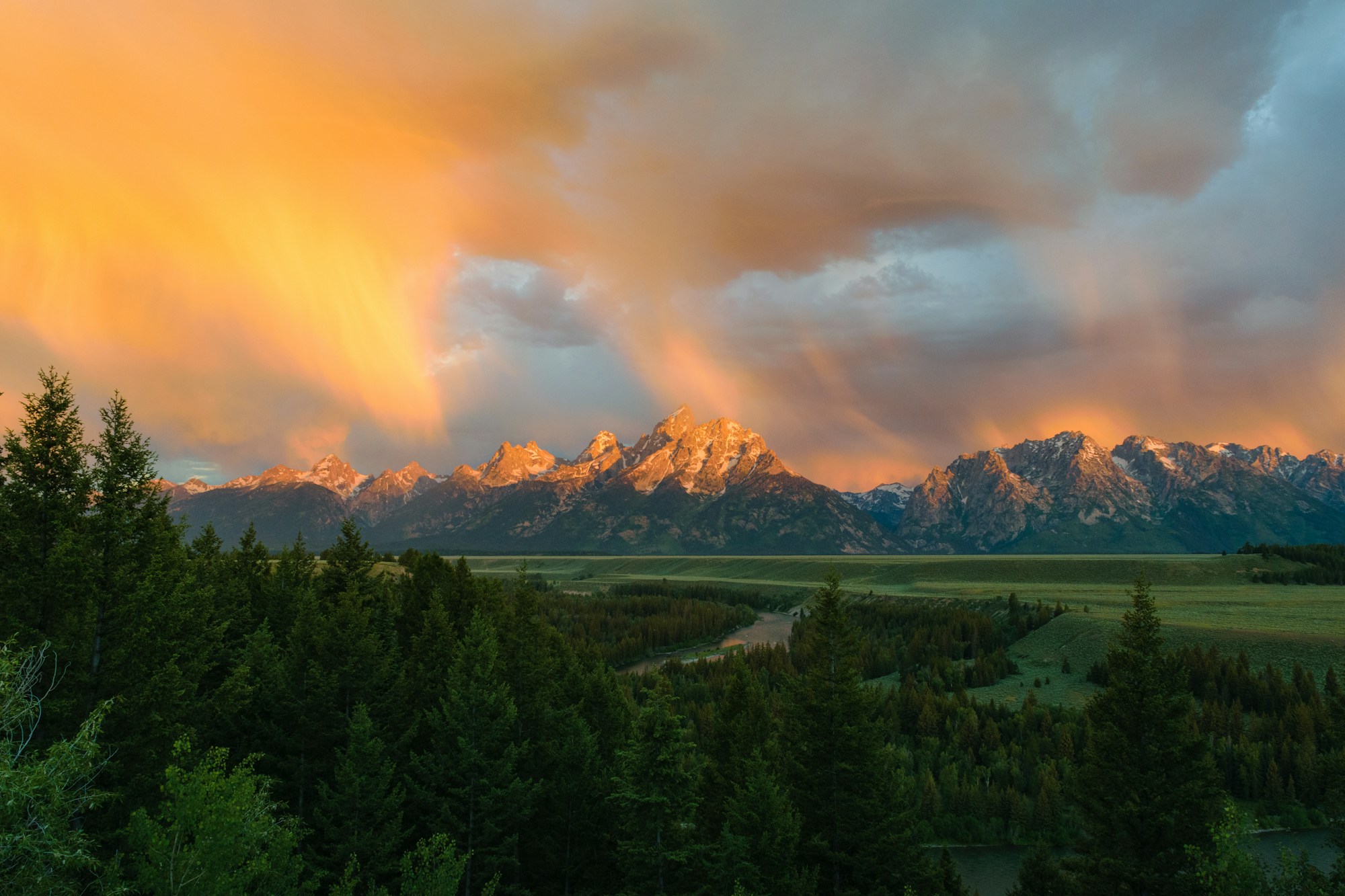
Grand Teton National Park is Jagged granite peaks, reflective lakes, and sunrise-lit valleys make Grand Teton one of America’s most photogenic mountain parks.. This is the working photographer’s field guide: 15 GPS-tagged vantage points, season-by-season light conditions, current 2026 entrance fees and permit requirements, wildlife safety distances, and the post-processing workflow that handles this park’s specific color challenges. The genre rewards photographers who arrive prepared — bring this guide, pin the coordinates before you leave home, and the logistics solve themselves. For practitioners, see our breakdown of shutter for time-lapse base frames.
 Save
SaveQuick map: 15 photography vantage points with GPS
The table below covers all 15 vantage points with GPS coordinates verifiable on Google Maps, recommended focal length, best time of day, and trail difficulty. Pin them to your phone before driving to the park — cell service is unreliable or absent at elevation in most of these parks. The list is ordered roughly as a photographer would work through a full day: establishing wide first, then mid-range compositions, then detail and wildlife.
| Vantage point | GPS (lat, lng) | Best time | Lens (mm) | Hike difficulty |
|---|---|---|---|---|
| Mormon Row Historic District | 43.5719, -110.7103 |
Sunrise / early morning | 24–70mm | Easy |
| Snake River Overlook | 43.6513, -110.7157 |
Sunrise / early morning | 24–105mm | Easy |
| Schwabacher Landing | 43.6871, -110.7298 |
Sunrise / early morning | 16–35mm | Easy |
| Oxbow Bend Turnout | 43.8182, -110.6786 |
Sunrise / golden hour | 70–200mm | Easy |
| Jackson Lake Lodge – View Restaurant Overlook | 43.8095, -110.5549 |
Sunrise / golden hour | 24–70mm | Easy |
| Lunch Tree Hill | 43.8077, -110.5538 |
Sunset / golden hour | 24–105mm | Easy |
| Signal Mountain Summit Road Overlook | 43.4967, -110.7626 |
Sunrise / golden hour | 24–70mm | Strenuous |
| Schwabacher Landing River Bend | 43.6886, -110.7282 |
Sunrise / golden hour | 16–35mm | Easy |
| Cunningham Cabin | 43.6539, -110.7079 |
Sunrise / golden hour | 24–70mm | Easy |
| Elk Ranch Flats Turnout | 43.7209, -110.6233 |
Sunrise / golden hour | 70–200mm | Easy |
| Jenny Lake Overlook | 43.7554, -110.7169 |
Sunrise / golden hour | 16–35mm | Easy |
| String Lake Trailhead | 43.7747, -110.7249 |
Sunrise / golden hour | 24–70mm | Easy |
| Colter Bay Lakeshore Trail | 43.909, -110.6468 |
Sunrise / early morning | 24–105mm | Easy |
| Glacier View Overlook | 43.7074, -110.7836 |
Sunrise / golden hour | 24–70mm | Easy |
| Heron Pond – Swan Lake Loop | 43.9404, -110.665 |
Sunrise / golden hour | 70–200mm | Easy |
These coordinates are decimal-degree format for direct entry into Google Maps or Gaia GPS. A dedicated GPS app with offline maps is strongly recommended for backcountry vantage points. The 15-point PDF version (linked above) includes driving directions and trail access notes for each entry.
Why Grand Teton National Park is a photographer’s pilgrimage
Grand Teton delivers classic alpine photography with dramatic Teton summits, braided rivers, elk-meadow foregrounds, historic barns, and mirror-like lake reflections. The park’s road network and many pullouts make it easy to build a strong sunrise-to-sunset itinerary, and NPS specifically notes that turnouts are safe places to enjoy scenic views, view wildlife, and take photographs.[Grand Teton Scenic Drives](https://www.nps.gov/grte/planyourvisit/drives.htm)
For photographers, Grand Teton National Park concentrates a particular set of technical demands. The park rewards photographers who study the iconic frames in advance — and decide deliberately what to do differently. Look for the second-best angle: it is usually empty, and the image it produces is more personal and more publishable than the postcard shot everyone else is shooting from the main overlook. Bring questions, not just gear.
The most common mistake photographers make at major national parks is arriving without a shot list and spending the first hour figuring out what to shoot. The GPS table above is your shot list. Work it systematically, allow time to return to the same location in different light, and the portfolio builds itself. Three vantage points visited three times in different conditions beats twelve vantage points visited once each.
When to visit: season-by-season and photo conditions
Late May through early October is the strongest overall window for photography because road access is broad, meadows are green, lakes are mostly open, and sunrise/sunset conditions are reliable; June also gives long golden hours, while September adds clearer air, warmer color, and elk activity. Winter can be beautiful for snow scenes, but access is more limited because several roads close seasonally.[Grand Teton Park Roads](https://www.nps.gov/grte/planyourvisit/roads.htm)
Day-by-day, plan around the morning and evening blue and golden hours. Midday at most national park landscapes is harsh and unflattering for wide-angle work — but productive for wildlife (animals are most active at the edges of day, but midday thermals are when raptors and condors soar most visibly). Photographers who insist on shooting through midday sun produce washed-out files they cull in the edit. Use midday for scouting the afternoon compositions, eating lunch in shade, and resting. Return when the light returns.
Weather is your collaborator. Light overcast is a gift for waterfall and forest photography — diffuse light eliminates the harsh contrast that blows out cascade whites. Rain darkens volcanic rock and saturates botanical color. Storm approach clouds create drama that clear-sky postcard shots cannot match. The best national park photographers book trips specifically targeting transitional weather windows rather than chasing guaranteed sunshine.
Entrance fees, permits, and reservations (2026)
Entrance fee: Standard entrance fee is $20.00–$35.00 for a 7-day pass; non-US residents age 16+ pay an additional $100 per person unless covered by an Annual or America the Beautiful Pass. The Annual Entrance – Park pass is $70.00 and is valid for one year through the month of purchase.Grand Teton Fees & Passes
General park entry does not require a reservation. Tripods are fine for personal photography in normal visitor use areas, but commercial filming/photo work may require a permit or CUA through the park’s permits process. If entering on foot or by bicycle, visitors age 16+ need their own entrance pass.Grand Teton Fees & Passes
The America the Beautiful interagency annual pass ($80 for US citizens and residents) covers entrance fees at all national parks and most federal recreation lands — it pays for itself in two visits to fee-charging parks. For commercial photography productions, contact the park superintendent’s office at least 30 days before your shoot date to allow permit processing time.
Detailed vantage point guide for Grand Teton National Park
Each of the 15 vantage points below includes GPS coordinates (linkable to Google Maps), recommended focal length range, optimal time of day, trail difficulty, and specific composition and hazard notes. Work through the list as a sequence rather than jumping around — the ordering is designed for efficient movement through the park.
Mormon Row Historic District
GPS: 43.5719, -110.7103 |
Best time: Sunrise / early morning |
Focal length: 24–70mm |
Difficulty: Easy
Iconic barns with the Teton Range behind them; best at sunrise for side-light on the structures and often-moving clouds over the peaks. Construction is ongoing, so check access before going.[Grand Teton Trip Ideas](https://www.nps.gov/grte/planyourvisit/tripideas.htm)
Snake River Overlook
GPS: 43.6513, -110.7157 |
Best time: Sunrise / early morning |
Focal length: 24–105mm |
Difficulty: Easy
Classic curving-river composition with the Teton wall beyond; excellent at sunrise and after storms when the river reflects color. NPS notes ranger orientation here on select days in summer.[Grand Teton Trip Ideas](https://www.nps.gov/grte/planyourvisit/tripideas.htm)
Schwabacher Landing
GPS: 43.6871, -110.7298 |
Best time: Sunrise / early morning |
Focal length: 16–35mm |
Difficulty: Easy
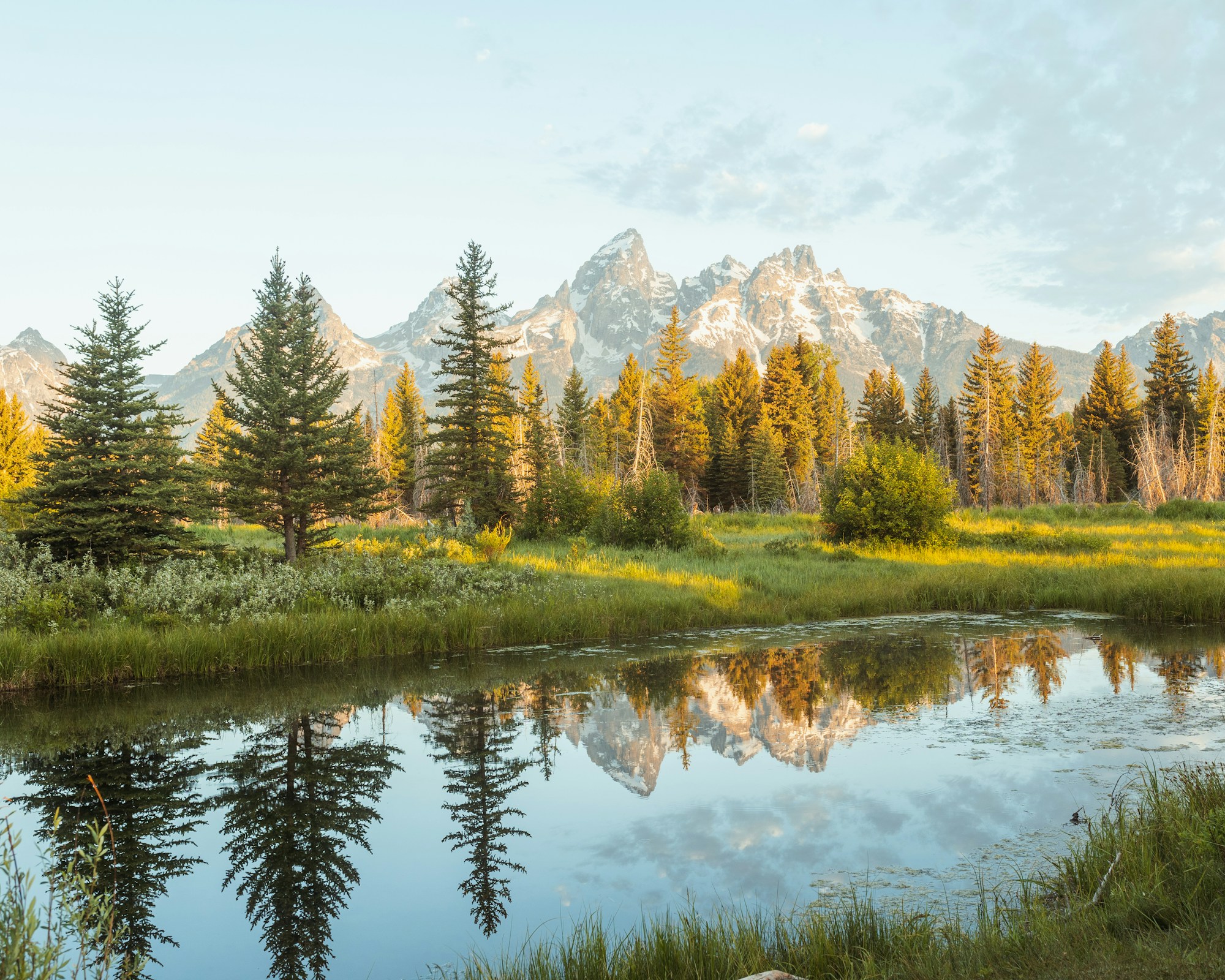
One of the best reflection scenes in the park, especially at dawn with still water and cottonwoods in the foreground. Road access is seasonal, so confirm closure status before planning.[Grand Teton Park Roads](https://www.nps.gov/grte/planyourvisit/roads.htm)
Oxbow Bend Turnout
GPS: 43.8182, -110.6786 |
Best time: Sunrise / golden hour |
Focal length: 70–200mm |
Difficulty: Easy
Strong for Mount Moran reflections, waterbirds, and telephoto layering. Use a longer lens to isolate the peak or compress clouds, and arrive early for the calmest water.[Grand Teton Scenic Drives](https://www.nps.gov/grte/planyourvisit/drives.htm)
Jackson Lake Lodge – View Restaurant Overlook
GPS: 43.8095, -110.5549 |
Best time: Sunrise / golden hour |
Focal length: 24–70mm |
Difficulty: Easy
High, sweeping view over the lake and the Teton Range; good for wide panoramas and layered evening light. A useful mid-trip stop when clouds build over the range.[Grand Teton Trip Ideas](https://www.nps.gov/grte/planyourvisit/tripideas.htm)
Lunch Tree Hill
GPS: 43.8077, -110.5538 |
Best time: Sunset / golden hour |
Focal length: 24–105mm |
Difficulty: Easy
Short walk above Jackson Lake Lodge with a cleaner, slightly elevated angle on the range than the lodge terrace. Great for sunset silhouettes and weather drama.[Grand Teton Trip Ideas](https://www.nps.gov/grte/planyourvisit/tripideas.htm)
Signal Mountain Summit Road Overlook
GPS: 43.4967, -110.7626 |
Best time: Sunrise / golden hour |
Focal length: 24–70mm |
Difficulty: Strenuous
Panoramic view over Jackson Lake, the valley, and the Teton Range; best in the evening when haze softens the background. Drive carefully because the road is steep, narrow, and winding.[Grand Teton Trip Ideas](https://www.nps.gov/grte/planyourvisit/tripideas.htm)
Schwabacher Landing River Bend
GPS: 43.6886, -110.7282 |
Best time: Sunrise / golden hour |
Focal length: 16–35mm |
Difficulty: Easy
A slightly different angle from the main lot that emphasizes foreground grasses, water texture, and mountain reflection. Great for a minimalist composition when the water is still.[Grand Teton Park Roads](https://www.nps.gov/grte/planyourvisit/roads.htm)
Cunningham Cabin
GPS: 43.6539, -110.7079 |
Best time: Sunrise / golden hour |
Focal length: 24–70mm |
Difficulty: Easy
Historic cabin with broad meadow views and the Tetons in the background; excellent for classic Western storytelling images. Works well in side light or after a storm.[Grand Teton Trip Ideas](https://www.nps.gov/grte/planyourvisit/tripideas.htm)
Elk Ranch Flats Turnout
GPS: 43.7209, -110.6233 |
Best time: Sunrise / golden hour |
Focal length: 70–200mm |
Difficulty: Easy
Good for wildlife and meadow layering, especially elk in the distance and storm light over the range. A strong telephoto stop when the valley is active.[Grand Teton Trip Ideas](https://www.nps.gov/grte/planyourvisit/tripideas.htm)
Jenny Lake Overlook
GPS: 43.7554, -110.7169 |
Best time: Sunrise / golden hour |
Focal length: 16–35mm |
Difficulty: Easy
A classic lake-and-peak composition with easy access to multiple foreground options. Arrive very early or late to avoid parking congestion; NPS specifically recommends before 9 a.m. or after 3 p.m.[Grand Teton Trip Ideas](https://www.nps.gov/grte/planyourvisit/tripideas.htm)
String Lake Trailhead
GPS: 43.7747, -110.7249 |
Best time: Sunrise / golden hour |
Focal length: 24–70mm |
Difficulty: Easy
Great for calm-water reflections and a lower, intimate perspective on the mountains. Useful on windy days when bigger lakes lose their mirror effect.[Grand Teton Scenic Drives](https://www.nps.gov/grte/planyourvisit/drives.htm)
Colter Bay Lakeshore Trail
GPS: 43.909, -110.6468 |
Best time: Sunrise / early morning |
Focal length: 24–105mm |
Difficulty: Easy
Flexible lakefront compositions with Jackson Lake and the northern Teton skyline; excellent for sunrise, shoreline abstracts, and wildlife distance work. Colter Bay is also a strong access hub for park services and easier parking.[Grand Teton Trip Ideas](https://www.nps.gov/grte/planyourvisit/tripideas.htm)
Glacier View Overlook
GPS: 43.7074, -110.7836 |
Best time: Sunrise / golden hour |
Focal length: 24–70mm |
Difficulty: Easy
Reliable roadside pullout for the central Teton skyline with strong foreground road and meadow geometry. Good for quick stops when weather changes fast; ranger orientation is offered here on select summer days.[Grand Teton Trip Ideas](https://www.nps.gov/grte/planyourvisit/tripideas.htm)
Heron Pond – Swan Lake Loop
GPS: 43.9404, -110.665 |
Best time: Sunrise / golden hour |
Focal length: 70–200mm |
Difficulty: Easy
Best for moody wetlands, birds, and soft morning light rather than big mountain panoramas. Great when you want layered habitat images and quieter compositions.[Grand Teton Trip Ideas](https://www.nps.gov/grte/planyourvisit/tripideas.htm)
| Scenario | Aperture | Shutter | ISO |
|---|---|---|---|
| Golden hour landscape | f/8 – f/11 | 1/125 – 1/500s | 100 – 400 |
| Wildflower foreground (wide) | f/11 – f/16 | 1/60 – 1/250s | 100 – 400 |
| Wildlife (birds in flight) | f/5.6 – f/8 | 1/1600 – 1/3200s | 400 – 1600 |
| Waterfall long exposure | f/11 – f/16 | 0.5s – 4s (tripod, ND) | 100 |
| Milky Way / night sky | f/2.8 | 15 – 25s (tripod) | 3200 – 6400 |
| Blue hour lake reflection | f/8 | 2s – 8s (tripod) | 200 – 800 |
Wildlife photography ethics and safety distances
Keep a minimum of 25 yards from all large animals and 100 yards from bears and wolves; never stop in the middle of the road to view wildlife, and use pullouts instead. Respect that wildlife has the right-of-way, and photograph from a safe distance with a long lens rather than approaching animals.
The NPS wildlife distance guidelines apply at all national parks: maintain at least 100 yards from bears and wolves; 25 yards from all other wildlife including elk, deer, and bison; 50 yards from nesting birds. If an animal changes its behavior in response to your presence — stops feeding, raises its head, moves away — you are too close. Back away slowly. A longer focal length is always the right tool; approaching wildlife for a closer shot is the wrong one, and it is illegal in national parks regardless of the photographic result.
Leave No Trace principles apply universally: pack out everything you pack in, camp only in designated sites, do not collect any natural materials (rocks, cones, flowers, feathers), and avoid creating new social trails to off-trail vantage points. The trampling damage from a hundred photographers creating an unofficial path to an off-trail viewpoint can take a decade to recover in fragile alpine or volcanic ecosystems.
 Save
SaveDrone rules at national parks
Drones (uncrewed aircraft) are prohibited within all National Park Service boundaries per NPS uncrewed aircraft policy (36 C.F.R. § 2.12). Launching, landing, or operating a drone inside any national park boundary without written authorization from the park superintendent is a misdemeanor under federal law, punishable by up to six months imprisonment and a $5,000 fine per violation. This prohibition applies regardless of FAA authorization — having a FAA Part 107 certificate does not grant permission to fly in a national park. The only exceptions are NPS administrative operations (search and rescue, fire, scientific research) explicitly approved by the superintendent. For any commercial aerial work requiring drone footage of a national park, the only legal path is to apply to the park superintendent for a written Special Use Permit, which is rarely granted for commercial visitor photography purposes. Aerial photography inside a national park is effectively limited to what you can capture from the ground or from outside park boundaries.
Backcountry vs roadside shooting strategies
Pack for variable Grand Teton National Park weather: a weather-sealed body, lens cloths, and rain covers. Bring a 16–35mm for wide vistas and reflections, a 24–70mm or 24–105mm as the workhorse range for cabins, lakes, and general landscapes, and a 70–200mm for compressed mountain layers, wildlife, and detail studies. A tripod helps at dawn, dusk, and in shaded forest or wetland scenes. Bring a sturdy tripod for low-light vantage points, a polarizer for water and foliage, and 3-stop and 6-stop ND filters for waterfalls and rivers. Cold-weather grips and spare batteries in inner pockets are essential at higher elevations or on shoulder-season visits.
Backcountry photography in national parks requires self-sufficiency that roadside photography does not. Navigation: download offline maps before entering areas with poor cell coverage (Gaia GPS or AllTrails with downloaded tiles). Emergency: carry a satellite communicator (Garmin inReach or SPOT) for any trip beyond cell range. Weather: afternoon thunderstorms develop quickly at elevation — the rule is to be below treeline by noon in summer. Water: treat all backcountry water sources; carry a filter or treatment tabs. A lightweight carbon-fiber tripod (under 1.5kg) is the right balance of stability and portability for multi-mile approaches.
Roadside shooting has its own constraints. Most national park pullouts fill by 8am in summer — arrive early or accept that you will be shooting over other vehicles and tripods. The solution is to identify pullouts accessible before sunrise and arrive in the dark. Rangers do not enforce a closing time at most overlooks, and the 30 minutes before first light at a good composition is consistently worth the alarm clock sacrifice.
Sample edits and post-processing workflow
Grand Teton National Park RAW files reward a careful color-grade workflow: Natural, crisp, and high-contrast with clean blues in the sky, restrained saturation, and luminous alpenglow on the Tetons; emphasize depth, reflective water, and slight warmth in sunrise/sunset frames. Lift shadows gently to preserve forest detail without losing depth, recover highlights in the brightest sky region first, and use HSL panel adjustments to keep saturated greens and blues from over-cooking. For panorama-style stitches at vantage points, lens-correct each frame in the same export pass to ensure consistent tone across the seam.
A general post-processing sequence that works on most national park RAW files: (1) lens correction and chromatic aberration first — always; (2) basic exposure with shadows lifted and highlights pulled before any other adjustment; (3) HSL panel to manage the specific color challenges of this park’s palette; (4) Clarity at +10 to +15 maximum on landscape frames — never higher; (5) a subtle vignette to draw the eye inward; (6) export at 16-bit TIFF for printing, JPEG 90% for web. Save the base settings as a starting preset for the whole trip’s RAW files — consistency across a trip’s images is more important than perfection on individual frames.
3-day photography itinerary
Day 1: Arrive and scout. Visit the Grand Teton National Park visitor center, pick up backcountry permits if needed, and shoot the closest sunset vantage point. Day 2: Pre-dawn departure to the flagship sunrise vantage point — plan transit so you arrive 45 minutes before sunrise to set up and capture blue hour. Mid-day exploration of secondary vantage points with softer or shaded light. Sunset at a complementary vantage point chosen by light direction. Day 3: Sunrise at the most photographically significant location not yet visited, then drive out via remaining vantage points. Tip: book lodging 3-6 months ahead in peak season.
This itinerary is designed for the dedicated photography traveler who is there to shoot, not to cover the tourist checklist. It assumes early starts (4-5am in summer for dawn positions), midday rest, and afternoon re-engagement. Three full days of structured photography will produce a portfolio of 300-500 RAW frames that edit down to 30-50 keeper images — a meaningful body of work from a single park. Adjust based on fitness, weather windows, and which specific subjects matter most to your portfolio.
Take the Grand Teton National Park guide further
More national park photography guides from ShutYourAperture: Crater Lake National Park, Mount Rainier National Park, North Cascades National Park – and the full national parks photography hub.
The ShutYourAperture national parks photography hub covers the complete US national parks system with the same GPS-tagged, permit-verified depth as this guide. Each park guide in the series follows the same structure so you can quickly identify the logistics differences between parks and build multi-park itineraries efficiently.
National Parks Guide Series
This guide is part of the Shut Your Aperture national parks series: GPS-tagged vantage guides, camera settings cheat sheets, and seasonal light notes for the parks photographers ask about most.
Related guides nearby
Other photography destinations to explore:
-
Arches
564 km away, national park, USA -
Mesa Verde
598 km away, national park, USA -
Denver
640 km away, city, USA
Frequently asked questions
When is the best time to photograph Grand Teton National Park?
Late May through early October is the strongest overall window for photography because road access is broad, meadows are green, lakes are mostly open, and sunrise/sunset conditions are reliable; June also gives long golden hours, while September adds clearer air, warmer color, and elk activity. Winter can be beautiful for snow scenes, but access is more limited because several roads close seasonally.[Grand Teton Park Roads](https://www.nps.gov/grte/planyourvisit/roads.htm)
Do I need a permit to photograph Grand Teton National Park?
For typical recreational still photography by groups of eight or fewer with hand-carried equipment, no permit is required at most national parks. Commercial shoots, large groups, or use of tripods on closed surfaces may require a Special Use Permit. Check with the park visitor center before commercial work.
Are drones allowed in Grand Teton National Park?
Drones/uncrewed aircraft are not allowed in U.S. national parks unless specifically authorized by the park superintendent; for Grand Teton, plan on no recreational drone use. Always check current NPS rules and local closures before bringing any aerial gear.[NPS drone policy](https://www.nps.gov/glca/planyourvisit/horseshoe-bend.htm)
What lenses should I bring to Grand Teton National Park?
Bring a 16–35mm for wide vistas and reflections, a 24–70mm or 24–105mm as the workhorse range for cabins, lakes, and general landscapes, and a 70–200mm for compressed mountain layers, wildlife, and detail studies. A tripod helps at dawn, dusk, and in shaded forest or wetland scenes.
How much is the entrance fee at Grand Teton National Park?
Standard entrance fee is $20.00–$35.00 for a 7-day pass; non-US residents age 16+ pay an additional $100 per person unless covered by an Annual or America the Beautiful Pass. The Annual Entrance – Park pass is $70.00 and is valid for one year through the month of purchase.Grand Teton Fees & Passes
Plan a Grand Teton and Yellowstone trip with Klook
This three-day sightseeing trip departs from Salt Lake City and visits both parks. It is not photography instruction. Check the itinerary, accommodation, guide language, mandatory gratuities and park fees before booking.
ShutYourAperture affiliate disclosure: this page contains affiliate links to B&H Photo, Viator, Skylum, and Amazon. ShutYourAperture may earn a commission at no extra cost to you.
Klook links are affiliate links. If you book through them, Shut Your Aperture may earn a commission at no extra cost to you.
What to Pack
A landscape kit built around wide views, steady support, and changing light is a useful starting point. Compare the gear and choose what fits your camera, budget, and conditions. These links lead to B&H Photo Video and Amazon.
| What & Why | B&H | Amazon |
|---|---|---|
Sony 16-35mm f/2.8 GM Check the camera mount before buying. Choose a focal length that fits the photos you plan to make. | Shop B&H → | Shop Amazon → |
Peak Design Travel Tripod Check the load rating, packed size and local tripod rules before buying. | Shop B&H → | Shop Amazon → |
Breakthrough X4 CPL Check the filter type and lens thread size before buying. Use a filter only when the effect fits your photo. | Shop B&H → | Shop Amazon → |
Breakthrough X4 10-stop ND Check the filter type and lens thread size before buying. Use a filter only when the effect fits your photo. | Shop B&H → | Shop Amazon → |
Sony NP-FZ100 battery Use the battery type specified for your camera. Bring a spare if your shooting plan calls for one. | Shop B&H → | Shop Amazon → |
SanDisk Extreme Pro 128GB Check the card format and speed requirements specified for your camera. | Shop B&H → | Shop Amazon → |
Koh microfiber cloths Compare this option with your current kit. Check compatibility and the product details before buying. | Shop B&H → | Shop Amazon → |
B&H and Amazon links are affiliate links. We earn a small commission on purchases at no extra cost to you.