Best Photography Spots in Cartagena: 11 Locations With GPS
edinchavez01-20). Buying through these links costs you nothing extra and helps fund our free guides.
Cartagena, Colombia is one of the most photogenic cities in the world. If you have a camera and the patience to show up before dawn, Cartagena will give you images that last a career — but only if you know where and when to point it.
This is the definitive field guide to the 11 best photography spots in Cartagena, with GPS coordinates you can drop straight into Google Maps, exact camera settings tuned to Cartagena’s unique light, precise timing for every location, and the access notes nobody else bothers to document. It mirrors the intel inside our Cartagena Ultimate Photographer’s Guide ($47 PDF) — a downloadable field guide with full-page hero images, GPS maps, seasonal tables, a city safety briefing, and a complete photographer’s packing list. Get the guide →
Planning multi-city travel? See also: U.S. cities photography hub and the National Parks Photography Guides.
11 GPS-mapped locations · Exact camera settings · Multi-season shooting calendar · Free annual updates
Download the PDF guide →
Get the Cartagena Ultimate Photographer’s Guide
Every location below — pre-mapped with GPS, golden-hour timing, gear recommendations, cultural rules, and a 14-day itinerary. Downloaded by 200+ working photographers.
Quick jump to the 11 spots
- Walled City — Colonial Streets & Pastel Facades (Ciudad Amurallada)
- Castillo San Felipe de Barajas
- Plaza Santo Domingo & Botero’s La Gorda Gertrudis
- Torre del Reloj (Clock Tower) & Plaza de los Coches
- Las Bóvedas — The Vaulted Gallery Arcade
- Plaza San Pedro Claver & Eduardo Carmona Sculptures
- Café del Mar — Baluarte de Santo Domingo Sunset Wall
- Getsemaní — Street Art Murals & Bohemian Streets
- Iglesia de San Pedro Claver — Sanctuary & Baroque Nave
- Convento de la Popa — Hill Panorama
- Bocagrande Beach — Modern Skyline & Caribbean Shore
A look inside the Cartagena Photographer’s Guide
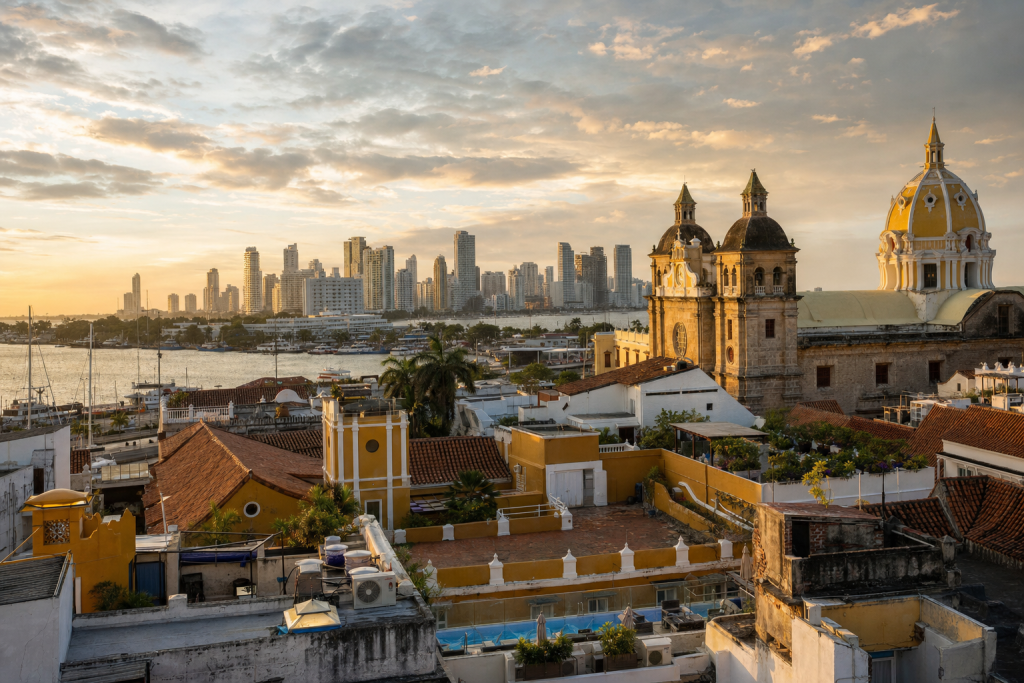
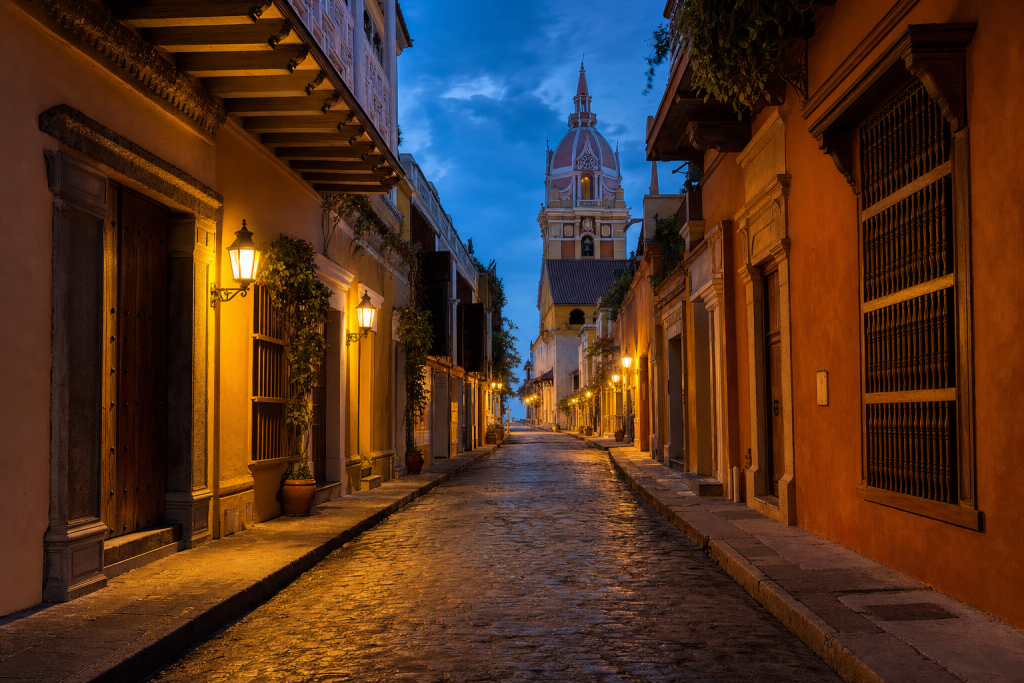
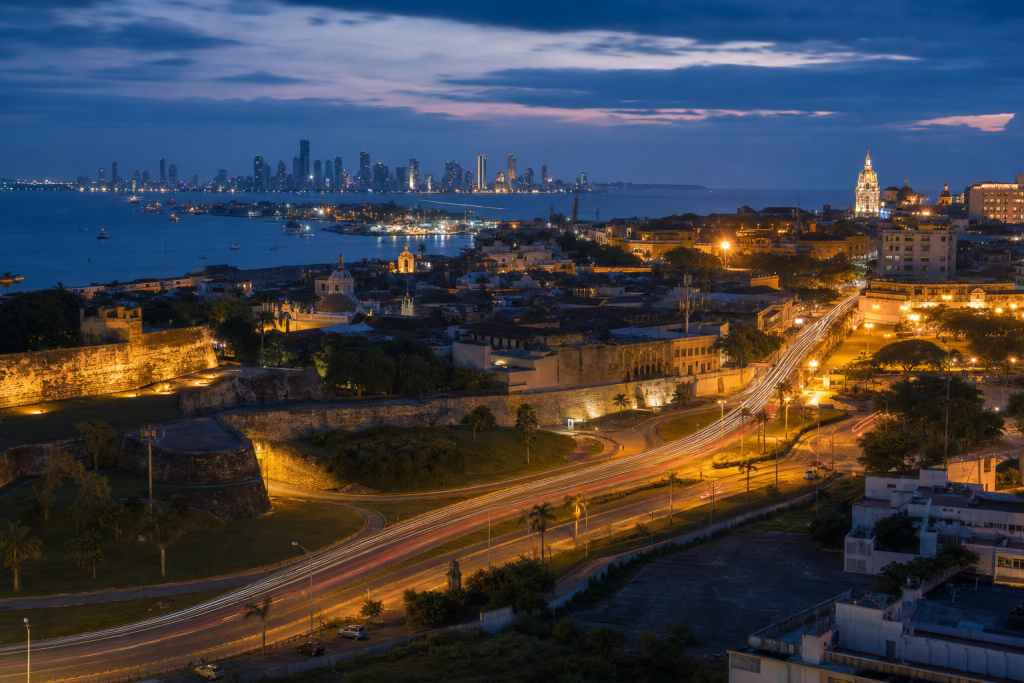
Here are three of the actual shots you’ll find inside the PDF — cinematic full-page references for the exact spots, lenses, and lighting conditions documented in the guide. The full guide includes 11 locations, each with a hero image, GPS map, settings table, and a five-shot list.
Save
Before you shoot Cartagena: the essentials
- Free public access: Walled City streets, defensive wall walks near Las Bóvedas (300–400 m section), Torre del Reloj archways, Plaza de los Coches, Plaza Santo Domingo, Plaza San Pedro Claver, Plaza de Bolívar, Getsemaní neighborhood and all street art are free; Café del Mar/Baluarte de Santo Domingo wall access is free (drinks ~COP$34,000–70,000 if ordering at bar); Castillo San Felipe de Barajas COP$36,000/foreigners (~USD$9); Iglesia de San Pedro Claver COP$28,000/adults; Convento de la Popa COP$13,000–15,000/adults (~USD$3–4); last Sunday of most months (Feb–Nov) free for Colombian nationals at San Felipe
- Commercial permits: Personal and tourist photography throughout the Walled City, public plazas, streets, defensive walls, and public spaces is entirely unrestricted with no fee. Commercial shoots and film productions require independent permits managed through the Cartagena Film Commission (asesorcomisionfilmica@ipcc.gov.co; ipcc.gov.co). For walls and bastions, permits are obtained through Escuela Taller; for cultural heritage sites, through the Heritage Committee. The Unified Filming Permit for Cartagena (PUFAC) is being implemented. Drone operations require prior authorization from the Civil Aviation Authority (Aeronáutica Civil, aerocivil.gov.co) filed at least 15 business days in advance; max altitude 152 m. Source: comisionfilmicacolombia.com/en/procedures/permits/
- Best photography seasons: December–April (dry season: clear skies, lower humidity, temperatures ~87°F/31°C, ideal for street and architectural photography); January–March is peak dry season with lowest rainfall and most consistent light
- Blue hour notes: Cartagena sits at 10.4°N latitude — sunsets occur between approximately 5:45 PM (Dec–Feb) and 6:30–7:00 PM (Jun–Aug), with blue hour lasting only 15–20 minutes due to the steep sun angle near the equator. The rapid twilight transition from warm gold to deep blue is intense and brief; set up tripods at least 20 minutes before sunset. The Caribbean Sea to the west creates spectacular orange and magenta horizon colors before the cobalt blue phase. The low latitude means the sun drops steeply and predictably throughout the year.
- Drone policy: Drone laws vary widely by country and city — many capital and tourist zones are no-fly. Verify the local civil aviation authority’s current rules before launching.
- Local resource: Official visitor information
The full-resolution version of every map below — plus seasonal calendars, gear notes per location, sun-angle diagrams, and a complete photographer’s packing checklist — is inside the Cartagena Photographer’s Guide PDF ($47).
1. Walled City — Colonial Streets & Pastel Facades (Ciudad Amurallada)
The Walled City is a UNESCO World Heritage Site — 1.5 sq km of immaculately preserved 16th–18th century Spanish colonial architecture protected by 13 km of defensive fortifications. Every street is a composition: candy-colored facades in turquoise, ochre, coral, and white; massive carved wooden doors with iguana knockers marking former homes of colonial nobility; bougainvillea cascading over iron-balconied windows; and cobblestone lanes framing barrel-vaulted church towers. No other city in South America offers this density of photogenic colonial architecture in such compact, walkable form.
- GPS: 10.4236, -75.5494
- Elevation: 10 ft
- Best time of day: early morning golden hour — 6:30–8:30 AM when soft directional Caribbean light rakes across pastel facades, bougainvillea-draped balconies glow, and cobblestone streets are empty of the cruise ship crowds that arrive after 10 AM; also late afternoon golden hour 5:00–6:30 PM for west-facing walls bathed in warm light before sunset
- Sun direction: Cartagena sits at 10.4°N, so the sun traces a nearly overhead path year-round. At sunrise (~6:00–6:20 AM), light enters from the east-northeast, raking across north-south running streets at low angles and creating strong shadows that emphasize the texture of colonial stone facades. By 9 AM the sun climbs high, producing harsh overhead shadows. Late afternoon sun (5–6 PM) comes from the west-southwest, illuminating east-facing facades and casting long shadows along the narrow streets for dramatic depth. Streets running east-west catch the most direct morning or afternoon light; north-south streets remain in partial shadow at golden hours but gain soft-fill light.
- Access: The Walled City (Centro Histórico) is freely and publicly accessible 24 hours. No entry fee. The historic center covers approximately 1.5 sq km. Main pedestrian entry points: Torre del Reloj (Clock Tower) from Getsemaní side; Portal de los Dulces at Plaza de los Coches; multiple wall staircases. Taxis and ride-shares drop off at perimeter; interior streets are largely pedestrianized. Airport (Rafael Núñez) is 3 km northeast; taxi ~COP$20,000–30,000. Most colonial hotels are inside the walls.
- Difficulty: easy
- Recommended settings: Morning Golden Facades: f/8, 1/500 sec, ISO 200, 35mm · Narrow Street Leading Lines: f/11, 1/250 sec, ISO 200, 24mm · Door Detail Overcast: f/5.6, 1/125 sec, ISO 400, 85mm · Blue Hour Illuminated Plazas: f/8, 2 sec, ISO 100, 24mm, tripod
Shots to chase:
- Low-angle shot along Calle del Estanco del Aguardiente or Calle del Sargento Mayor at first light — the parallel facades converge toward a church tower or bell dome at the vanishing point
- Wide-angle composition of a colonial doorway with carved wooden door, iguana knocker, and overhanging bougainvillea framing a narrow street beyond
- Silhouette of a Palenquera woman in full colorful dress and fruit basket against a sunlit pastel wall in early morning, using the wall as a clean background
- Telephoto compression (135mm+) from the top of the defensive wall looking into the historic center — church towers and tile rooftops layer against each other in a dense mosaic
- Blue-hour shot of an illuminated plaza (Parque de Bolívar or Plaza de la Trinidad) from an elevated balcony position, capturing warm lamplight on colonial facades and the deep cobalt sky above
Pro tip: Arrive by 6:15 AM on weekdays — streets are swept and nearly empty before 7:30 AM; by 10 AM cruise groups dominate the main squares. The best-preserved residential streets are north of Parque de Bolívar (Calle de Don Sancho, Calle de la Factoria, Calle Segunda de Badillo). Look for streets that run east-west to catch pure frontal morning light. Midday (11 AM–3 PM) is the worst light — harsh overhead shadows flatten all architectural texture. Evening walks after 7 PM reveal the city lit by warm lanterns and open restaurant doorways — ideal for atmospheric street photography without crowds.
Common mistake to avoid: Visiting only the main tourist squares (Plaza de Bolívar, Plaza Santo Domingo) and missing the quieter residential streets with the best architectural detail. Shooting at midday when the equatorial sun is directly overhead, destroying all shadow definition on facades. Using very wide lenses (14mm) in tight streets — the barrel distortion makes straight colonial walls appear curved. Forgetting that the most photogenic light windows are very short (30–45 minutes) at golden hour; plan specifically and don’t wander aimlessly waiting for the right moment.
2. Castillo San Felipe de Barajas
The largest and most sophisticated Spanish colonial fortress in South America — built 1536–1657 on the San Lázaro hill, expanded to cover 4.5 hectares and featuring an intricate underground tunnel network where acoustics allowed commanders to hear footsteps and whispers throughout 200+ meters of subterranean galleries. The massive sloping granite ramparts, restored cannon batteries at multiple elevations, and commanding views over Cartagena and the Caribbean Sea create photographic layering opportunities that no flat-terrain fortress can match. It withstood Edward Vernon’s 1741 British siege of 23,600 troops against only 3,600 Spanish defenders — one of the most decisive defensive victories in Americas history.
- GPS: 10.4228, -75.533
- Elevation: 150 ft
- Best time of day: early morning 7:00–9:30 AM for the coolest temperatures, soft eastern light raking across the fortress ramparts, and minimal crowds before tour bus arrivals; or late afternoon 4:30–6:00 PM for golden hour when low-angle warm light models the fortress stonework and creates dramatic silhouettes against the Caribbean sky with city views
- Sun direction: The fortress sits on the 40-metre San Lázaro hill oriented roughly north-south. At sunrise (6:00–6:20 AM), early light from the east-northeast illuminates the eastern ramparts and tunnel entrances with directional warmth. The fortress faces generally west toward the city — afternoon light after 3 PM progressively warms the west-facing walls and brings out the golden-orange tone in the aged stone. At sunset (~6:00–6:20 PM), the fortress silhouette against the darkening western sky is striking from the main approach road (Avenida Antonio de Arévalo). Shooting from within the fortress looking west at golden hour captures the city and Caribbean behind warm-lit battlements.
- Access: Avenida Antonio Arévalo, sector Pie del Cerro, Cartagena. Open daily 7 AM–6 PM. Entrance fee (2024): COP$36,000 for foreign visitors (~USD$9); COP$31,000 for Colombian nationals/residents with ID; COP$15,000 for children 6–13 and students with ID; free for children under 6, Colombian citizens over 62, and military/police with ID. Free entry last Sunday of most months (Feb–Nov) for Colombian nationals only. Audio guide rental ~COP$15,000. No advance online booking; tickets purchased at entrance gate (cash COP or credit card). Photography permitted throughout including tunnels and ramparts at no extra charge. ~20–30 min walk from Walled City or 5-min taxi (COP$12,000). Source: cartagenaexplorer.com/visit-castillo-san-felipe-fortress-cartagena-guide/
- Difficulty: moderate
- Recommended settings: Golden Hour Ramparts: f/8, 1/400 sec, ISO 100, 35mm · Tunnel Interior Low Light: f/2.8, 1/60 sec, ISO 3200, 24mm · Tunnel Archway Framing: f/8, 1/250 sec, ISO 400, 24mm · City Panorama Telephoto: f/11, 1/500 sec, ISO 100, 135mm · Fortress Approach Silhouette: f/11, 1/1000 sec, ISO 100, 50mm
Shots to chase:
- Standing inside the main entrance tunnel and shooting outward toward the city — the dark stone archway frames a bright exterior view of Cartagena in a natural vignette, especially powerful at golden hour when warm light floods the tunnel mouth
- Low-angle shot from the base of the lower ramparts looking up the sloping stone face toward cannon placements and the giant Colombian flag against the sky — emphasizes the sheer scale of the fortification
- From the highest upper battery, wide-angle panorama capturing the fortress foreground with the entire city of Cartagena and Caribbean Sea stretching behind in a single frame
- Telephoto compression from the Avenida Antonio de Arévalo approach road at sunset: the massive fortress silhouetted against deep orange sky with the city visible behind
- Inside the underground tunnels: slow-shutter handheld shot (or tripod) capturing the receding stone vault with ambient light and texture — works dramatically in both directions along the tunnels
Pro tip: Arrive at 7 AM opening to beat both the heat and the tour groups (main tour buses arrive 9–11 AM). Wear light-colored clothing and carry water — there is no shade on the upper ramparts and equatorial sun is brutal by 10 AM. The tunnel network is cool and dark — carry a pocket flashlight for the deepest sections to complement the ambient lighting. The highest vantage point at the top of the fortress aligns perfectly with the Bocagrande skyscraper skyline to the northwest — a telephoto shot from this position compresses the modern high-rises against the colonial fortress architecture. Commercial photography and video production may require special permits through the Cartagena Film Commission.
Common mistake to avoid: Visiting only at midday when the equatorial sun creates harsh shadowless light and the heat becomes oppressive. Skipping the underground tunnel system — this is the fortress’s most dramatically photogenic interior, often ignored by tourists who stay on the open ramparts. Not checking opening hours around free Sundays, when operating schedule sometimes changes and crowds multiply dramatically. Underestimating the steep climb to the upper batteries — comfortable shoes with grip are essential on the old stone ramps.
3. Plaza Santo Domingo & Botero’s La Gorda Gertrudis
The juxtaposition of Fernando Botero’s bronze La Gorda Gertrudis (1,443-lb / 655-kg voluptuous reclining woman, donated 2000) directly in front of one of Cartagena’s oldest churches creates an irresistible visual tension between sacred architecture and Botero’s irreverent sculptural vocabulary. The sculpture’s jet-black bronze finish photographs remarkably well against the white colonial church facade and the warm pastel buildings surrounding the plaza. Locals believe rubbing the sculpture brings luck in love — the shiny worn patches on certain anatomical areas are themselves a photographic document of cultural belief.
- GPS: 10.4257, -75.5497
- Elevation: 10 ft
- Best time of day: early morning 6:30–8:00 AM when soft eastern light illuminates the church facade and sculpture with gentle warmth, and the plaza is empty enough for clean compositions; or blue hour 6:15–6:45 PM when the church is illuminated and the Botero sculpture glows warmly under plaza lighting against the fading sky
- Sun direction: Plaza Santo Domingo is oriented so the church’s main facade faces roughly west-southwest. At sunrise, the early eastern light catches the right side of the church tower and casts long shadows across the cobblestone plaza — useful for foreground texture. By mid-morning the church facade is in full frontal light. The sun at golden hour (5–6 PM) comes from the west, backlighting the tower’s upper section while warming the plaza stones below. The Botero sculpture faces generally eastward — morning light falls directly on the sculpture’s polished bronze surface for the most detailed shots, while late afternoon creates partial shadow play across its curves.
- Access: Plaza Santo Domingo, Cartagena Centro Histórico. Free public space, open 24 hours. The Iglesia de Santo Domingo (church) fronts the plaza’s west end; the Botero sculpture stands in the center-east of the plaza. Restaurants and cafes line the plaza perimeter. Walking distance from Torre del Reloj (~5 min), Plaza de Bolívar (~3 min). No access fee; the sculpture is fully in the public domain. Note: Palenquera women often position themselves next to the sculpture and expect a tip (~COP$2,000–5,000) if you photograph them alongside it.
- Difficulty: easy
- Recommended settings: Sculpture Morning Front Lit: f/8, 1/500 sec, ISO 100, 50mm · Wide Plaza Church Context: f/11, 1/250 sec, ISO 100, 24mm · Blue Hour Illuminated Plaza: f/8, 2 sec, ISO 100, 35mm, tripod · Detail Polished Bronze Patches: f/5.6, 1/250 sec, ISO 200, 85mm
Shots to chase:
- Classic wide shot from across the plaza with the Botero sculpture in the foreground left and the Iglesia de Santo Domingo’s white baroque facade filling the background — best at morning or soft overcast light for even exposure across both subjects
- Low-angle close-up from behind the sculpture looking up past the bronze curves toward the church tower — the size juxtaposition is dramatic and unexpected
- Blue-hour long exposure with the church facade illuminated in warm artificial light and the sculpture casting a soft shadow on the cobblestone plaza
- Candid street scene: shoot the steady stream of tourists posing with the sculpture from a distance with a telephoto lens — captures the cultural ritual and creates a layered street photograph with the colonial backdrop
- Detail: extreme close-up of the sculpture’s highly polished worn areas (a cultural record of thousands of hands) against the dark patinated bronze — an abstract within an iconic subject
Pro tip: Arrive by 6:30 AM for empty-plaza compositions — by 9 AM the square fills with guided tour groups and the Palenqueras who position themselves around the sculpture. Morning light (7–8 AM) provides the best direct frontal illumination on the bronze without harsh shadows. At blue hour, the church facade is lit from below while the sculpture picks up ambient plaza light — the balanced exposure window is only about 10 minutes wide, so pre-focus and pre-expose before the light arrives. If photographing the Palenqueras alongside the sculpture, agree on a tip amount before shooting.
Common mistake to avoid: Visiting at midday when harsh overhead light flattens the sculpture and creates dark shadow cavities in the curves. Not controlling the background — the restaurants and tourist stalls around the plaza edges intrude into wide shots; position carefully for clean church-backdrop framing. Shooting only from the standard frontal angle; the sculpture’s three-dimensional form rewards exploration from multiple angles including behind and overhead-looking-down.
Want this in your pocket on the street?
The full-resolution version of every spot above — with full-page hero photography, GPS maps with gold location pins, sun direction diagrams, multi-season tables, and a complete safety + packing checklist — is inside the Cartagena Ultimate Photographer’s Guide PDF ($47). Print it, save it offline, take it on the walk. Get the guide →
4. Torre del Reloj (Clock Tower) & Plaza de los Coches
The Torre del Reloj is Cartagena’s most recognizable landmark and the symbolic gateway between the colonial past and the present city. Built 1601–1631 as the Boca del Puente (Mouth of the Bridge, connecting Getsemaní via drawbridge), the eight-sided golden-yellow Baroque tower with its four-faced Swiss clock (1937) creates one of South America’s most iconic architectural portraits. The three arched passages function as natural picture frames in every direction — shooting from inside through the central arch captures Getsemaní, the bay, and the Caribbean horizon; shooting from outside, the arch frames colonial plaza activity. The triangular Plaza de los Coches immediately inside was once the city’s slave market, now lined with the Portal de los Dulces candy arcade and anchored by the Pedro de Heredia statue.
- GPS: 10.4225, -75.551
- Elevation: 10 ft
- Best time of day: sunrise to 8:00 AM when the golden-yellow Baroque tower catches warm directional light from the east and the plaza is quiet, or sunset 5:30–6:30 PM for silhouette compositions and warm backlighting through the three archways; the tower is also highly photogenic at night when floodlit against a deep blue sky
- Sun direction: The Torre del Reloj faces west toward the Getsemaní side and the bay. At sunrise, the eastern sun backlights the tower from behind it (from the Walled City side), creating a silhouette against the morning sky when photographed from outside the walls. Shooting from inside the Walled City at sunrise, the eastern light illuminates the tower’s warm yellow facade frontally. At sunset, the sun descends to the west-southwest, providing warm directional sidelight and backlighting the tower from the Caribbean side — ideal for shooting the three arched gateway passages lit from behind. At night the tower is floodlit from below in warm yellow-white light.
- Access: Plaza del Reloj / Avenida Venezuela, Cartagena Centro Histórico. Free public space, open 24 hours. You cannot enter or climb the tower itself; access is through the three arched ground-level passageways. The plaza is on the eastern boundary of the Walled City, adjacent to Getsemaní. From the Getsemaní side: the tower faces you from Avenida Venezuela. From inside the walls: you’re in Plaza de los Coches immediately through the arches, with the Portal de los Dulces (sweets market) arcade and the statue of Pedro de Heredia. No fees. Vendors, selfie-stick sellers, and tour groups congregate here from ~9 AM onward.
- Difficulty: easy
- Recommended settings: Sunrise Backlit Silhouette: f/11, 1/1000 sec, ISO 100, 35mm · Arch Framing Interior: f/8, 1/500 sec, ISO 200, 24mm · Night Floodlit Tower: f/8, 4 sec, ISO 100, 35mm, tripod · Plaza Activity Candid: f/5.6, 1/500 sec, ISO 400, 85mm
Shots to chase:
- Standing in the central arch gateway looking out through the tunnel toward Getsemaní and the bay — the dark archway frames a rectangle of morning sky, harbor activity, and Getsemaní buildings in a classic framing composition
- From Avenida Venezuela (Getsemaní side) at sunrise: the tower’s warm yellow facade backlit by dawn sky with locals or horse-drawn carriage passing through the arches
- Night long exposure from the Getsemaní side: the floodlit golden tower against deep blue sky with light trails from passing vehicles on Avenida Venezuela
- From inside Plaza de los Coches looking back at the tower arch: wide-angle shot incorporating the Portal de los Dulces arcade at left, Pedro de Heredia statue at center, and tower arch at right in a single composition
- Telephoto detail shot (135mm) of the four-faced clock face from the plaza level, isolating the ornate clockwork against the painted tower architecture
Pro tip: The cleanest exterior tower shot from Avenida Venezuela is early morning (6:00–7:30 AM) before vendors and tour groups set up. For the through-arch framing shot, position yourself in the shadowed center of the passage and expose for the bright exterior — the resulting contrast emphasizes the transition between two worlds. The tower is floodlit from approximately 30 minutes after sunset until midnight — the warm yellow artificial light creates excellent contrast against the deep blue sky of late blue hour. Horse-drawn carriages (which operate from 5 PM–11 PM) passing through the arch add authentic historical atmosphere to evening shots.
Common mistake to avoid: Shooting only frontally from Avenida Venezuela and missing the dramatic through-arch compositions from inside. Arriving at midday when harsh overhead light kills the shadow definition on the eight-sided Baroque facade. Not accounting for the arch passageways’ darkness when exposing — either bracket exposures or use HDR to balance the dark stone interior with the bright exterior beyond. The pedestrian area in front of the tower is heavily trafficked from 9 AM–9 PM; patience for a clear frame in peak hours requires multiple attempts.
5. Las Bóvedas — The Vaulted Gallery Arcade
Save
Las Bóvedas is the final Spanish colonial construction within Cartagena’s walls, built ~1798 by engineer Antonio de Arévalo. The 47 colonnaded arches and 23 barrel vaults create the longest rhythmic arcade in the Walled City — a photographer’s dream of repeating arches and diminishing perspective with Caribbean light flooding in from the open front. Originally designed as bombproof munitions storage (and, according to local legend, used as dungeons during the civil war with prisoners standing knee-deep in high-tide seawater), the structure today houses artisan shops selling local crafts. The walkable defensive wall directly above offers some of the best panoramic Caribbean Sea views in the historic center.
- GPS: 10.4289, -75.5484
- Elevation: 15 ft
- Best time of day: early morning 7:00–9:00 AM before shops open, when the 47 arches are bathed in soft directional eastern light and the long perspective of the arcade is unobstructed; also sunset 5:30–6:30 PM when warm light enters the western end of the arcade and the Caribbean beyond the wall glows
- Sun direction: Las Bóvedas runs along the northern city wall of the San Diego district with the Caribbean Sea immediately beyond. The arcade’s long axis runs roughly east-west. At sunrise, eastern light enters the open arch fronts at a low angle, casting long shadows across the arcade floor and illuminating alternate columns in warm and cool tones — the most dramatic architectural perspective lighting of the day. At sunset, warm light floods in from the west end of the arcade, progressively illuminating each vault in sequence. The wall-top walkway above Las Bóvedas faces north toward the Caribbean — morning light is somewhat sidelit from the east, and late afternoon light creates golden warm tones over the sea.
- Access: San Diego district, along the city wall between the Santa Clara and Santa Catalina bastions, northern wall of the Walled City. Free to access the exterior arcade and to walk along the top of the walls above. Interior shops (Las Bóvedas crafts market) open approximately 8:00 AM–6:30 PM daily. No entry fee. Accessible from the Walled City interior via stairs from the San Diego neighborhood streets. The wall-top walk above is accessed via a ramp or staircase. No photography fee.
- Difficulty: easy
- Recommended settings: Morning Arcade Perspective: f/11, 1/250 sec, ISO 200, 24mm · Arch Repetition Telephoto: f/8, 1/500 sec, ISO 100, 85mm · Vault Ceiling Detail: f/8, 1/125 sec, ISO 800, 14–16mm · Wall Top Sea Panorama: f/11, 1/500 sec, ISO 100, 24mm
Shots to chase:
- Classic receding perspective shot along the full 47-arch arcade from one end, using a 24mm lens at knee height — the arches converge toward a vanishing point with Caribbean light flooding in through the open colonnade side
- Telephoto compression shot (85–135mm) from the far end of the arcade compressing multiple arches into a dense pattern, with craftspeople or shopkeepers visible as small figures in the middle ground
- Looking up through a single vault ceiling at the barrel arch architecture — the curved stone ribs form a perfect semicircular frame with the white interior
- From the wall-top walk above Las Bóvedas: wide-angle panoramic shot of the Caribbean Sea to the north with the defensive cannon emplacements in the foreground and the coastal skyline of Bocagrande visible to the southwest
- Silhouette of a visitor standing in one of the open arches against the bright Caribbean daylight — the dark frame contrasts with the luminous sea beyond
Pro tip: The best arcade perspective is from the eastern end looking west, where the morning sun enters from the right and progressively illuminates each vault — arrive by 7:30 AM before shops set up display stands that break the clean perspective lines. The wall-top walk above Las Bóvedas is one of the most accessible and rewarding sections of Cartagena’s defensive walls — the northern sea view at sunset turns the Caribbean a deep orange-gold, and the scale of the 13-km fortification system becomes visually apparent. Bring a wide-angle lens for interior vault ceilings and a telephoto for the arcade compression effect.
Common mistake to avoid: Visiting only when shops are open and display racks clutter the arcade perspective — the cleanest shots require either very early morning or late afternoon on slow days. Using the wrong focal length: a 50mm or longer lens from inside the arcade misses the dramatic converging perspective that only a 24–28mm captures. Overlooking the wall-top panoramic walk directly above, which is one of the city’s most accessible elevated viewpoints and completely free.
6. Plaza San Pedro Claver & Eduardo Carmona Sculptures
Plaza San Pedro Claver is one of the most artistically layered public spaces in the Walled City — the graceful twin-towered Baroque church facade dominates the northern end while Eduardo Carmona’s remarkable bronze and metal sculptures of ordinary Colombian people (street vendors, workers, children, women) are scattered through the plaza at various heights and angles, turning the entire space into an open-air sculpture garden. The combination of 17th-century Spanish colonial architecture and 20th-century figurative sculpture creates photographic pairings unique in Cartagena. A separate bronze statue of San Pedro Claver himself tending to an enslaved person adds historical and emotional resonance.
- GPS: 10.4243, -75.5515
- Elevation: 10 ft
- Best time of day: morning golden hour 7:00–9:00 AM when the Iglesia de San Pedro Claver’s twin bell towers catch soft eastern light and the plaza is quiet; or late afternoon 5:00–6:00 PM when the church facade glows in warm directional light and the metal sculptures of Eduardo Carmona cast long expressive shadows across the cobblestones
- Sun direction: The Iglesia de San Pedro Claver’s main facade faces roughly north-northeast toward the plaza. Morning sun from the east-northeast hits the church facade at a flattering diagonal angle, revealing the stone texture and sculpted detail in the Baroque doorway. By midday the facade is frontally lit with flat, harsh light. Late afternoon from the west provides warm sidelight on the church’s flanking walls. The Eduardo Carmona metal sculptures around the plaza are best lit in late afternoon when the warm directional light emphasizes their three-dimensional form and the long shadows they cast on the cobblestones become an integral part of the composition.
- Access: Plaza de San Pedro Claver, Carrera 4 #30-01, Centro Histórico, Cartagena. Free public plaza, open 24 hours. One block from Plaza de la Aduana. The Museo Santuario de San Pedro Claver is on the plaza’s eastern side; the Modern Art Museum of Cartagena (Museo de Arte Moderno) is on the south side. Restaurants and cafes line the plaza perimeter. No access fee for the plaza itself. Accessing the church and museum requires an entry ticket (see Iglesia de San Pedro Claver entry).
- Difficulty: easy
- Recommended settings: Church Facade Morning: f/8, 1/500 sec, ISO 100, 35mm · Carmona Sculpture Shadow: f/11, 1/400 sec, ISO 100, 50mm · Wide Plaza Context: f/11, 1/250 sec, ISO 100, 24mm · Church Tower Telephoto: f/8, 1/500 sec, ISO 100, 135mm
Shots to chase:
- Wide-angle shot from the southern plaza end with Eduardo Carmona’s metal figures in the foreground and the church’s twin towers filling the background — human-scale sculpture against monumental architecture
- Close-up portrait-style shot of one of the Carmona sculptures with the church facade as background, using shallow depth of field (f/4) to separate the detailed metalwork from the stone backdrop
- The bronze San Pedro Claver tending-to-slave statue as a standalone portrait against the church doorway — backlit at golden hour for a halo effect on the figure
- From the city wall walkable section near this plaza: elevated view looking down into the plaza with the church towers visible at eye level and the sculpture garden visible below
- Blue-hour shot of the plaza with church facade illuminated and Carmona sculptures casting shadows under warm plaza lighting — requires tripod for sharp exposures
Pro tip: The plaza functions as a popular tour meeting point from 8:30 AM onward — for clean architecture shots without tour groups in frame, arrive at 7 AM. The Eduardo Carmona sculptures reward patient examination from multiple angles; some are at unusual heights (elevated on pedestals, crouching at ground level) and create unexpected compositional opportunities. The church facade is most photogenic in morning front light (7:30–9:30 AM) and at blue hour when artificial illumination activates. Street performers often work the plaza from 5 PM — excellent candid photography opportunity with the church as backdrop.
Common mistake to avoid: Overlooking the Eduardo Carmona sculpture garden in favor of photographing only the church facade — these metal figures create the plaza’s most unique photographic character. Visiting at midday when overhead light creates harsh shadow cavities in the sculptures and flattens the church facade. Not exploring the plaza perimeter for elevated perspectives — the wall walk section accessible nearby offers unusual overhead angles into the square.
7. Café del Mar — Baluarte de Santo Domingo Sunset Wall
Café del Mar on the Baluarte de Santo Domingo is the most iconic sunset photography location in Cartagena — and one of the most dramatic in Colombia. The 17th-century bastioned defensive wall projects directly over the Caribbean Sea, elevating the viewer ~8 meters above the water and providing an unobstructed western horizon with the entire sunset sky from north to south. The Charleston hotel’s neo-colonial architecture in the middle distance provides architectural foreground interest without competing with the sky. The wall’s ancient stone battlements create a natural compositional frame for silhouette photography. The Baluarte de Santo Domingo is historically significant as the origin point of Cartagena’s wall construction (early 17th century).
- GPS: 10.4218, -75.5543
- Elevation: 25 ft
- Best time of day: late afternoon 5:00–5:30 PM to secure a position; the photographic peak is the 15–20 minutes before and after sunset (~5:50–6:10 PM Dec–Feb; ~6:20–6:40 PM Jun–Aug) when the sun descends directly over the Caribbean to the west, the sky transitions from gold to orange to magenta, and the illuminated historic walls and Charleston hotel rooftop reflect the last warm light
- Sun direction: The Baluarte de Santo Domingo faces almost due west, directly over the Caribbean Sea. At Cartagena’s latitude (10.4°N), the sun sets nearly due west throughout the year, making this wall the most perfectly aligned sunset viewpoint in the city. The sun’s path changes only slightly between summer and winter — in December it sets slightly south of west (~255°) and in June slightly north of west (~285°). The consequence is a nearly ideal direct-into-the-sun sunset composition for every night of the year, with the Caribbean horizon as a clean backdrop. In the 10–15 minutes after sunset, the sky turns deep orange-magenta before transitioning to blue hour — the brief Colombian blue hour is only 15–20 minutes due to the steep equatorial sun angle.
- Access: Baluarte de Santo Domingo, Centro Histórico, Cartagena. Accessible via a stone ramp or wooden stairs from the Walled City interior streets. The defensive wall itself is free to access 24 hours. Café del Mar (bar/restaurant on the wall’s top terrace) may require a minimum spend at peak sunset hours; drinks range ~COP$34,000–70,000 (~USD$8–17). Arrive by 5:00–5:15 PM (at least 45 min before sunset) to secure a prime viewing position before it fills. Reservations recommended for peak sunset season (Dec–Jan). Note: Café del Mar has faced intermittent legal/operational changes; confirm current status before visiting. The public wall section offers free sunset viewing without bar access. Source: amarla.co/7-best-places-to-watch-the-sunset-in-cartagena-2026/
- Difficulty: easy
- Recommended settings: Golden Hour Sea Sky: f/11, 1/500 sec, ISO 100, 24mm · Sunset Silhouette People: f/8, 1/1000 sec, ISO 100, 35mm · Post Sunset Magenta Sky: f/8, 1/60 sec, ISO 400, 24mm · Blue Hour City Illuminated: f/8, 2 sec, ISO 100, 24mm, tripod
Shots to chase:
- Classic wide sunset composition: the ancient stone battlements framing the western horizon in the lower third, silhouetted figures of other sunset-watchers on the wall providing human scale, and a full-width sky transitioning from gold to magenta above
- Silhouette of a couple or solo figure standing in a battlement gap with the flaming sunset sky creating a perfect backlit portrait against the bright horizon
- Telephoto compression (135mm) from the south end of the wall toward the Baluarte, compressing the line of sunset-watchers with the Charleston hotel and sky behind — captures the social ritual
- Wide-angle looking back east from the wall: the warm golden light from the setting sun illuminates the colonial church towers and white-washed building facades of the Walled City — a rarely captured reverse composition
- Blue-hour long exposure after the crowd disperses: tripod shot of the illuminated wall, city lights beginning to glow, and the deep blue sky over the dark Caribbean — the 15-minute window after full sunset
Pro tip: Arrive 45 minutes before sunset — by 30 minutes before, the best wall positions are filled. The photographic peak is NOT the final sun-on-horizon moment but the 10–15 minutes after the sun disappears, when the sky saturates to deep orange and magenta; most amateur photographers pack up too early. Shoot both with the sun in frame (silhouettes, sun stars at f/11–f/16) and with your back to the sun (warm light on the city behind you). The brief blue hour — only 15–20 minutes at this latitude — requires a tripod for sharp long exposures of the illuminated city; have it set up before twilight ends.
Common mistake to avoid: Arriving at the exact sunset time and finding all positions taken — 45 minutes early is the minimum. Packing up when the sun touches the horizon rather than staying through the post-sunset color peak and blue hour, which together provide the best photographic light. Not shooting back toward the city during golden hour — the warm light illuminating the church towers and colonial facades from the rear is as spectacular as the sunset itself and completely overlooked by visitors facing west.
Want this in your pocket on the street?
The full-resolution version of every spot above — with full-page hero photography, GPS maps with gold location pins, sun direction diagrams, multi-season tables, and a complete safety + packing checklist — is inside the Cartagena Ultimate Photographer’s Guide PDF ($47). Print it, save it offline, take it on the walk. Get the guide →
8. Getsemaní — Street Art Murals & Bohemian Streets
Getsemaní’s transformation from one of Cartagena’s most dangerous neighborhoods to a UNESCO-adjacent bohemian hub began with the First International Festival of Urban Art in 2013, when international and Colombian artists painted the district’s dilapidated walls with murals honoring local people and history. The result is one of Latin America’s densest and most emotionally resonant collections of street art: the Maria Mulata mural by Yurika at Plaza de la Trinidad; Joe Arroyo (king of Colombian salsa) on Calle de San Juan; the Dominga portrait by Sem; and The Three Warriors by Irish artist Fin DAC at Quintal Distrito Gourmet. Beyond murals, the overhanging umbrella installations on Callejón Angosto and the colorful pennant-flag streets create photogenic layers at every turn.
- GPS: 10.4207, -75.5527
- Elevation: 10 ft
- Best time of day: early morning 7:00–9:00 AM for clean mural shots with soft directional light and empty streets before residents and vendors emerge; or late afternoon 4:00–6:00 PM for warm golden light on the murals with lively street activity for candid photography
- Sun direction: Getsemaní sits just outside the Walled City to the southwest. The neighborhood’s streets run in a rough grid with varying orientations. Calle de la Sierpe (main mural street) runs roughly north-south — east-facing murals catch morning light beautifully (7–10 AM), while west-facing murals are ideally lit in late afternoon (3–6 PM). Plaza de la Trinidad (central square with the Maria Mulata mural) faces east-northeast, making it best for morning photography. The Callejón Angosto narrow alley runs east-west, so one face is lit in the morning and the opposite in the afternoon. Most of the neighborhood’s colorful street installations (hanging flags, umbrellas) are photographed best on bright overcast days when the diffused light brings out saturated colors without harsh shadows.
- Access: Barrio Getsemaní, immediately south of the Walled City. Free and publicly accessible 24 hours. ~10-minute walk from Torre del Reloj through Getsemaní’s main entrance. Starting point: Calle 29 (Calle del Pedregal) from the Walled City edge. Key streets: Calle de la Sierpe, Calle de San Juan (Calle 26), Callejón Angosto (Calle 27). Central landmark: Plaza de la Trinidad with the Iglesia de la Santísima Trinidad. No fees. Guided graffiti tours (~$15–25 USD pp) start at Plaza de la Trinidad; led by local guides. Some murals are on private building facades — photography is unrestricted from public streets.
- Difficulty: easy
- Recommended settings: Mural Front Lit Morning: f/8, 1/500 sec, ISO 100, 24mm · Narrow Alley Colorful Overhead: f/8, 1/250 sec, ISO 200, 16–24mm · Candid Street Golden Hour: f/4, 1/500 sec, ISO 400, 50mm · Wide Plaza Mural Context: f/11, 1/250 sec, ISO 100, 24mm
Shots to chase:
- Maria Mulata mural (Plaza de la Trinidad, mustard-yellow wall): wide-angle shot incorporating the plaza activity, children playing, and the church of La Trinidad in the background — captures the community context the mural was meant for
- Callejón Angosto overhead umbrella installation: stand in the center of the narrow alley and shoot straight up at the colorful hanging umbrellas against the sky, or shoot along the alley’s length for the classic compressed canopy composition
- Joe Arroyo mural on Calle de San Juan: photograph the large-scale portrait with a local or musician in the foreground for scale and contemporary cultural connection
- Walking-through shot: photographer’s shadow or feet visible in the lower frame of a mural-lined street — subjective first-person perspective framing the street art in situ
- Candid golden-hour photography of Getsemaní street life — fruit vendors, children on bicycles, residents in doorways — with murals as colorful backdrops
Pro tip: Calle de la Sierpe and the adjoining side streets contain the densest concentration of murals — walk these systematically before exploring side alleys. The Callejón Angosto umbrella alley gets very crowded by 10 AM; early morning gives clean shots and the bonus of soft directional light. Guided graffiti tours beginning at Plaza de la Trinidad provide essential context: the backstories of the murals (many depict actual neighborhood residents) transform documentary photography into something much richer. Note that the neighborhood has gentrified significantly since 2015 — some original murals have been painted over and replaced; the street art is in constant evolution, so some murals described in older guides may no longer exist.
Common mistake to avoid: Treating Getsemaní as a quick walkthrough rather than spending at least 2–3 hours to explore the full street art network. Shooting only the most-photographed murals on Calle de la Sierpe and missing the quieter side streets with equally impressive work. Using only a wide-angle lens — telephoto (85–135mm) is excellent for isolating mural detail and compressing background street life. Not building in time for the guided tour option, which fundamentally changes the quality of images by providing compositional context and storytelling insight.
9. Iglesia de San Pedro Claver — Sanctuary & Baroque Nave
Save
San Pedro Claver is the most architecturally photogenic church in Cartagena and houses the remains of the Jesuit priest who devoted his life to the care of enslaved Africans arriving in the city — the ‘Apostle of the Blacks.’ The church, built in the early 17th century, features a soaring barrel-vaulted nave, a Baroque altar built by Vittorio de Montarsolo (1884) with four massive columns weighing 2,000 kg each, and a carved dome that is one of Cartagena’s most-photographed architectural features. The attached cloister museum contains one of the most complete collections of religious art on the Caribbean coast: pre-Columbian artifacts, portraits of all bishops of Cartagena, the saint’s actual living quarters, and the infirmary where he died.
- GPS: 10.4242, -75.5519
- Elevation: 10 ft
- Best time of day: morning 8:00–10:00 AM when the main dome and twin towers catch warm eastern light from outside; interior photography is possible throughout visiting hours in natural light — the stained glass windows are most luminous in late morning when angled sunlight enters from the south
- Sun direction: The Iglesia de San Pedro Claver faces north-northeast, with its main entrance on the plaza (north side). The nave runs roughly north-south. Morning sun from the east illuminates the church’s eastern flank and the top of the bell towers from approximately 7:30–10:30 AM. The dome — one of Cartagena’s most iconic architectural features — is best lit in the morning when the eastern sun reveals its color and texture. Interior light enters primarily through the stained glass windows on the south and east walls; mid-morning provides the most colorful light projecting through the glass onto the white interior walls.
- Access: Plaza de San Pedro Claver, Carrera 4 #30-01, Centro Histórico, Cartagena. Entry via the Museo Santuario de San Pedro Claver (cloister museum). Admission (2025): COP$28,000 for foreign adults (~USD$7); COP$20,000 for children, students, and seniors 60+. Museum and church open daily; Mon–Fri 8:00 AM–5:30 PM, Sat–Sun 8:00 AM–5:00 PM. Museum provides access to the church interior, cloister patio, three museum floors, balcony/choir, and the altar with the remains of San Pedro Claver. No tripods inside the church. Flash photography prohibited. Personal non-commercial photography permitted inside. Source: nomadicniko.com/colombia/cartagena/church-of-san-pedro-claver/
- Difficulty: easy
- Recommended settings: Exterior Dome Towers Morning: f/8, 1/500 sec, ISO 100, 35mm · Interior Nave No Flash: f/2.8, 1/60 sec, ISO 3200, 24mm · Stained Glass Backlighting: f/5.6, 1/125 sec, ISO 800, 50mm · Cloister Patio Garden: f/8, 1/250 sec, ISO 200, 24mm · Dome Looking Upward: f/8, 1/125 sec, ISO 1600, 14mm
Shots to chase:
- Exterior: low-angle shot from the plaza looking up at the twin bell towers and dome against the morning sky — use a 24–35mm lens and get close to emphasize the vertical scale of the facade
- Interior nave: standing at the rear of the church (entrance end) looking toward the main altar — the receding barrel vault and rows of columns create a powerful perspective line toward the gilded altar
- Dome from below: lie on your back or tilt up with a 14mm lens to capture the full circular dome interior with the concentric decorative rings converging at the oculus
- Stained glass window detail: isolate one window with a 50–85mm lens, expose for the glass to saturate the colors, and let the surrounding stone fall into silhouette
- Cloister garden: wide-angle shot of the central patio with the colonnaded arcade reflected in the central cistern, framed by tropical palms and shrubs
Pro tip: The museum ticket (COP$28,000) is the only way to access the church interior and the full complex — the small fee is worth it for access to the cloister, upper choir balcony, and the saint’s preserved rooms. No tripods are permitted inside; shoot handheld with a fast aperture (f/2.8) and high ISO (3200–6400) to avoid blur in the low-light interior. The best dome photography is from directly beneath the central crossing — take your time composing before the next tour group arrives beneath it. The altar with the skeleton of San Pedro Claver (fully robed, only the skull visible) can be photographed — a rare opportunity to document a saint’s earthly remains.
Common mistake to avoid: Trying to enter and photograph the church without paying the museum admission — interior access is only through the cloister museum ticket. Using flash, which is strictly prohibited and immediately noticed by staff. Visiting only the exterior and missing the extraordinary interior volumes. Arriving after 10 AM on weekend mornings when school and cruise ship groups fill the nave and cloister patio.
10. Convento de la Popa — Hill Panorama
The Convento de la Popa (Our Lady of the Candelaria Convent) is Cartagena’s highest point and offers the only true 360° aerial panorama of the entire city, Caribbean coast, bay system, and inland lagoons in a single vantage. Founded in 1607 by Augustinian friars, the white convent with its pink-accented walls and inner courtyard is architecturally graceful, and the colonial religious art inside the small chapel includes the original 17th-century figure of the Virgin of the Candelaria — Cartagena’s patron. But the photography draws visitors here: no other accessible vantage compresses the modern Bocagrande high-rises, the colonial Walled City, the Caribbean Sea, the bay and fortress of San Felipe, and the green lagoon wetlands into a single frame.
- GPS: 10.4325, -75.5331
- Elevation: 490 ft
- Best time of day: morning 8:30–10:30 AM for the clearest air and best visibility of the full city panorama, with the sun at an angle that differentiates the colonial towers from the modern Bocagrande high-rises; or late afternoon 4:00–5:30 PM for golden hour panoramas over the Caribbean before the sun descends behind the city
- Sun direction: La Popa hill rises to ~150 meters above sea level (~490 ft) — the highest vantage point in Cartagena. The summit provides a 360° view: the historic Walled City to the south-southwest, Bocagrande modern skyline to the west, Caribbean Sea to the north and northwest, the bay and port to the south, and the inland lagoons and marshlands to the east and southeast. Morning sun from the east lights the Walled City from behind the camera at La Popa, ideal for front-lit compositions of the historic center with the sea beyond. At sunset, the sun descends over the Caribbean to the west — from La Popa, the entire Bocagrande skyline and coastal panorama are side-lit in warm gold before the sun sets over the sea.
- Access: Cerro de la Popa, Cll. 37, Cartagena de Indias. Open daily 8:30 AM–5:30 PM. Admission: COP$13,000–15,000 for adults (~USD$3–4); COP$11,000 for children. Transport: taxi from the historic center recommended (~20–25 min, ~COP$40,000–60,000 round trip with driver waiting); do NOT walk up the hill as the neighborhoods at the base have safety concerns. Arrange for the taxi driver to wait while you visit (typical visit is 30–45 min). No public buses serve the summit directly. The final approach requires climbing a short flight of stairs after the ticket gate. Wheelchair inaccessible. Sources: viator.com Convento de la Popa; tripadvisor.com Cerro de la Popa
- Difficulty: moderate
- Recommended settings: Panoramic City View: f/11, 1/500 sec, ISO 100, 24mm · Bocagrande Telephoto: f/8, 1/500 sec, ISO 100, 135–200mm · Wide Cityscape Blue Hour: f/11, 4 sec, ISO 100, 16mm, tripod · Convent Courtyard Detail: f/8, 1/250 sec, ISO 200, 35mm
Shots to chase:
- 360° panoramic sequence from the highest accessible terrace — shoot overlapping frames in manual exposure mode for consistent stitch across the full horizon, then combine in post
- Telephoto (135–200mm) compression of the Bocagrande skyline across the bay: the modern high-rise towers appear stacked against the Caribbean horizon with the historic fort and colonial church towers visible in the middle distance
- Wide-angle overview including the convent’s own terrace wall in the foreground for depth — the historic stone parapet frames the panorama of Cartagena below
- Dawn shot if you can arrange early access: the city slowly illuminated from the east as the sun rises behind the camera, progressively lighting the Walled City’s church towers in sequence
- Interior courtyard of the convent: the pink-accented colonial arches, the central garden, and the small chapel interior with the 17th-century virgin figure
Pro tip: Negotiate a round-trip taxi fare in advance (~COP$40,000–60,000 for the car, including waiting time); without a waiting taxi, getting back down is difficult. Bring a hat and sunscreen — there is minimal shade at the summit and the equatorial sun is intense. The view is best on clear morning days; afternoon sea haze and heat shimmer frequently reduce visibility and flatten telephoto compression shots. A wide-angle lens captures the full panorama while a telephoto (135–200mm) dramatically compresses the Bocagrande skyline and the relationship between modern and colonial. Most visits take 30–45 min; photographers may want 90 minutes to work the full 360° systematically.
Common mistake to avoid: Attempting to walk up the hill without awareness of the safety situation in the neighborhoods at the base — always take a taxi directly to the summit. Visiting in the afternoon when haze builds over the city and reduces panoramic clarity. Spending all time at the viewpoint and skipping the convent interior and courtyard, which offer architectural photography completely different from the panoramic exterior. Arriving without cash for the entrance fee; bring Colombian pesos as credit card acceptance cannot be guaranteed.
11. Bocagrande Beach — Modern Skyline & Caribbean Shore
Bocagrande is Cartagena’s Miami-style modern district — a peninsula of 1960s–2000s high-rise hotels and condominiums rising directly from the Caribbean shore. The visual contrast with the 17th-century Walled City visible 2 km to the north creates one of Latin America’s most dramatic architectural juxtapositions: modern gleaming towers in the foreground, colonial church steeples and defensive walls on the horizon. The beach’s westward orientation makes it the city’s premier sunset photography location for open-water horizon shots, and blue hour reveals the towers as towers of light glowing against a darkening Caribbean sky — a composition unlike anywhere else in Colombia.
- GPS: 10.3994, -75.556
- Elevation: 5 ft
- Best time of day: sunrise 6:00–7:00 AM for dramatic golden light on the high-rise facades with the Caribbean in the foreground; or sunset 5:30–6:30 PM from the northern beach end where the sun descends over the sea and the towers catch warm sidelight; blue hour after sunset is outstanding when the towers’ interior lights begin glowing against the darkening sky
- Sun direction: Bocagrande is a south-pointing peninsula with the beach running along its western Caribbean shore and facing approximately west to northwest. At sunrise, the early eastern light illuminates the eastern faces of the high-rise towers from behind the beach — creating a silhouette cityscape effect with the Caribbean glittering in the foreground. As the sun rises higher, the towers are front-lit from the east. At sunset, the sun descends almost directly over the open Caribbean to the west from this vantage, turning the sea into a mirror of orange and gold with the high-rise skyline visible behind. The northern tip of Bocagrande beach provides the best sunset composition with unobstructed sea views to the west-northwest.
- Access: Bocagrande beach, Avenida San Martín and Malecón, Cartagena. Free public beach, open 24 hours. ~10–15 min taxi from the Walled City (~COP$10,000–15,000). The main beach promenade (Malecón) runs parallel to the beach with restaurants, hotels, and vendors. The northern tip of the Bocagrande peninsula, near the Hotel Capilla del Mar and the bay entrance, provides the best open-water sunset views. No photography fee. Beach vendors and informal activity from mid-morning; early morning and evening are quietest.
- Difficulty: easy
- Recommended settings: Sunrise Tower Silhouettes: f/11, 1/1000 sec, ISO 100, 35mm · Golden Hour Reflections: f/8, 1/500 sec, ISO 100, 24mm · Sunset Long Exposure Sea: f/11, 4 sec, ISO 100, 24mm, tripod, ND filter · Blue Hour Illuminated Skyline: f/11, 8 sec, ISO 100, 24mm, tripod
Shots to chase:
- Long-exposure sunrise shot from knee-height at the waterline: the smooth-water foreground reflects the first light while the tower skyline glows with morning sun, using a 4–8 second exposure to silken the Caribbean surface
- Sunset silhouette panorama from the northern beach tip: the full Bocagrande tower skyline creates an urban horizon silhouette against the orange sunset sky with a clean sea foreground
- Blue-hour long exposure at tripod: the towers are fully lit from within, the sky is deep cobalt, and the beach sand in the foreground catches the last ambient light — the balance between artificial and natural light lasts approximately 15–20 minutes
- Telephoto compression from the Malecón promenade (135–200mm) looking north: the Bocagrande towers appear to rise directly from the sea in a compressed layer with the Walled City’s church towers visible on the skyline beyond
- Wide-angle low-tide foreground composition: crescent-shaped reflections in wet sand mirror the tower facades and sky above, with a lone figure walking the shoreline for scale
Pro tip: The best blue-hour skyline position is from the northern end of the beach near the bay entrance where you can compose the tower skyline along the full beach arc. A tripod is essential for the long exposures that reveal this location’s full quality — handheld shots at blue hour will be blurred. Using a 6-stop ND filter during golden hour allows 4–8 second exposures that smooth the Caribbean surface into a silky foreground mirror. The beach vendors typically pack up after 6 PM, which clears the waterline for clean seascape compositions.
Common mistake to avoid: Shooting only at sunset and missing the outstanding blue-hour window that follows — the tower illumination against the deep cobalt sky is more dramatic and unique than the sunset itself. Composing with the towers too small in frame — get close to the waterline and use 24–35mm to fill the frame with the urban skyline while including beach foreground. Visiting at midday when overhead light is harsh and the beach is at maximum crowd.
When to photograph Cartagena: a year-round breakdown
Cartagena is photogenic every month of the year — but the conditions differ radically by season. Here is what to expect:
December–April (dry season: clear skies, lower humidity, temperatures ~87°F/31°C, ideal for street and architectural photography); January–March is peak dry season with lowest rainfall and most consistent light
Photographer safety in Cartagena: read this
City photography has its own risks: gear visibility, neighborhood timing, traffic, weather. Read the briefing before you go.
- Gear visibility: Use a discreet bag with no obvious camera branding. Keep a body strapped under a jacket on transit.
- Neighborhood timing: Pre-dawn and post-sunset shoots reward early scouting. Cross-reference each location with current local guidance and choose well-lit transit routes.
- Situational awareness: Headphones out. One eye in the viewfinder, one on the street.
- Traffic: Bridges, medians, and bike lanes are not setup zones. Shoot from sidewalks and pedestrian areas only.
- Weather: Summer storms move quickly; winter cold drains batteries. Layer up, keep gear dry, watch for ice on cobblestones at blue hour.
The complete safety briefing is inside the Cartagena Photographer’s Guide PDF.
Take this guide into the city
This post is the complete field reference. The Cartagena Ultimate Photographer’s Guide PDF is the field-deployable version: full-page resolution hero photography, GPS maps with gold pins for every location, multi-season shooting calendars, gear notes per location, sun-angle diagrams, the full city safety briefing, and a print-ready editorial layout in Framehaus black and gold. Save it offline. Print it. Take it on the walk.
Cartagena Ultimate Photographer’s Guide
Downloadable PDF · 11 GPS-mapped locations · Multi-season calendar · City safety briefing · Packing checklist
Get the Cartagena guide — $47
Get the Cartagena Guide + Preset Pack
Photograph it. Edit it. Done.
All links go to Viator (a TripAdvisor company), the world’s largest marketplace for guided experiences. Tagged as affiliate per FTC.
Quick Amazon shortcuts to the gear most useful for this kind of shot. Use them if Prime shipping or Amazon credit makes more sense than B&H. As an Amazon Associate ShutYourAperture earns from qualifying purchases.
Take Cartagena home in your pocket.
Every shot location, every angle, every time of day worth shooting. Printable PDF + GPS-tagged map.
Instant download. Works on phone, tablet, and printed.
Continue reading
- International Cities Photography Guides — every city, mapped
- U.S. Cities Photography Hub
- National Parks Photography Guides
- Travel photography destinations
- Travel photography pillar
- How to shoot golden hour like a pro
- Blue hour photography settings and locations
← Back to International Cities Photography Guides
Related guides nearby
Three more photography guides within striking distance — perfect for combining into one trip.
- Miami 1775 km away · city · USA
- Orlando 2101 km away · city · USA
- New Orleans 2643 km away · city · USA
The complete Cartagena guide is $47
All vantage points above + 5 bonus secret spots, printable map, gear pack list, and editing recipes. One-time payment, instant download, lifetime updates.
Common questions about the Cartagena guide
Is the Cartagena photography guide worth $47?
For most photographers, yes. The guide saves 8-12 hours of trip-planning research and prevents the most common mistake of Cartagena photography: shooting at the wrong time of day. If a single better frame is worth $47 to you, the guide pays for itself on day one. Buyers get every GPS coordinate, every golden-hour window, every cultural rule, and a printable shot list.
Does the Cartagena guide include GPS coordinates?
Yes — every vantage point in the guide has Google Maps-ready GPS coordinates so you can pin them before you fly. The guide also includes a printable map showing all locations clustered by walking distance, so you can build efficient half-day routes.
What's in the Cartagena PDF that isn't in this article?
The article shows the highlights. The PDF includes: 5 additional secret spots not published online, a 14-day itinerary with daily routes, the full camera-settings cheat sheet for every scenario in Cartagena, a printable gear packing list, post-processing recipes with screenshot examples, and a list of local guides we trust for portrait commissions.
Do I get the Lightroom presets too?
The $47 guide is the PDF only. The matching Cartagena preset pack is a separate $19 download — most buyers grab both as a bundle and save the editing time. Both are instant download, both work on Lightroom Classic and Lightroom Mobile.
Will the guide work for a Cartagena trip in 2026?
Yes. The guide is updated annually as fees, restrictions, and new vantage points change. All buyers get free lifetime updates. The 2026 edition includes the latest drone rules, museum photography policies, and seasonal light data for the year.
Visiting more than Cartagena?
Bundle multiple destination guides and save planning time across the trip:
- Rio de Janeiro Photographer’s Guide ($47)
- Buenos Aires Photographer’s Guide ($47)
- Mexico City Photographer’s Guide ($47)
- Cusco Photographer’s Guide ($47)
Or get all 60+ destinations in one bundle: Photo Atlas — every guide, every map, $97.