Best Photography Spots in Miami: 12 Locations With GPS
edinchavez01-20). Buying through these links costs you nothing extra and helps fund our free guides.
Miami, Florida is one of the most photogenic cities in the United States. If you have a camera and the patience to show up before dawn, Miami will give you images that last a career — but only if you know where and when to point it.
This is the definitive field guide to the 12 best photography spots in Miami, with GPS coordinates you can drop straight into Google Maps, exact camera settings tuned to Miami’s unique light, precise timing for every location, and the access notes nobody else bothers to document. It mirrors the intel inside our Miami Ultimate Photographer’s Guide ($47 PDF) — a downloadable field guide with full-page hero images, GPS maps, seasonal tables, a city safety briefing, and a complete photographer’s packing list. Get the guide →
Planning multi-city travel? See also: U.S. cities photography hub and the National Parks Photography Guides.
12 GPS-mapped locations · Exact camera settings · Multi-season shooting calendar · Free annual updates
Download the PDF guide →
Get the Miami Ultimate Photographer’s Guide
Every location below — pre-mapped with GPS, golden-hour timing, gear recommendations, cultural rules, and a 14-day itinerary. Downloaded by 200+ working photographers.
Quick jump to the 12 spots
- Ocean Drive Art Deco Historic District
- Wynwood Walls
- Vizcaya Museum & Gardens
- Brickell Key / Brickell Key Park
- Bayfront Park
- Calle Ocho, Little Havana
- Pérez Art Museum Miami (PAMM) Exterior
- Coral Gables Biltmore Hotel
- Lincoln Road Mall
- Key Biscayne / Crandon Park Beach
- Bayside Marketplace
- Miami Beach Boardwalk
A look inside the Miami Photographer’s Guide
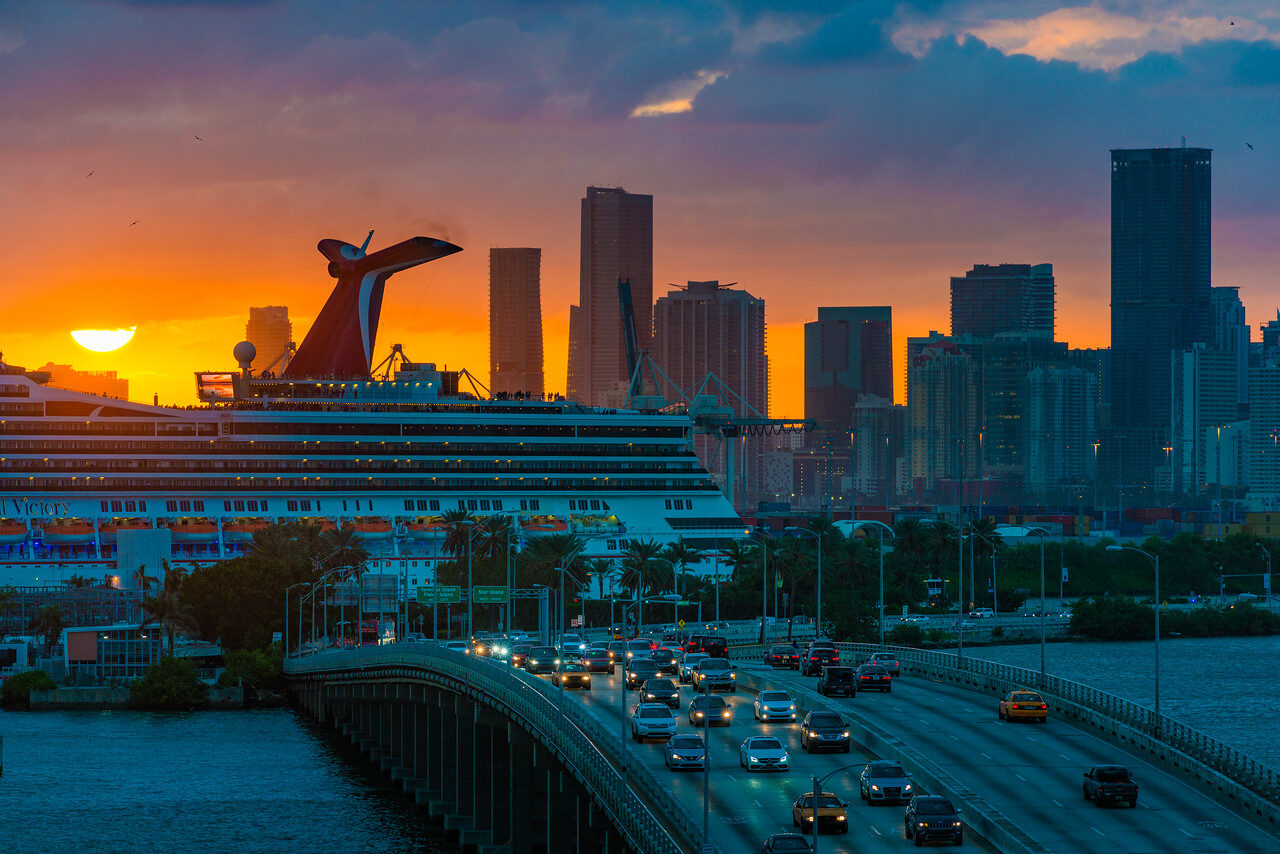
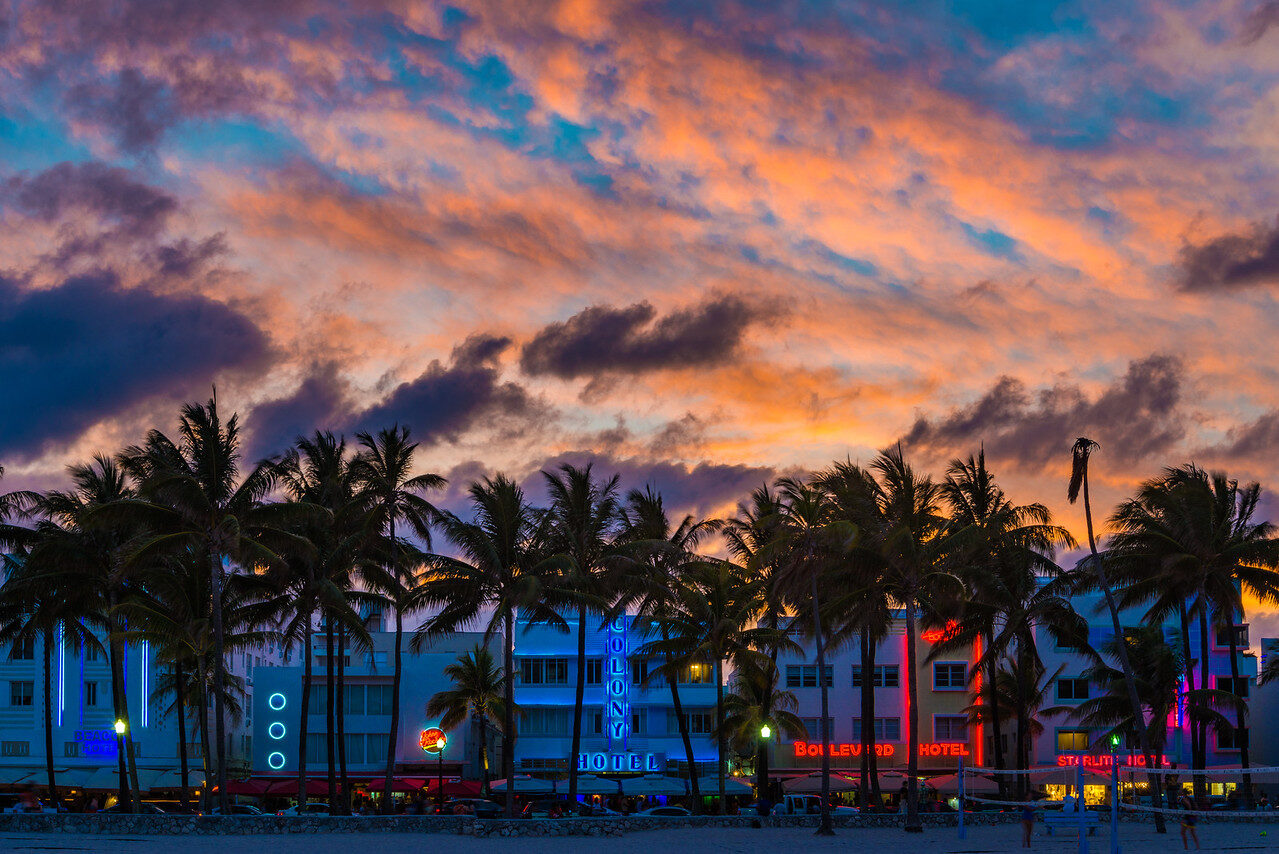
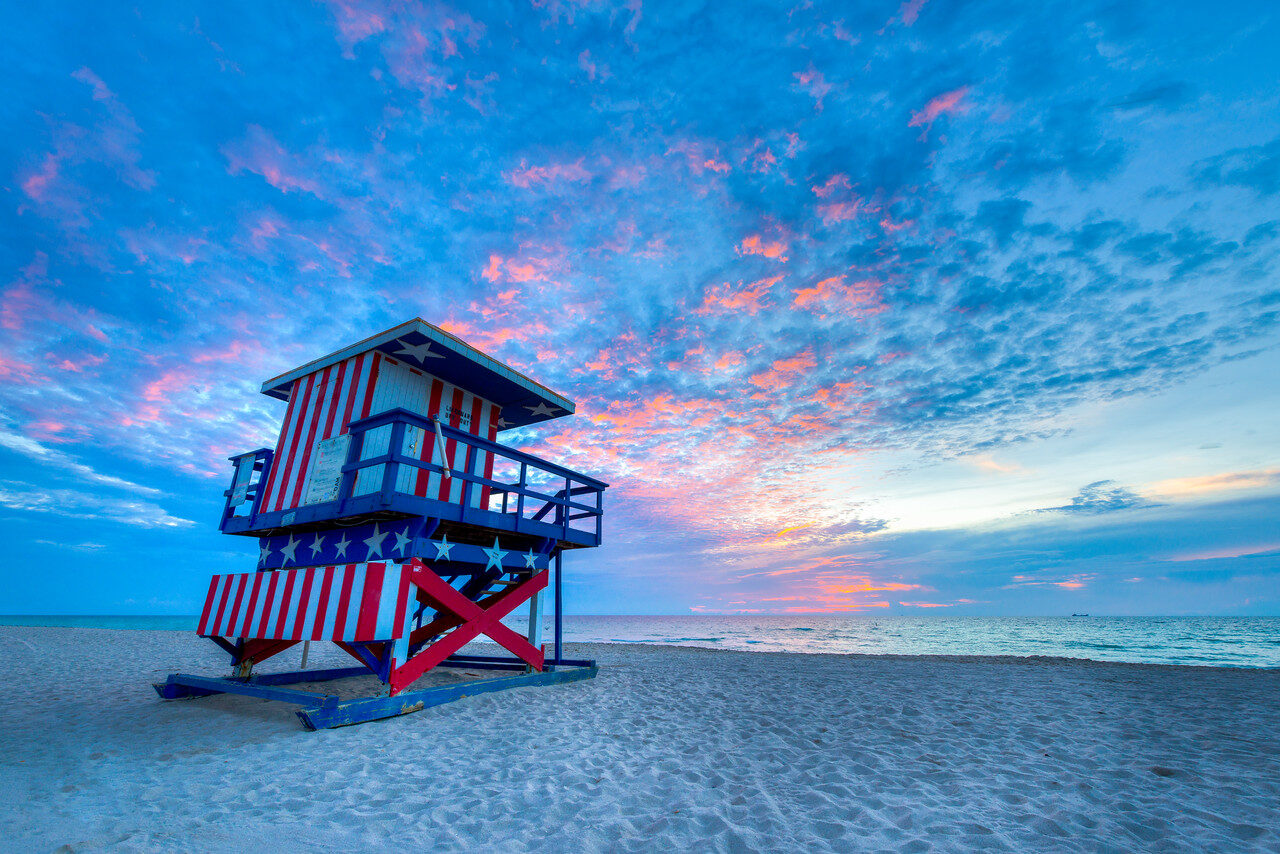
Here are three of the actual shots you’ll find inside the PDF — cinematic full-page references for the exact spots, lenses, and lighting conditions documented in the guide. The full guide includes 12 locations, each with a hero image, GPS map, settings table, and a five-shot list.
Save
Before you shoot Miami: the essentials
- Free public access: Ocean Drive, Wynwood Walls exterior, Bayfront Park, Brickell Key Park, Lincoln Road Mall, Miami Beach Boardwalk, and Bayside Marketplace are free to access. Vizcaya Museum & Gardens charges admission ($25 adult); Crandon Park charges a parking fee ($8 vehicle).
- Commercial permits: Commercial/professional photography permits required at Vizcaya Museum & Gardens (call 305-250-9133). Wynwood Walls requires a permit for commercial shoots. Street photography on public rights-of-way (Ocean Drive, Lincoln Road, Calle Ocho) is permit-free. PAMM exterior is on public bayfront grounds.
- Best photography seasons: November through April — lower humidity, stable light, lush dry-season greenery, and crowds manageable on weekday mornings
- Blue hour notes: Blue hour lasts roughly 20–25 minutes after sunset year-round. Brickell Key and Bayside Marketplace face west-northwest, giving ideal blue-sky backdrops over the illuminated skyline. Ocean Drive neon activates during twilight for layered artificial/natural-light compositions.
- Drone policy: Most major U.S. cities restrict drone flight in airspace and via local ordinances. Check FAA + city rules before launching.
- Local resource: Official visitor information
The full-resolution version of every map below — plus seasonal calendars, gear notes per location, sun-angle diagrams, and a complete photographer’s packing checklist — is inside the Miami Photographer’s Guide PDF ($47).
1. Ocean Drive Art Deco Historic District
The largest intact collection of Art Deco architecture in the world — 800+ buildings from the 1930s–40s rendered in pastel pinks, teals, and yellows with nautical porthole windows and bas-relief friezes. After dark, neon marquees cast multicolored reflections on rain-slicked pavement, producing images that feel simultaneously retro and electric.
- GPS: 25.7768, -80.1314
- Elevation: 7 ft
- Best time of day: Night / blue hour — neon pastel facades activate at dusk and peak contrast occurs during the 20-minute blue hour window after sunset
- Sun direction: Street runs north–south; morning sun rises over the Atlantic to the east, backlighting facades until about 9 AM. Afternoon sun swings west, side-lighting the hotels from the street side with warm golden tones 2–3 hours before sunset. Neon signs become dominant after civil twilight.
- Access: Street parking metered along Collins Ave and side streets; SunPass-free street parking after 10 PM on most blocks. Miami Beach Trolley stops along the corridor. The district runs 5th–23rd Streets along Ocean Drive; no admission or hours restriction for street shooting.
- Difficulty: easy
- Recommended settings: Blue Hour Neon Street: f/8, 1/15 sec, ISO 800, 24mm · Night Long Exposure Reflections: f/11, 4 sec, ISO 100, 16mm on tripod · Golden Hour Facade Detail: f/5.6, 1/500 sec, ISO 200, 70mm · Pre Dawn Empty Street: f/2.8, 1/30 sec, ISO 3200, 35mm
Shots to chase:
- Wide-angle long exposure of Ocean Drive at 10th Street looking north with neon reflections on wet pavement
- Compression telephoto of stacked Art Deco cornices and neon signs at 100mm from the south end looking north
- Lifeguard tower silhouette against pastel sky at 6th Street at sunrise
- Classic car parked in front of the Beacon Hotel as a foreground element at golden hour
- Blue hour shot from across Lummus Park using palm trees to frame the illuminated facade row
Pro tip: Arrive 90 minutes before sunrise for empty streets and blue-hour neon; the district’s hotel signs remain lit all night. A light rain dramatically improves reflections — check the forecast and plan accordingly. Shoot from the sidewalk on the park side (east side of Ocean Drive) for straight-on architectural compositions.
Common mistake to avoid: Shooting at midday produces flat, blown-out highlights on white facades with no shadow depth. Framing too tight on individual buildings misses the cumulative impact of the continuous facade row — use a wide or ultra-wide lens at medium distance. Forgetting a tripod for blue hour forces high-ISO noise at the expense of the neon glow.
2. Wynwood Walls
The world’s most prominent outdoor street-art museum — curated murals by Shepard Fairey, Os Gemeos, Futura, and 50+ international legends covering every inch of the warehouse block. The ever-changing roster (walls are painted over annually during Art Basel) guarantees unique images unavailable elsewhere.
- GPS: 25.801, -80.1995
- Elevation: 10 ft
- Best time of day: Early morning golden hour (6:30–8:30 AM) — side-lighting brings out mural texture and colors before crowds arrive; alternatively overcast days eliminate harsh shadows
- Sun direction: The open-air compound is bounded by NW 2nd Ave (east) and NW 26th St (north). Morning sun enters from the east, illuminating west-facing murals with warm directional light. By midday the compound traps direct overhead sun, creating harsh hotspots on painted surfaces. Afternoon sun backlights east-facing walls.
- Access: Wynwood Walls is open Sun–Thu 11 AM–11 PM, Fri–Sat 11 AM–midnight; general admission $12 adults. The surrounding Wynwood Arts District streets are free and open 24/7. Street parking along NW 2nd Ave; paid lots on NW 25th–27th Streets. Metrobus Route 36 stops nearby.
- Difficulty: easy
- Recommended settings: Mural Detail Even Light: f/8, 1/250 sec, ISO 200, 50mm · Environmental Portrait With Mural: f/2.8, 1/500 sec, ISO 200, 35mm · Wide Compound Overview: f/11, 1/200 sec, ISO 400, 16mm · Overcast Flat Color: f/5.6, 1/320 sec, ISO 400, 24mm
Shots to chase:
- Subject standing 2–3 meters from wall at eye level to avoid keystoning and keep mural in sharp focus
- Ultra-wide capturing entire compound wall corner-to-corner with crowd movement at golden hour
- Detail macro of brushstroke texture on a textured mural panel at 100mm
- Overhead drone-perspective looking straight down on rooftop murals during midday overcast
- Street-level view at dawn before opening, shooting through the locked gate for a quiet framing device
Pro tip: The neighborhood gets almost no shade — bring a diffusion panel for portrait work in direct sun. Stand 2–3 meters from the wall to avoid perspective distortion and to keep both subject and mural acceptably sharp. Check @wynwoodwalls Instagram for freshly repainted sections before visiting.
Common mistake to avoid: Visiting between 10 AM and 3 PM produces harsh midday shadows that split murals into overexposed and underexposed halves. Shooting parallel to the wall at close range produces converging verticals — step back and use a longer focal length instead. Ignoring the surrounding Wynwood streets misses equally compelling murals that are free and uncrowded.
3. Vizcaya Museum & Gardens
A 1916 Italian Renaissance villa on 43 acres of formal gardens and native woodland along Biscayne Bay — one of the most European-feeling spaces in the entire United States. The ornamental barge moored in the bay, intricate garden parterres, and baroque fountains create an endless variety of architectural and botanical compositions.
- GPS: 25.7436, -80.2103
- Elevation: 8 ft
- Best time of day: Sunrise / morning golden hour (8–9:30 AM with premium early access permit) — soft directional light across the Italianate facade, cool temperatures, minimal crowds
- Sun direction: The Main House faces east over Biscayne Bay, receiving direct sunrise light on the bay-facing facade. By 9:30 AM the light transitions to soft side-light ideal for garden detail work. The west-facing formal gardens catch afternoon golden light from about 4 PM until closing at 4:30 PM. The ornamental barge platform faces southeast, creating beautiful morning reflections.
- Access: Open Wed–Mon 9:30 AM–4:30 PM (closed Tuesdays); admission $25 adult. Premium Early Access Permit (8–9:30 AM before public hours) available by reservation at 305-250-9133 or via vizcaya.org. Parking lot on-site; Vizcaya Metrorail Station is a short walk. Photography permit required for professional/commercial use.
- Difficulty: moderate
- Recommended settings: Main House Facade Morning: f/8, 1/320 sec, ISO 200, 24mm · Garden Detail Golden Hour: f/4, 1/500 sec, ISO 200, 85mm · Barge Reflection Sunrise: f/11, 1/60 sec, ISO 400, 16mm · Interior Courtyard Shade: f/2.8, 1/200 sec, ISO 800, 35mm
Shots to chase:
- Wide-angle of the south facade reflected in the bay from the ornamental barge platform at sunrise
- Symmetrical shot framing the formal Italian garden with the Main House in the background at 35mm
- Detail of carved limestone balustrade with bokeh background of the mangrove shoreline
- Low-angle garden path lined with Bismarck palms converging toward the casino pavilion
- Blue hour with the villa’s exterior lights coming on against a deep indigo sky over the bay
Pro tip: Book the Premium Early Access Permit (available for the garden only, 8:00–9:30 AM) for near-solitary shooting conditions and the most flattering morning light. A 16–35mm lens covers both the intimate gardens and the sweeping bay views. Bring a polarizer to cut glare from the bay and fountain surfaces.
Common mistake to avoid: Arriving only during public hours (after 9:30 AM) means competing with tour groups at every iconic spot. Shooting the Main House facade from directly in front produces a flat image — approach from a 45-degree angle to show the wing and bay together. Midday flat light erases the three-dimensional relief carvings that make the architecture so compelling.
4. Brickell Key / Brickell Key Park
A man-made island offering a 270-degree panorama of the Brickell and Downtown Miami skylines from water level — arguably the finest unobstructed land-based skyline perspective in the city. The foreground is Biscayne Bay, the middle ground is illuminated bridges, and the background is a dense wall of glass towers.
- GPS: 25.7663, -80.1851
- Elevation: 5 ft
- Best time of day: Blue hour / sunset — west-facing views capture the Miami skyline fully lit against a deep blue sky; the 30-minute window after sunset is peak time for balanced sky and building exposure
- Sun direction: Standing on Brickell Key’s southern tip, the Downtown Miami and Brickell tower clusters are to the north-northwest. The sun sets behind and to the right of the skyline in winter (southwest), casting warm sidelight on the glass facades. In summer the sun sets more to the northwest, aligning better with the skyline. Blue-hour window provides even ambient light for balanced exposures without blowouts.
- Access: Brickell Key is a public island accessed via Brickell Key Drive off Brickell Ave (SE 7th St bridge). Free street parking is limited; paid garage at One Tequesta Point nearby. The park walkway around the island perimeter is open 24/7. No admission fee. Metromover Brickell stop is a 5-minute walk.
- Difficulty: easy
- Recommended settings: Blue Hour Skyline Wide: f/11, 8 sec, ISO 100, 16mm on tripod · Sunset Warm Tones: f/8, 1/30 sec, ISO 400, 24mm · Golden Hour Reflections: f/8, 1/60 sec, ISO 200, 35mm · Night City Lights: f/8, 15 sec, ISO 100, 24mm on tripod
Shots to chase:
- Long-exposure blue hour panorama from the southern tip with smooth water reflections of the skyline
- Telephoto compression of Brickell Flatiron and neighboring towers stacked tightly at 200mm
- Low-angle from the seawall with the bay in the foreground and the full skyline horizon
- 30-second star-trail exposure combining Brickell lights with Milky Way on a clear summer night
- Time-lapse sequence from sunset through blue hour capturing the skyline lighting sequence
Pro tip: Position yourself at the south-facing seawall at the island’s tip for the widest skyline sweep. Arrive 30 minutes before sunset to scout exact framing and set up a tripod before the light changes. A 16–35mm lens at f/11 will keep the entire skyline acceptably sharp while allowing a multi-second exposure for smooth water.
Common mistake to avoid: Shooting at night without a tripod results in motion blur from hand-holding at the exposures needed for proper sky-to-building balance. Using too-wide an angle from too close shrinks the towers into tiny slivers — back up or use a 24–50mm to maintain skyline impact. Arriving right at sunset misses the blue hour window, which is arguably more photogenic than the golden moment itself.
Want this in your pocket on the street?
The full-resolution version of every spot above — with full-page hero photography, GPS maps with gold location pins, sun direction diagrams, multi-season tables, and a complete safety + packing checklist — is inside the Miami Ultimate Photographer’s Guide PDF ($47). Print it, save it offline, take it on the walk. Get the guide →
5. Bayfront Park
Save
A 32-acre urban bayfront park with dramatic water views, the iconic Challenger Memorial, the Noguchi-designed Mildred & Claude Pepper Fountain, and a canopy of royal palms framing the Downtown Miami skyline. The park provides rare open space in the urban core and doubles as the city’s outdoor concert venue.
- GPS: 25.7768, -80.1859
- Elevation: 7 ft
- Best time of day: Sunrise / early morning golden hour — east-facing Biscayne Bay illuminated by rising sun, palm silhouettes, and the reflection of the Downtown Miami skyline on calm morning water
- Sun direction: The park runs along the western shore of Biscayne Bay; the water faces east-southeast. Sunrise light strikes the bay surface and bounces back toward the park, creating warm reflected fills on palm trunks and monuments. Afternoon sun illuminates the park grounds from behind (west), backfighting palms and the Challenger Memorial fountain.
- Access: Open daily 6 AM–11 PM; free admission. Metered street parking on Biscayne Blvd and nearby garages. Metromover Bayfront Park station is steps from the main entrance at 301 Biscayne Blvd. Trolley service from Downtown.
- Difficulty: easy
- Recommended settings: Sunrise Bay Reflection: f/8, 1/60 sec, ISO 400, 24mm · Palm Silhouette Golden Hour: f/11, 1/500 sec, ISO 200, 35mm · Fountain Long Exposure: f/16, 1/2 sec, ISO 100, 24mm · Skyline From South End: f/8, 1/200 sec, ISO 200, 50mm
Shots to chase:
- Sunrise wide-angle with royal palm row receding toward the bay and soft pastel sky
- Silhouette of the Challenger Memorial obelisk against a burning orange sunrise over the bay
- Long-exposure Pepper Fountain with silky water and the Frost Museum of Science in the background
- Midday from the amphitheater steps looking east with Downtown towers flanking either side
- Blue hour wide-angle showing the illuminated Downtown skyline reflected in the fountain basin
Pro tip: The park’s south end near Bayside offers the cleanest skyline framing with the least obstructions. Arrive 15 minutes before sunrise for the pre-dawn blue-purple sky gradient over the bay. A circular polarizer at midday will cut surface glare on the water and saturate the turquoise bay color.
Common mistake to avoid: Standing in the center of the park produces cluttered backgrounds — work the south and north ends for cleaner water-to-skyline compositions. Weekend evenings bring concerts and crowds that make tripod work difficult. Ignoring the interior fountain areas in favor of only the bay edge misses some of the park’s most sculptural photo opportunities.
6. Calle Ocho, Little Havana
The cultural heart of Miami’s Cuban-American community — a living streetscape of roosters, hand-rolled cigars, domino games, live salsa music, and Afro-Cuban murals. Calle Ocho is one of the few urban corridors in the U.S. where documentary street photography and vibrant color photography converge in the same block.
- GPS: 25.7681, -80.233
- Elevation: 10 ft
- Best time of day: Golden hour (late afternoon, 4–6 PM) — warm sidelight saturates the vivid murals and storefront colors while domino players are most active at Máximo Gómez Park
- Sun direction: SW 8th Street runs east–west; afternoon sun (west) illuminates north-facing storefronts and murals on the south side of the street with warm light. Morning sun (east) catches north-side architecture but can create harsh shadows on murals. Overcast days are ideal for consistent mural color without hotspots.
- Access: Public street; free access 24/7. Street parking along SW 8th St and residential side streets; paid lots near Máximo Gómez Domino Park (1444 SW 8th St). MDT Bus Route 8 runs the full length of Calle Ocho. Máximo Gómez Park (Domino Park) is open daily 9 AM–6 PM, free.
- Difficulty: moderate
- Recommended settings: Street Documentary Action: f/5.6, 1/500 sec, ISO 400, 35mm · Mural Color Portrait: f/2.8, 1/320 sec, ISO 200, 50mm · Domino Park Indoor Shade: f/2.8, 1/200 sec, ISO 800, 35mm · Storefront Golden Hour: f/8, 1/400 sec, ISO 200, 24mm
Shots to chase:
- Domino players at Máximo Gómez Park — tight 85mm portrait with concentration and motion blur of hands
- Rooster statue or live rooster on SW 8th St with colorful mural background at 50mm f/2.8
- Cuban cigar roller in the doorway of a cigar shop with window light at 35mm
- Wide-angle of Calle Ocho storefront strip at golden hour with street activity and mural wall
- Ball & Chain bar neon sign at blue hour with street reflection on wet pavement
Pro tip: Ask permission before photographing domino players up close — most are welcoming when approached respectfully. The densely shaded Domino Park provides excellent consistent light all day for portrait work, making it immune to the midday-sun problem that plagues the open street. Come hungry — coffee and food stops at Versailles Restaurant and Azucar Ice Cream provide natural photographic pauses.
Common mistake to avoid: Treating Calle Ocho as purely a mural destination misses the documentary richness of the street life — engage with the community rather than just photographing walls. Tripods on busy sidewalks are a hazard and annoyance; work handheld at appropriate ISO. Arriving only on weekday mornings means the domino park is less active — late morning to early afternoon on any day is better for social scenes.
7. Pérez Art Museum Miami (PAMM) Exterior
Herzog & de Meuron’s 2013 design features a dramatic overhanging canopy draped with vertical garden curtains — 154 living plant panels suspended by steel cables that sway in the bay breeze. The structural canopy frames views of Biscayne Bay and Downtown Miami in a way no other building in the city achieves.
- GPS: 25.786, -80.1863
- Elevation: 8 ft
- Best time of day: Golden hour / blue hour — the hanging vertical garden curtains glow amber under late afternoon sun; at blue hour the exterior lighting illuminates the overhanging roof against a deep blue sky
- Sun direction: PAMM faces west over Biscayne Bay (the bay-facing terrace and hanging gardens face southwest). West-facing facades catch full afternoon golden light from 3–6 PM. The north-facing museum entrance is in open shade most of the day. The bay-side terrace faces west–southwest, making it ideal for sunset compositions.
- Access: Exterior grounds and bayfront terrace at Museum Park are freely accessible 24/7. Museum admission $20 adult (free first Thu of month 10 AM–9 PM). Museum Park parking garage adjacent; Metromover Museum Park station immediately adjacent. Address: 1103 Biscayne Blvd, Miami, FL 33132.
- Difficulty: easy
- Recommended settings: Hanging Gardens Golden Hour: f/5.6, 1/500 sec, ISO 200, 35mm · Blue Hour Canopy Exterior: f/8, 4 sec, ISO 200, 16mm on tripod · Bayfront Terrace Wide: f/8, 1/200 sec, ISO 200, 24mm · Detail Vertical Garden Curtain: f/4, 1/500 sec, ISO 200, 100mm
Shots to chase:
- Looking up through the hanging garden curtains toward the canopy underside with dappled sky above
- Wide-angle from the bay terrace looking east with the museum canopy framing the bay and downtown skyline
- Blue hour exterior with interior museum lighting glowing through translucent panels under the overhanging roof
- Detail of individual hanging-garden plant modules with the bay as a blurred blue background
- Sunrise from the bay terrace looking back west with the PAMM canopy silhouetted against pastel sky
Pro tip: The bay-side terrace at Maurice A. Ferré Park (immediately south) provides the best wide-angle view of the full museum exterior with the water as foreground. The hanging gardens are most dramatic under slightly overcast light, which illuminates all the green tones evenly without bleaching. Shoot vertically to capture the full height of the garden curtains from ground to canopy.
Common mistake to avoid: Arriving at midday creates harsh top-down shadows that flatten the hanging garden texture. Shooting only from the street-side entrance misses the architectural showpiece — the bay-facing canopy elevation is the primary photographic subject. Using too-short a focal length from too close distorts the rectilinear geometry of the canopy structure.
8. Coral Gables Biltmore Hotel
Built in 1926 by Addison Mizner, the Biltmore is a National Historic Landmark whose 315-foot tower is modeled on Seville’s Giralda Bell Tower. The Mediterranean Revival architecture, with its terracotta barrel-tile roofs, arched loggias, and massive swimming pool courtyard, is unmatched in scale and grandeur anywhere in South Florida.
- GPS: 25.7411, -80.2792
- Elevation: 18 ft
- Best time of day: Golden hour (late afternoon, 4–6 PM) — the Giralda-inspired tower glows warm amber and the pool terrace casts long elegant shadows; exterior facade best lit from the south golf-course side
- Sun direction: The hotel’s tower faces northwest from the golf course approach. The main south-facing portico receives afternoon sun directly from about noon until sunset. The iconic 315-foot tower catches golden side-light at about 30–60 minutes before sunset. From the golf course, the tower is backlit at sunrise and front-lit at sunset.
- Access: The exterior, porte-cochère, and public lobby are freely accessible. Hotel pool (largest hotel pool in the continental U.S. at time of construction) is for hotel guests and members only. Adjacent Biltmore Golf Course is public; the 18th hole provides the classic tower-with-fairway composition. Street parking and paid valet. Address: 1200 Anastasia Ave, Coral Gables, FL 33134.
- Difficulty: easy
- Recommended settings: Tower Golden Hour: f/8, 1/500 sec, ISO 200, 50mm · Facade Symmetry Wide: f/11, 1/320 sec, ISO 200, 24mm · Pool Courtyard Detail: f/5.6, 1/400 sec, ISO 200, 35mm · Blue Hour Illuminated Tower: f/8, 8 sec, ISO 100, 35mm on tripod
Shots to chase:
- Classic tower symmetry from the center of Anastasia Ave looking north with royal palms flanking
- Wide-angle of the pool terrace arches at golden hour with turquoise water and colonnade
- Telephoto 200mm of the tower top and weathervane against a cumulus cloud-filled sky
- Blue hour with the tower flood-lit and reflected in the pool surface
- Low-angle from golf course 18th fairway at sunset with tower rising above the tree line
Pro tip: The best tower-framing shot is from the 300-foot mark along Anastasia Avenue where the royal palm boulevard creates a natural leading-line alley to the tower. Blue hour is exceptional here because the tower flood lighting turns the travertine a warm gold against the deepening blue sky. Request hotel management permission before setting up a tripod in the lobby or pool area.
Common mistake to avoid: Shooting from too close to the base of the tower creates extreme converging verticals — step back at least 150 meters for a composed architectural shot. Arriving on a cloudy day hides the terracotta roof color that makes the Mediterranean Revival palette so photogenic. Ignoring the golf course approach means missing the full-scale context that explains the building’s grandeur.
Want this in your pocket on the street?
The full-resolution version of every spot above — with full-page hero photography, GPS maps with gold location pins, sun direction diagrams, multi-season tables, and a complete safety + packing checklist — is inside the Miami Ultimate Photographer’s Guide PDF ($47). Print it, save it offline, take it on the walk. Get the guide →
9. Lincoln Road Mall
Save
Miami Beach’s legendary pedestrian promenade — 8 blocks of al fresco dining, design boutiques, and sculptural water features connecting the Atlantic to Biscayne Bay. The 1111 Lincoln Road parking structure by Herzog & de Meuron is itself an architectural icon, its bold concrete form offering Miami’s best free elevated photography platform overlooking the entire South Beach grid.
- GPS: 25.7909, -80.1355
- Elevation: 5 ft
- Best time of day: Golden hour / sunset — the western end of Lincoln Road at the bay faces west, creating beautiful backlit pedestrian silhouettes; the 1111 Lincoln Road parking structure rooftop offers an elevated skyline view at any time
- Sun direction: Lincoln Road runs east–west. The eastern end (near the ocean) is in shadow by late afternoon. The western end opens toward Biscayne Bay and faces west-southwest, receiving direct sunset light. The 1111 Lincoln Road parking structure at the western end faces south and west, giving views across South Beach and the bay at blue hour.
- Access: Open pedestrian promenade 24/7; free to walk. 1111 Lincoln Road garage rooftop is publicly accessible during garage hours (typically 6 AM–midnight, free to walk up the spiral ramp on foot). Bus routes 119, C, M serve Lincoln Road. Metered parking on nearby streets.
- Difficulty: easy
- Recommended settings: Pedestrian Street Golden Hour: f/5.6, 1/500 sec, ISO 200, 50mm · 1111 Rooftop Skyline Blue Hour: f/8, 6 sec, ISO 100, 16mm on tripod · Sculpture And People Midday: f/8, 1/800 sec, ISO 200, 35mm · Night Cafe Scene: f/2.8, 1/60 sec, ISO 3200, 35mm
Shots to chase:
- From the 1111 Lincoln Road rooftop looking south at blue hour with South Beach street grid and bay beyond
- Ground-level wide-angle of Lincoln Road pedestrian corridor receding into vanishing point at golden hour
- Street photography of the lively outdoor restaurant scene with umbrellas, couples, and ambient neon
- Architectural abstract of the 1111 Lincoln Road bare concrete ramp structure at midday with strong shadow geometry
- Backlit silhouette of pedestrians and cyclists at the sunset end near the bay
Pro tip: Walk up the 1111 Lincoln Road ramp on foot (no cost) to reach the rooftop level for a completely unique elevated view of South Beach — this is one of the city’s best free photography platforms. The ground-floor promenade is best for street photography in the late afternoon and evening when the al fresco scene is most energetic. Bring a 24–70mm zoom to handle both the intimate street scenes and the wider architectural compositions.
Common mistake to avoid: Shooting only at ground level misses Lincoln Road’s most photogenic vantage point — the 1111 rooftop. Arriving at midday produces harsh shadows from the overhead canopies and strips the scene of ambient warmth. Focusing exclusively on the western architectural icon and neglecting the sculpted water features and people activity at mid-promenade limits the diversity of your shoot.
10. Key Biscayne / Crandon Park Beach
Miami’s finest natural beach — 2 miles of calm turquoise Atlantic water on a barrier island 5 miles from downtown, with almost no high-rise development on the horizon. The combination of clear Caribbean-color water, white sand, sea grape canopy edges, and an unobstructed eastern horizon produces a tropical-paradise aesthetic impossible to replicate on Miami Beach proper.
- GPS: 25.712, -80.1539
- Elevation: 3 ft
- Best time of day: Sunrise — east-facing Atlantic beach glows pink-gold as the sun emerges directly over the water; the beach is almost completely empty before 8 AM
- Sun direction: Crandon Park beach faces east-northeast on the Atlantic side. Sunrise is direct and dramatic with the sun rising from the ocean — ideal for silhouette, reflection, and warm-tone beach work. Midday produces clear turquoise water photography. The western (bay) side of Key Biscayne catches sunset directly over the bay toward the Miami skyline.
- Access: Open daily sunrise to sunset. Vehicle entry fee $8/car (Miami-Dade residents may have discounted rates). 4000 Crandon Blvd, Key Biscayne, FL 33149. Accessible via the Rickenbacker Causeway (toll $2). No public transit to Crandon directly; Bike Miami-Dade path runs along the causeway.
- Difficulty: easy
- Recommended settings: Sunrise Beach Reflection: f/11, 1/60 sec, ISO 200, 24mm · Turquoise Water Midday: f/8, 1/1000 sec, ISO 100, 50mm polarized · Palm Silhouette Sunrise: f/16, 1/500 sec, ISO 100, 24mm · Long Beach Shot Morning: f/11, 1/200 sec, ISO 200, 70mm
Shots to chase:
- Sunrise wading silhouette with sun rising from the Atlantic directly along the beach axis
- Low-angle wide-shot of the receding shoreline with turquoise water and no buildings on the horizon
- Under sea grape canopy framing the beach with dappled early morning light through the leaves
- Overhead drone view of the clear turquoise-to-aquamarine water gradient at midday
- Aerial view from Rickenbacker Causeway looking south at the island with bay and Atlantic on both sides
Pro tip: Arrive at least 20 minutes before sunrise and position yourself on the waterline for the most dramatic sky-to-sand reflection images. The water is exceptionally clear on calm mornings — a circular polarizer at midday reveals the sandy bottom in luminous turquoise. Weekday mornings in the off-season (May–November) offer nearly empty beach conditions.
Common mistake to avoid: Arriving after 9 AM on weekends means sharing the beach with large crowds and losing the empty-horizon aesthetic. Forgetting a polarizer wastes the exceptional water clarity that makes Crandon exceptional. Shooting exclusively toward the ocean misses the gorgeous sea grape and mangrove canopy on the park interior, which provides lush green frames for beach compositions.
11. Bayside Marketplace
A waterfront festival marketplace with 150+ shops and restaurants on a working marina directly on Biscayne Bay — the meeting point of Downtown Miami, the cruise port, and the MacArthur Causeway. The marina is packed with yachts and tour boats, and the surrounding skyline and causeways create a complex layered nighttime composition unique among U.S. waterfronts.
- GPS: 25.7784, -80.1869
- Elevation: 7 ft
- Best time of day: Night — the marina is fully illuminated with reflection in the marina basin; at blue hour the skyline and bridge lights combine for complex layered compositions
- Sun direction: Bayside faces east over Biscayne Bay. The marina reflects the sunset sky during golden hour but is backlit by the western city. After dark, marina lighting and the American Airlines Arena (now Kaseya Center) flood-lights dominate. The MacArthur Causeway lights provide a luminous foreground arch against the night sky.
- Access: Open Sun–Thu 10 AM–10 PM, Fri–Sat 10 AM–11 PM; free to enter the marketplace exterior and marina area. Paid parking garages ($3/hr). Metromover Bayfront Park station is adjacent; Metrobus service on Biscayne Blvd. Address: 401 Biscayne Blvd, Miami, FL 33132.
- Difficulty: easy
- Recommended settings: Night Marina Reflection: f/8, 10 sec, ISO 200, 24mm on tripod · Blue Hour Skyline Marina: f/8, 4 sec, ISO 100, 16mm on tripod · Yacht Detail Golden Hour: f/5.6, 1/500 sec, ISO 200, 70mm · Causeway Arch Night: f/8, 20 sec, ISO 200, 16mm on tripod
Shots to chase:
- Long-exposure blue hour from the southern marina pier with yacht masts, MacArthur Causeway arch, and illuminated skyline
- Night reflection of the Kaseya Center and Downtown towers in the still marina water
- Golden hour wide-angle of the outdoor marketplace with activity and the bay glowing behind
- Telephoto 200mm of the cruise terminal ships through the marina with skyline compression
- Sunrise from the bayfront promenade looking east at the Venetian Causeway with Miami Beach behind it
Pro tip: The marina’s south pier (furthest from the entrance) provides the best unobstructed view of both the MacArthur Causeway and the Downtown skyline simultaneously. Arrive just after sunset for the blue-hour sweet spot, then transition to pure night photography — both light conditions from the same spot within 30 minutes. Low-ISO tripod shots at 8–15 seconds will smooth the water surface into a mirror.
Common mistake to avoid: Shooting at midday produces harsh contrasts between the gleaming boat surfaces and the dark water — the marina only looks its best at golden hour or night. Handholding at night forces ISO 3200+ and produces unacceptable noise for print-quality work; always use a tripod here. Standing at the main entrance provides the most cluttered composition — walk further into the marina for clean water-reflection foregrounds.
12. Miami Beach Boardwalk
A continuous oceanfront promenade through Miami Beach’s quieter mid-beach neighborhoods — broader than South Beach, less crowded than Ocean Drive, with the natural Atlantic dune system intact. The combination of the wooden boardwalk texture, rolling surf, and clear sunrise light creates classic Florida coastal photography with an elevated urban edge.
- GPS: 25.8208, -80.121
- Elevation: 5 ft
- Best time of day: Sunrise — the boardwalk faces due east over the Atlantic; the sun rises directly from the ocean, painting the beach and surf in orange-gold tones with near-empty conditions
- Sun direction: The boardwalk runs north–south along the Atlantic shoreline of Miami Beach. Sunrise comes directly over the ocean, striking the boardwalk head-on from the east — ideal for silhouettes and backlit wave photography. Midday produces harsh overhead light but brilliant turquoise water color. Sunset hits the west side only (the city blocks east of Collins Ave), making the boardwalk a sunrise location above all.
- Access: Free public boardwalk open 24/7; runs approximately 7 miles from 21st Street to 46th Street with the north section extending to Indian Beach Park near 79th Street. Access at any cross street. Metered parking on Collins Ave parallel to the boardwalk. No Miami Beach Trolley service to the north section — use SoBe Free Trolley for the south portion.
- Difficulty: easy
- Recommended settings: Sunrise Beach Wide: f/11, 1/200 sec, ISO 200, 16mm · Runner Silhouette Sunrise: f/8, 1/1000 sec, ISO 200, 70mm · Wave Freeze Midday: f/8, 1/2000 sec, ISO 100, 50mm polarized · Golden Hour Boardwalk Path: f/5.6, 1/500 sec, ISO 200, 35mm
Shots to chase:
- Sunrise shot from the water’s edge facing east with the boardwalk receding north and the horizon glow
- Silhouette of a lone early-morning runner on the boardwalk with the orange disc rising over the Atlantic
- Drone overhead of the boardwalk ribbon with the ocean gradient from turquoise to deep blue
- Telephoto compression of the boardwalk crowd at golden hour with hotel towers rising above Collins Ave
- Long exposure of the surf at blue hour with the boardwalk lights glowing in the background
Pro tip: The north section near Indian Beach Park (46th–79th Streets) is significantly less crowded at sunrise than the South Beach end — use this as your primary location for empty-boardwalk compositions. The hour before sunrise is the best time to walk the full length without interruption from cyclists and joggers. A 16–35mm zoom handles both the intimate boardwalk path and the broad Atlantic horizon.
Common mistake to avoid: Arriving after 8 AM on weekends means the boardwalk is busy with cyclists, rollerbladers, and foot traffic that makes tripod work dangerous. Shooting only from the boardwalk level misses the beach-level perspective that reveals the full scale of the breaking surf. Relying on the phone GPS address ‘500 Ocean Dr’ (the south end access point) deposits you at the crowded South Beach section — enter from the north end for better conditions.
When to photograph Miami: a year-round breakdown
Miami is photogenic every month of the year — but the conditions differ radically by season. Here is what to expect:
November through April — lower humidity, stable light, lush dry-season greenery, and crowds manageable on weekday mornings
Photographer safety in Miami: read this
City photography has its own risks: gear visibility, neighborhood timing, traffic, weather. Read the briefing before you go.
- Gear visibility: Use a discreet bag with no obvious camera branding. Keep a body strapped under a jacket on transit.
- Neighborhood timing: Pre-dawn and post-sunset shoots reward early scouting. Cross-reference each location with current local guidance and choose well-lit transit routes.
- Situational awareness: Headphones out. One eye in the viewfinder, one on the street.
- Traffic: Bridges, medians, and bike lanes are not setup zones. Shoot from sidewalks and pedestrian areas only.
- Weather: Summer storms move quickly; winter cold drains batteries. Layer up, keep gear dry, watch for ice on cobblestones at blue hour.
The complete safety briefing is inside the Miami Photographer’s Guide PDF.
Take this guide into the city
This post is the complete field reference. The Miami Ultimate Photographer’s Guide PDF is the field-deployable version: full-page resolution hero photography, GPS maps with gold pins for every location, multi-season shooting calendars, gear notes per location, sun-angle diagrams, the full city safety briefing, and a print-ready editorial layout in Framehaus black and gold. Save it offline. Print it. Take it on the walk.
Miami Ultimate Photographer’s Guide
Downloadable PDF · 12 GPS-mapped locations · Multi-season calendar · City safety briefing · Packing checklist
Get the Miami guide — $47
Get the Miami Guide + Preset Pack
Photograph it. Edit it. Done.
All links go to Viator (a TripAdvisor company), the world’s largest marketplace for guided experiences. Tagged as affiliate per FTC.
Quick Amazon shortcuts to the gear most useful for this kind of shot. Use them if Prime shipping or Amazon credit makes more sense than B&H. As an Amazon Associate ShutYourAperture earns from qualifying purchases.
Take Miami home in your pocket.
Every shot location, every angle, every time of day worth shooting. Printable PDF + GPS-tagged map.
Instant download. Works on phone, tablet, and printed.
Continue reading
- U.S. Cities Photography Guides — every city, mapped
- National Parks Photography Guides
- Travel photography destinations
- Travel photography pillar
- How to shoot golden hour like a pro
- Blue hour photography settings and locations
← Back to U.S. Cities Photography Guides
Related guides nearby
Three more photography guides within striking distance — perfect for combining into one trip.
- Orlando 327 km away · city · USA
- Atlanta 976 km away · city · USA
- New Orleans 1077 km away · city · USA
The complete Miami guide is $47
All vantage points above + 5 bonus secret spots, printable map, gear pack list, and editing recipes. One-time payment, instant download, lifetime updates.
Common questions about the Miami guide
Is the Miami photography guide worth $47?
For most photographers, yes. The guide saves 8-12 hours of trip-planning research and prevents the most common mistake of Miami photography: shooting at the wrong time of day. If a single better frame is worth $47 to you, the guide pays for itself on day one. Buyers get every GPS coordinate, every golden-hour window, every cultural rule, and a printable shot list.
Does the Miami guide include GPS coordinates?
Yes — every vantage point in the guide has Google Maps-ready GPS coordinates so you can pin them before you fly. The guide also includes a printable map showing all locations clustered by walking distance, so you can build efficient half-day routes.
What's in the Miami PDF that isn't in this article?
The article shows the highlights. The PDF includes: 5 additional secret spots not published online, a 14-day itinerary with daily routes, the full camera-settings cheat sheet for every scenario in Miami, a printable gear packing list, post-processing recipes with screenshot examples, and a list of local guides we trust for portrait commissions.
Do I get the Lightroom presets too?
The $47 guide is the PDF only. The matching Miami preset pack is a separate $19 download — most buyers grab both as a bundle and save the editing time. Both are instant download, both work on Lightroom Classic and Lightroom Mobile.
Will the guide work for a Miami trip in 2026?
Yes. The guide is updated annually as fees, restrictions, and new vantage points change. All buyers get free lifetime updates. The 2026 edition includes the latest drone rules, museum photography policies, and seasonal light data for the year.
Visiting more than Miami?
Bundle multiple destination guides and save planning time across the trip:
- New York City Photographer’s Guide ($47)
- Los Angeles Photographer’s Guide ($47)
- Chicago Photographer’s Guide ($47)
- San Francisco Photographer’s Guide ($47)
- Seattle Photographer’s Guide ($47)
Or get all 60+ destinations in one bundle: Photo Atlas — every guide, every map, $97.