Best Photography Spots in Nashville: 12 Locations With GPS
edinchavez01-20). Buying through these links costs you nothing extra and helps fund our free guides.
Nashville, Tennessee is one of the most photogenic cities in the United States. If you have a camera and the patience to show up before dawn, Nashville will give you images that last a career — but only if you know where and when to point it.
This is the definitive field guide to the 12 best photography spots in Nashville, with GPS coordinates you can drop straight into Google Maps, exact camera settings tuned to Nashville’s unique light, precise timing for every location, and the access notes nobody else bothers to document. It mirrors the intel inside our Nashville Ultimate Photographer’s Guide ($47 PDF) — a downloadable field guide with full-page hero images, GPS maps, seasonal tables, a city safety briefing, and a complete photographer’s packing list. Get the guide →
Planning multi-city travel? See also: U.S. cities photography hub and the National Parks Photography Guides.
12 GPS-mapped locations · Exact camera settings · Multi-season shooting calendar · Free annual updates
Download the PDF guide →
Get the Nashville Ultimate Photographer’s Guide
Every location below — pre-mapped with GPS, golden-hour timing, gear recommendations, cultural rules, and a 14-day itinerary. Downloaded by 200+ working photographers.
Quick jump to the 12 spots
- John Seigenthaler Pedestrian Bridge — Nashville Skyline Viewpoint
- Lower Broadway Honky-Tonk Strip — Neon Night Photography
- Ryman Auditorium — Exterior & Interior
- Centennial Park — The Nashville Parthenon
- Cumberland Park — Skyline Lawn & Waterfront
- Country Music Hall of Fame — Exterior Architecture
- Bicentennial Capitol Mall State Park
- The Gulch — ‘What Lifts You’ Wings Mural
- 12 South Neighborhood — ‘I Believe in Nashville’ Mural & Street
- Tennessee State Capitol
- RCA Studio B — Music Row
- Schermerhorn Symphony Center
A look inside the Nashville Photographer’s Guide
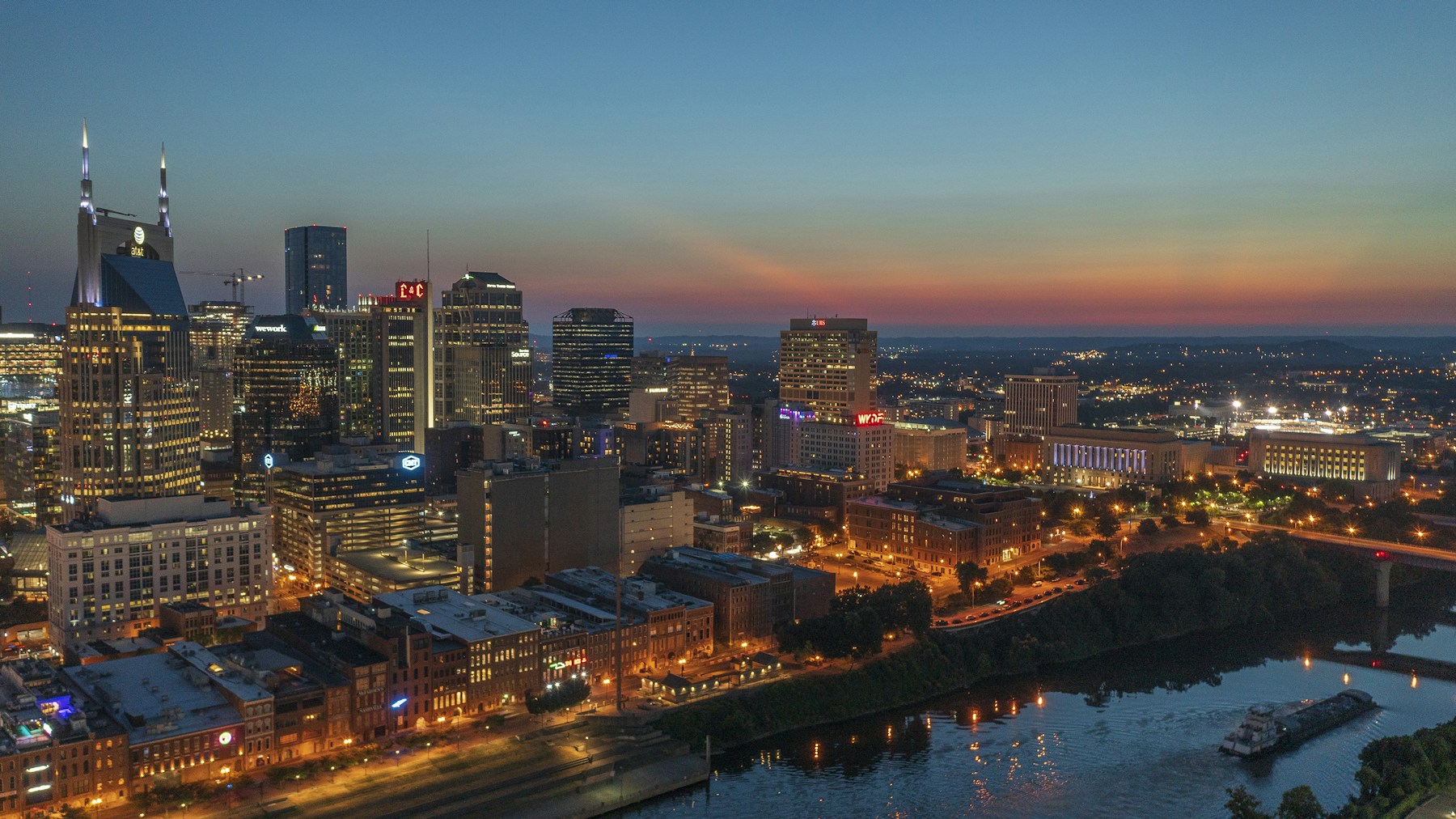
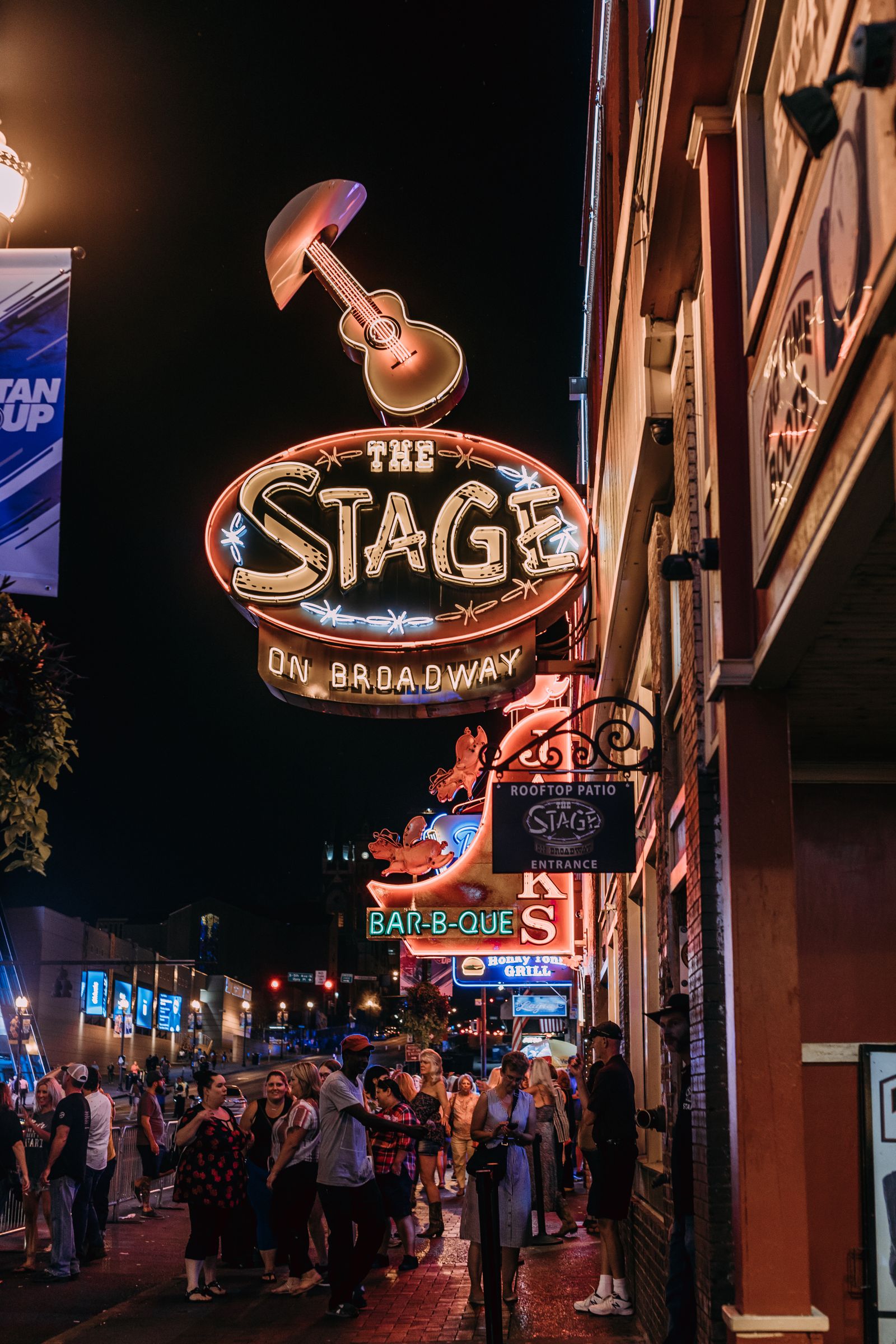
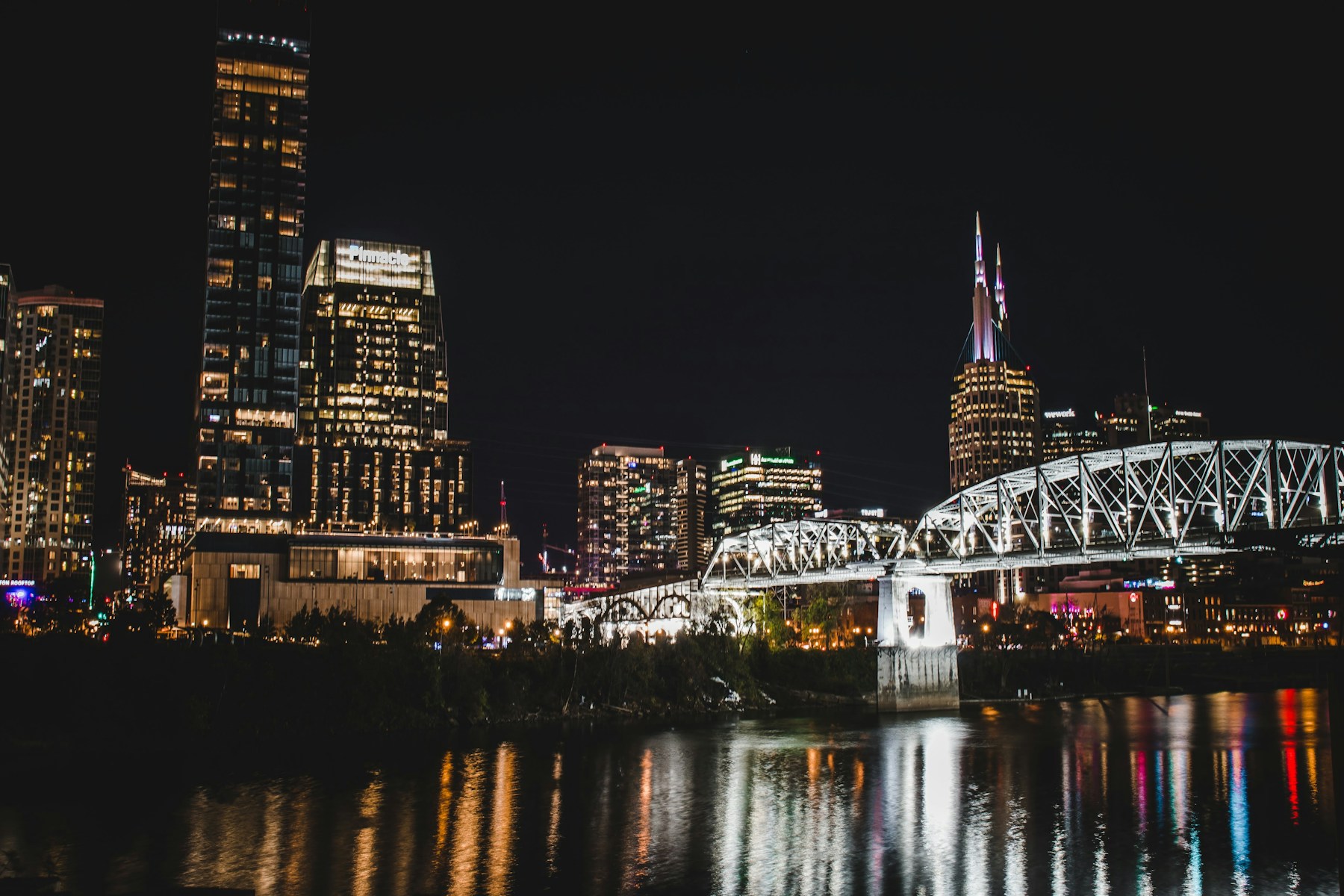
Here are three of the actual shots you’ll find inside the PDF — cinematic full-page references for the exact spots, lenses, and lighting conditions documented in the guide. The full guide includes 12 locations, each with a hero image, GPS map, settings table, and a five-shot list.
Save
Before you shoot Nashville: the essentials
- Free public access: The John Seigenthaler Pedestrian Bridge (24/7), Cumberland Park and its skyline lawn, Riverfront Park, Bicentennial Capitol Mall State Park grounds, Tennessee State Capitol exterior and grounds, all exterior views of the Ryman Auditorium, the ‘What Lifts You’ wings mural in The Gulch (public sidewalk 24/7), the ‘I Believe in Nashville’ mural at 12 South (public sidewalk 24/7), Country Music Hall of Fame exterior and plaza, and Centennial Park / Parthenon exterior grounds are all free to photograph publicly without a permit for personal/editorial use
- Commercial permits: Commercial photography on Metro Nashville Parks & Recreation property (including Cumberland Park, Centennial Park, Bicentennial Capitol Mall State Park, and Riverfront Park) requires a permit from Metro Nashville Parks Special Events Division: daily rate $125 for Davidson County businesses, $150 for out-of-county; annual permit $250 ($300 out-of-county) covers all Metro parks for 12 months. Film/video: $150/day Davidson County, $180/day out-of-county. Certificate of Insurance ($1,000,000 general liability naming Metro Board of Parks & Recreation) required. Drones are prohibited in all Metro parks. Applications emailed to parkphotos@nashville.gov or call 615-862-8446. Bicentennial Capitol Mall is a Tennessee state park — contact TDEC at tnstateparks.com for state-level commercial shoot permits. The Nashville Film Office (Nashville’s Office of Film and Special Events) handles permits for shoots affecting public rights-of-way and Metro government properties outside of parks; contact via nashville.gov/film.
- Best photography seasons: Fall (mid-October–early November) for peak foliage framing the skyline across the Cumberland River and lining Bicentennial Mall; Spring (late March–April) for blooming dogwoods and redbuds throughout Centennial Park and 12 South, mild temperatures, and rich golden light before summer haze; Summer (June–August) for long golden hours, vibrant honky-tonk neon against warm dusk skies, and rooftop bar access; Winter (December–February) for rare dusting of snow on the Parthenon columns, unobstructed pedestrian bridge skyline shots with bare trees, and intimate interior concert shooting at the Ryman
- Blue hour notes: Blue hour is Nashville’s most rewarding photography window, particularly at the Cumberland River waterfront. From the John Seigenthaler Pedestrian Bridge or Cumberland Park, the AT&T Building (the ‘Batman Building’) — Nashville’s most recognizable skyline anchor — and the mid-rise SoBro towers turn amber and cobalt against the deepening sky 20–30 minutes after sunset, with reflections shimmering in the Cumberland below. Lower Broadway’s neon signs are best captured at blue hour when the sky still holds enough color to prevent a pure-black background, while the honky-tonk glow creates extraordinary contrast. Blue hour in Nashville runs approximately 20–30 minutes after official sunset in spring and fall; the window is shorter in winter (~15 minutes) but the low humidity often produces exceptionally clear cobalt skies.
- Drone policy: Most major U.S. cities restrict drone flight in airspace and via local ordinances. Check FAA + city rules before launching.
- Local resource: Official visitor information
The full-resolution version of every map below — plus seasonal calendars, gear notes per location, sun-angle diagrams, and a complete photographer’s packing checklist — is inside the Nashville Photographer’s Guide PDF ($47).
1. John Seigenthaler Pedestrian Bridge — Nashville Skyline Viewpoint
At 3,150 feet, the John Seigenthaler Pedestrian Bridge (formerly Shelby Street Bridge, built 1909) is one of the longest pedestrian bridges in the world, and it is the single most iconic Nashville skyline photography platform. From midspan, the view northwest encompasses the entire downtown skyline — the AT&T Building’s distinctive twin Gothic spires (the ‘Batman Building’), the SoBro glass towers, and the Korean War Veterans Memorial Bridge — compressed into a layered composition with the Cumberland River’s reflections below. The bridge’s steel Warren truss structure creates powerful diagonal leading lines. It featured prominently in the ABC TV series Nashville, cementing its cultural resonance. At blue hour, the bridge’s own lighting illuminates the trusses while the skyline glows in perfect cobalt balance.
- GPS: 36.1619, -86.7722
- Elevation: 445 ft
- Best time of day: Sunset and blue hour (primary); sunrise looking east; any clear night for skyline and bridge illumination
- Sun direction: The John Seigenthaler Pedestrian Bridge runs roughly east-west, spanning the Cumberland River from the foot of Broadway on the west (downtown) side to South 1st Street in East Nashville. When standing at the bridge’s midspan and looking northwest toward the skyline, the sun sets approximately 280–300° (slightly north of due west) in summer, sinking directly behind and slightly right of the Batman Building. In spring and fall the sunset azimuth (~265–275°) aligns more symmetrically with the skyline corridor, placing warm golden light on the AT&T Building’s twin spires. At sunrise, look east from the bridge for the rising sun illuminating the East Nashville bluffs — a less-photographed but rewarding angle. The bridge’s steel truss lattice frames create natural leading lines that converge toward the skyline from both sides; the best framing is from the western third of the bridge looking northwest, approximately 50–100 ft past the west tower. In summer, the sun sets north of due west, allowing the skyline to be frontally lit in golden hour before the sun dips behind the hills.
- Access: The bridge connects Riverfront Park (west approach: foot of Broadway and 1st Ave S, Nashville, TN 37201) and Cumberland Park (east approach: 592 S. 1st St, Nashville, TN 37206). Open 24/7 for pedestrians and cyclists; free access. Parking on the west side in the Riverfront Park lots or paid garages on 1st Ave S near Broadway (~$10–20/day). Parking on the east side in the Lot R surface lot adjacent to Cumberland Park and Nissan Stadium (~$5–10). The WeGo bus routes serve downtown Broadway. Tripods are permitted on the bridge — it is a public right-of-way. Commercial shoots on the bridge itself (public sidewalk) do not require a Metro Parks permit but may require a Metro Public Works right-of-way permit for extensive setups; call 615-862-8597.
- Difficulty: Easy — flat pedestrian walkway, 3,150 ft total span; fully paved; benches at intervals
- Recommended settings: Blue Hour Skyline: aperture: f/8, shutter: 8s, iso: 400, lens: 16-35mm or 24-70mm, notes: Position at the western third of the bridge looking northwest. Use tripod and remote shutter. Shoot 15–35 minutes after sunset when the sky holds cobalt color and city lights are fully activated. Bracket ±1 EV to handle the bright building lights vs. the darker river surface. A foreground of the steel truss handrail at the bottom of the frame adds depth. · Golden Hour Skyline: aperture: f/11, shutter: 1/60s, iso: 200, lens: 70-200mm at 100-135mm, notes: Use telephoto compression from midspan to isolate the Batman Building’s twin spires against the warm sunset sky. Best in late September–October when the sunset azimuth (~270°) places the last light directly behind and slightly right of the spires, creating a backlit crown of warm color. · Sunrise East View: aperture: f/11, shutter: 1/30s, iso: 200, lens: 16-35mm, notes: Stand on the east side of the bridge looking east toward East Nashville as the sun rises over the low hills. The Woodland Street neighborhood and Shelby Park trees are silhouetted in the pre-dawn glow. Include the bridge’s truss structure as foreground geometry. Best in spring when East Nashville’s tree canopy shows new green foliage. · Night Long Exposure: aperture: f/11, shutter: 25s, iso: 200, lens: 24-70mm, notes: After full dark, use a 25-second exposure to catch light trails from boats on the Cumberland and car headlights on the adjacent bridges. The river’s smooth dark surface creates clean mirrored reflections of the illuminated skyline. Use manual focus set to hyperfocal distance for both bridge truss and distant skyline sharpness.
Shots to chase:
- Classic blue hour skyline: from the western quarter of the bridge looking northwest, compose the full downtown skyline with the Batman Building centered, river reflections below, and the bridge truss framing the top-left corner — shoot 20 minutes after sunset
- Truss geometry abstraction: use a wide 16mm from below the railing level, pointing up-bridge along the steel diagonal members, with the night-lit skyline glowing at the vanishing point
- Telephoto Batman Building silhouette: from midspan with a 200mm lens, isolate the AT&T Building’s twin Gothic spires backlit against a golden sunset sky in late October
- Bridge-to-bridge layered composition: from the western third, include the Korean War Veterans Memorial Bridge in the mid-ground and the downtown tower cluster behind, creating a three-layer depth frame at blue hour
- Sunrise looking east: pre-dawn position on the east approach ramp captures East Nashville’s treeline silhouette with a magenta alpenglow sky — an undershot angle unique to this bridge
Pro tip: Walk to the western third of the bridge, not just the entrance ramp — the best skyline framing requires being well over the water. Check wind: even moderate breezes make the bridge vibrate slightly, requiring faster exposures or a heavier tripod. Arrive 45 minutes before sunset to scout your exact position and set up without foot traffic pressure. The bridge is popular with pedestrians and cyclists even at night; a remote shutter release is essential to avoid vibration from footsteps. In October and early November, the tree canopy on the East Nashville bank turns amber-gold, adding a second color layer to sunrise compositions.
Common mistake to avoid: Shooting from the bridge entrance at street level rather than walking out over the water to find the elevated, unobstructed skyline angle. Shooting straight down the bridge length rather than diagonally across the water toward the city. Arriving only at golden hour and leaving before blue hour — the 20-minute window after sunset when the cobalt sky and city lights balance is the prime shooting time.
2. Lower Broadway Honky-Tonk Strip — Neon Night Photography
Lower Broadway is Nashville’s singularly most electric street scene: a concentrated five-block strip of two- and three-story 19th-century brick commercial buildings converted into stacked honky-tonk bars, each one blazing competing neon signs in purple, red, green, and gold that spill over the sidewalk in a layered wash of overlapping light. Live country and rock music pours through the open ground-floor doors of Tootsie’s Orchid Lounge, Robert’s Western World, Layla’s Bluegrass Inn, and dozens more simultaneously — creating a unique sonic environment that is inseparable from the visual experience. No other American city produces this density of neon, live music, and authentic vernacular commercial architecture on a single street. The mix of cowboy boots and bachelorette-party tiaras, of tourists and local pickers, creates a street-photography universe that is equal parts cinematic and sociologically vivid.
- GPS: 36.1601, -86.7784
- Elevation: 435 ft
- Best time of day: Blue hour through full dark (primary); any night year-round; the neon never turns off
- Sun direction: Broadway runs east-west through downtown Nashville, angling very slightly northwest-southeast. The honky-tonk strip concentrates between 5th Ave N and 1st Ave S (one block from the Cumberland River). At sunset, when approaching from the east on Broadway, you face directly into the setting sun over the downtown skyline — a rare east-to-west shooting axis that places the warm sky behind the building silhouettes and activates the neon signs just as the golden hour fades. The neon is 24/7 per local Reddit reports, but the sweet spot is blue hour (15–35 minutes after sunset) when the sky still holds deep cobalt and the neon creates a saturation pop against it rather than a pure-black background. By 8–9 PM on any night, Broadway is wall-to-wall neon from the Tootsie’s Orchid Lounge purple to Kid Rock’s Big Honky Tonk red to Honky Tonk Central yellow-orange — Nashville’s most purely photographic street scene.
- Access: Lower Broadway between 5th Ave N and 1st Ave S, Nashville, TN 37201. The street is entirely public right-of-way; photography from the sidewalk requires no permit. Parking in the multiple paid garages off 1st Ave, 2nd Ave, and 3rd Ave ($15–25/evening). WeGo Bus routes and Lyft/Uber drop at Broadway and 2nd Ave. Tripods are permitted on public sidewalks but the narrow congested sidewalks on Broadway make tripods impractical on weekend nights — a monopod or high-ISO handheld approach is more practical Friday and Saturday nights. Weekday nights (Tuesday–Thursday) are significantly less crowded and more manageable for tripod use.
- Difficulty: Easy — flat urban street; the challenge is crowd management and framing clean shots amid heavy foot traffic
- Recommended settings: Blue Hour Neon Street: aperture: f/8, shutter: 1/15s, iso: 1600, lens: 24-70mm at 24-35mm, notes: 15–30 minutes after sunset when sky holds cobalt color. Use a monopod or brace against a lamppost — the goal is 1/15s to keep moving pedestrians in slight blur (showing energy) while the neon signs remain sharp. Auto white balance or set manually to 3500K to preserve the warm neon cast without overcooling. Shoot from the curb edge of the sidewalk looking up-street toward 5th Ave for maximum sign density perspective. · Full Dark Neon Saturation: aperture: f/5.6, shutter: 1/60s, iso: 3200, lens: 35mm or 50mm prime, notes: After 9 PM on a weekend night, hand-hold at f/5.6 and ISO 3200 for sharp pedestrian-frozen shots. The neon is bright enough at these settings to expose correctly. Set white balance to 3200K to let the warm orange-red neon dominate the palette. Shoot decisively: the crowd density means you have 1–2 seconds before someone steps into your frame. · Wide Street Perspective: aperture: f/11, shutter: 20s, iso: 200, lens: 16-24mm, notes: On a weeknight (Tuesday–Thursday) when foot traffic is lighter, use a tripod at street level at 2–3 AM for a long-exposure street view. The neon signs record as blazing static light while the sparse pedestrians ghost through the frame as transparent spirits. Car headlights on 2nd Ave become golden streaks. This reveals the architecture beneath the neon chaos. · Telephoto Neon Compression: aperture: f/4, shutter: 1/125s, iso: 6400, lens: 70-200mm at 135-200mm, notes: From a position at the corner of Broadway and 5th Ave, use a 135–200mm focal length to compress the signs on multiple bars into a single neon-saturated abstract layer. The telephoto collapse stacks Tootsie’s purple sign, Kid Rock’s red marquee, and the Honky Tonk Central yellow into overlapping planes of color with no sky visible — purely graphic and instantly recognizable.
Shots to chase:
- Looking-east blue hour perspective: stand at the corner of Broadway and 5th Ave N looking east toward the river, the cobalt twilight sky framing the neon canyon of signs receding down the hill to 1st Ave
- Tootsie’s Orchid Lounge purple glow: get low and wide at the corner of Broadway and 5th Ave, framing Tootsie’s iconic purple neon sign with the rest of Broadway’s color smear behind
- Crowd energy candid: from the second floor of any open-balcony bar (Honky Tonk Central has a famous corner balcony at 4th and Broadway), shoot down on the street with a 35–50mm for a top-down neon-and-crowd composition
- Rainy night reflection: when Broadway is wet after rain, the neon doubles in the shimmering wet asphalt — one of the city’s most photogenic conditions; use a wide 20mm at street level to maximize the wet mirror effect
- Musicians at the door: in the late afternoon before the neon peak (5–7 PM), individual musicians set up at bar doorways — shoot tight with a 50–85mm for environmental portraits with the neon as warm background bokeh
Pro tip: The best blue-hour shooting position for the widest neon view is on the curb at Broadway and 3rd Ave, looking east. This angle captures multiple bar facades simultaneously as the street curves slightly, preventing a flat single-plane composition. A circular polarizer used on the neon-wet-asphalt reflection shot at 45° rotation removes the worst specular glare while keeping the reflections. On weekend nights, bring a monopod rather than a full tripod — it provides stabilization without blocking the packed sidewalk. Nashville’s Broadway neon is genuinely never turned off, so a Tuesday at 2 AM in January is as productive as a Saturday in June for pure neon color — with far fewer obstacles.
Common mistake to avoid: Shooting only from the same position at 4th and Broadway (the most instagrammed spot) — walk the entire strip and find the cross-street angles. Shooting at ISO 800 and getting blurred neon signs from motion during a slower shutter — go to ISO 3200 or higher to allow faster exposure. Arriving at 10 PM on a Friday and fighting the bachelorette-party peak crowd — the hour before and after that is more navigable and the blue-sky window is earlier.
3. Ryman Auditorium — Exterior & Interior
The Ryman Auditorium is the most hallowed ground in American country music: a 2,362-seat National Historic Landmark built in 1892 as a nondenominational revival tabernacle by steamboat captain Tom Ryman, it became the home of the Grand Ole Opry from 1943 to 1974 and hosted performances by Hank Williams, Patsy Cline, Johnny Cash, Elvis Presley, and virtually every other artist who defined the 20th-century American musical canon. The building’s red brick Romanesque Revival exterior — with its arched windows, Gothic stained-glass lancets, and Victorian corbeling — is immediately recognizable and unique on Nashville’s street grid as a building that looks like a church but sounds like the world’s greatest jukebox. Inside, the original curved oak pews remain, arranged in a semicircle under timber trusses and warm incandescent house lights, creating one of the most intimate large-venue interiors in the country. The 60-foot proscenium stage with its painted backdrop is simply the most emotionally charged 1,000 square feet in music history.
- GPS: 36.1613, -86.7785
- Elevation: 440 ft
- Best time of day: Exterior: blue hour (primary) and overcast morning; Interior: during self-guided tours (9 AM–4 PM daily)
- Sun direction: The Ryman Auditorium at 116 Rep. John Lewis Way N (formerly 5th Ave N) faces west-southwest. Its red brick Romanesque Revival facade and arched windows catch direct afternoon light from approximately 1–5 PM. At blue hour, the streetlights on Rep. John Lewis Way activate and illuminate the Gothic-arch windows and brick corbeling from the front, making the facade glow warmly against the cobalt sky. The stained-glass windows on the south and north transept facades are best photographed from the exterior during late-afternoon golden hour when the sun’s angle causes the interior light to diffuse through the glass, producing a subtle glow. From the alley on the north side (near the stage door on 4th Ave S), a side-angle shot captures the Ryman’s brick tower against the adjacent Broadway neon blur — one of the most compressed Nashville compositions available. Interior: the main sanctuary receives no direct sunlight; house lighting illuminates the oak pews uniformly. The stained-glass rose window on the east (5th Ave) facade glows best in morning when the sun is in the east.
- Access: 116 Rep. John Lewis Way N (formerly 116 5th Ave N), Nashville, TN 37219. Self-guided museum tours open daily 9 AM–4 PM; adult admission approximately $25–30 (check ryman.com for current pricing). Backstage tour available at additional cost; tripods, monopods, telephoto lenses, and professional cameras with detachable lenses are NOT permitted inside at any time per Ryman policy — only standard digital cameras and phones during self-guided tours. Flash photography is prohibited during the backstage tour portion. The exterior is a public right-of-way accessible 24/7 for free. Parking: paid garages on 5th Ave and 4th Ave ($10–25). WeGo bus and Lyft/Uber stop on Broadway. Commercial shoots on public sidewalk outside the Ryman require no Metro Parks permit; internal commercial use requires Ryman venue management approval.
- Difficulty: Easy — all ground level; interior ADA accessible
- Recommended settings: Blue Hour Exterior: aperture: f/8, shutter: 4s, iso: 400, lens: 24-70mm at 28-35mm, notes: Set up on the sidewalk directly across Rep. John Lewis Way from the front facade. Shoot 20–35 minutes after sunset: the brick glows warm amber in the street light while the sky holds cobalt. Use a tripod, level the camera to the horizontal window sill lines (avoid keystoning), and shoot a vertical to capture the full facade height including the Gothic gables. · Interior Pew Wide: aperture: f/4, shutter: 1/30s, iso: 3200, lens: 16-24mm, notes: From the back of the main floor during self-guided tours, shoot a wide-angle perspective down the center aisle toward the stage. The curved converging pew rows create a natural leading line to the stage apron and the iconic painted Opry backdrop. Handhold at 1/30s with IBIS or brace against the back wall. No tripods permitted. · Stage Level Portrait: aperture: f/5.6, shutter: 1/60s, iso: 1600, lens: 35-50mm, notes: During the self-guided tour, you can stand on the stage for your photo. From stage level, shoot back into the house — the curved banks of pews receding away from you under the warm house lights create a dramatic reverse angle rarely seen in Ryman photography. Include the microphone stand if present as a foreground anchor. · Stained Glass Detail: aperture: f/5.6, shutter: 1/125s, iso: 800, lens: 70-200mm at 100-135mm, notes: From the interior balcony during tours, use a 100–135mm telephoto to isolate individual stained-glass lancet windows. Morning light (9–11 AM) from the east illuminates the rose window best. Expose for the glass itself; the surrounding brick will be dark — embrace the contrast.
Shots to chase:
- Blue hour exterior full facade: from the sidewalk opposite, compose the full Romanesque brick facade centered with the Gothic-arch entrance portal, the streetlight glow warming the red brick against cobalt sky
- Interior aisle leading lines: from the rear of the main floor at floor level, capture the converging curved oak pews receding to the lit stage with the painted Grand Ole Opry backdrop as the focal point
- Stage-eye view: stand at the front lip of the stage during your tour and shoot back into the full house — the curved 2,300-seat auditorium from a performer’s perspective, exactly where Hank Williams stood
- Alley compression: from the 4th Ave N alley corner, use a 50mm to frame the Ryman’s brick tower in the near-ground with Broadway’s neon blur in the soft background — a uniquely Nashville spatial compression
- Stained-glass window abstracts: use a telephoto to isolate the individual stained-glass panels on the south facade from the exterior — deep colors and Gothic tracery against the sky
Pro tip: The Ryman’s self-guided tours open at 9 AM and are at their least crowded in the first hour (9–10 AM, especially on weekdays). Arrive at opening for empty-pew interior shots — by 11 AM tour groups fill the aisles. The best exterior shot with street context (cars and passersby adding life) is actually 4–6 PM when golden afternoon light rakes across the brick from the west. The Ryman’s stage backdrop changes seasonally — check ryman.com to know if the classic Opry backdrop is displayed. In December, the venue often adds holiday decorations including candles and wreaths that enhance the interior warm-light atmosphere considerably.
Common mistake to avoid: Shooting the exterior with a wide lens from up close, causing severe keystoning in the tall facade — move across the street or use perspective correction in post. Attempting to bring a tripod inside (they are prohibited) — plan to handhold or use a high-ISO mirrorless body. Shooting only the front facade and skipping the north alley side angle, which provides the most compressed and narratively rich environment.
4. Centennial Park — The Nashville Parthenon
The Nashville Parthenon is the world’s only full-scale, accurate reproduction of the original Parthenon in Athens — built in 1897 for the Tennessee Centennial Exposition (and made permanent in 1931) to cement Nashville’s identity as ‘the Athens of the South.’ At 228 feet long and 101 feet wide with 46 Doric columns rising 34 feet, it is a staggering achievement of architectural mimicry set improbably in a 132-acre urban park. Inside, a 42-foot gold-leaf replica of the Athena Parthenos statue stands as the tallest indoor sculpture in the Western Hemisphere. For photographers, the building offers the most unusual subject in any American city — a genuine classical Greek temple in a park, surrounded by Nashville’s urban fabric, posing fundamental questions about authenticity, spectacle, and American ambition. In spring, dogwood and redbud trees bloom throughout Centennial Park, creating a uniquely Southern context for the Athens-in-Tennessee composition.
- GPS: 36.1497, -86.8133
- Elevation: 590 ft
- Best time of day: Golden hour at sunrise (primary) for empty grounds and raking column light; late afternoon before sunset for west-facade warm light; spring for dogwood blossoms as foreground
- Sun direction: The Nashville Parthenon is oriented with its primary facade facing north (toward West End Avenue), matching the orientation of the original Athens Parthenon relative to the Acropolis approach. At sunrise, the rising sun from the east-southeast side-lights the Doric columns of the east (rear) facade and the east pediment, revealing column fluting depth and casting dramatic shadow striations across the stylobate steps. By mid-morning in spring and fall, the north facade (the ‘front’ with the wide approach steps) receives soft northeast-angled light that illuminates the sculptured metopes and triglyphs without harsh shadows. Afternoon golden hour light (4–6 PM in summer, 3–5 PM in fall) falls directly on the north and west faces, warming the concrete aggregate into golden tones. At sunset, the building is backlit from the west, making silhouette compositions from the east side extraordinarily effective — 42-foot-tall Doric columns in pure silhouette against an orange sky. Lake Watauga to the southwest of the Parthenon provides a classic reflection opportunity on still mornings.
- Access: 2500 West End Ave, Nashville, TN 37203. Centennial Park is open dawn to 11 PM daily; exterior grounds and Parthenon exterior are free to access 24/7. The Parthenon museum interior (including Athena Parthenos statue) is open Tue–Thu 9 AM–7 PM, Fri–Sat 9 AM–4:30 PM, Sun–Mon 12:30 PM–4:30 PM; admission ~$10 adults, $8 seniors/children; closed major holidays. Commercial photography on the park grounds requires a Metro Nashville Parks permit: $125/day Davidson County, $150/day out-of-county; apply at parkphotos@nashville.gov. Drones prohibited. Parking: free lots off 25th Ave N and West End Ave. WeGo Bus routes on West End Ave. The park’s wide open lawn allows tripod use for exterior photography.
- Difficulty: Easy — flat paved paths around the building; the wide stylobate steps have no railing
- Recommended settings: Sunrise Column Sidelighting: aperture: f/11, shutter: 1/30s, iso: 200, lens: 24-70mm at 35-50mm, notes: Position on the east side (rear facade) at sunrise for diagonal raking light across the Doric column fluting. The shadows cast by each column groove become up to 1 inch deep in low-angle morning light — revealing texture invisible under flat light. A polarizer deepens the sky contrast above the pediment. Bracket -1 EV to hold the bright stone and +1 EV to open shadow detail in the entablature. · Lake Reflection: aperture: f/11, shutter: 1/15s, iso: 100, lens: 16-35mm, notes: From the southwest side of Lake Watauga on still mornings (typically before 8 AM when wind is calm), use a wide 16–24mm to include the lake surface in the lower third as a reflection plane with the Parthenon south facade above. A polarizer at approximately 45° rotation removes sky glare while preserving the water reflection. Overcast skies produce more even reflections than bright-sun conditions. · Sunset Silhouette: aperture: f/16, shutter: 1/250s, iso: 100, lens: 24-70mm, notes: From the east end of the building at golden-hour sunset, shoot looking west as the sun drops behind the Parthenon’s west pediment. The columns become pure black silhouettes against the orange-pink sky. Expose for the sky (bright background) — the building will go to silhouette naturally. In summer, the sunset azimuth (~290°) puts the sun directly behind the peak of the west pediment, creating a star-burst effect if you include the tip of the pediment. · Spring Dogwood Foreground: aperture: f/5.6, shutter: 1/250s, iso: 400, lens: 70-200mm at 85-100mm, notes: In late March–April when Centennial Park’s dogwood and redbud trees bloom, use a 85–100mm focal length to shoot through a branch of pink or white dogwood blossoms in the near foreground at f/5.6 — the blossoms blur to a soft dreamy wash while the Parthenon columns remain sharply defined behind at infinity focus. This is the one time of year when the Parthenon reads as distinctly Southern rather than merely Greek.
Shots to chase:
- Full north-facade symmetric composition: from the north approach steps axis at 300 ft distance, compose the Parthenon perfectly centered in a 35mm frame with the 46 columns marching symmetrically from edge to edge — best in diffuse overcast or soft morning sidelight
- Lake Watauga mirror reflection: pre-dawn still-water reflection of the Parthenon’s south face from the southwest shore of the lake, doubling the building in the water
- Column fluting raking light abstract: get within 10 feet of a single Doric column at sunrise and shoot upward along the flutes at f/11 — the texture of the entasis curve and the fluting shadows create a powerful abstract architectural study
- Sunset pediment silhouette: from the east lawn at golden hour looking west, the Parthenon’s triangular pediment and columns become a black silhouette cut against a blazing orange sky — a uniquely Greek-in-America composition
- Spring blooms in foreground: April dogwood branches in soft focus at f/5.6, with the Parthenon’s columns in sharp focus behind — this combination is the most uniquely Nashville version of the subject
Pro tip: The Parthenon’s concrete aggregate exterior is a warm cream-tan color, not pure white marble — it records warmer and less harsh than you might expect. Set white balance to Shade (~7500K) on overcast days to pull the most warmth from the stone. On weekend mornings before 9 AM, the park is nearly empty; by 11 AM on Saturdays, yoga classes, dog walkers, and families make clean exterior shots challenging. The Athena Parthenos interior statue tour (entry required) provides one of the most surreal interior photography subjects in the American South: a 42-foot gold-leaf goddess filling the entire cella. During the interior session, a wide 16–20mm captures the complete statue in one frame from the entrance doorway.
Common mistake to avoid: Shooting in harsh midday sun when the flat overhead light eliminates all column texture and the concrete reads as bleached white. Standing too close to the building and using a wide lens — this produces extreme keystoning; stand at least 100 feet away and use 35–50mm to maintain column proportion. Missing the Lake Watauga reflection angle, which is on the southwest side and requires walking away from the obvious north-facade approach.
Want this in your pocket on the street?
The full-resolution version of every spot above — with full-page hero photography, GPS maps with gold location pins, sun direction diagrams, multi-season tables, and a complete safety + packing checklist — is inside the Nashville Ultimate Photographer’s Guide PDF ($47). Print it, save it offline, take it on the walk. Get the guide →
5. Cumberland Park — Skyline Lawn & Waterfront
Save
Cumberland Park’s main skyline lawn offers the definitive Nashville skyline photography position: an unobstructed, wide-open grass field on the east bank with the full downtown skyline as a panoramic 180° backdrop across the river. The park’s modern design elements — the Ghost Ballet for the East Bank Machineworks sculpture installation (abstract steel forms referencing the industrial history of the site) — provide unique foreground elements that no other Nashville viewpoint offers. The adjacent Korean War Veterans Memorial Bridge to the south and the John Seigenthaler Pedestrian Bridge to the north frame the skyline view into a contained composition. At golden hour and blue hour, the Cumberland River reflects the skyline and sky colors in near-mirror conditions on calm evenings, transforming the flat foreground into a second sky.
- GPS: 36.1605, -86.7677
- Elevation: 410 ft
- Best time of day: Sunset and blue hour (primary); sunrise for soft pink sky behind East Nashville trees; any season
- Sun direction: Cumberland Park sits on the east bank of the Cumberland River in East Nashville, directly opposite the downtown skyline. Looking west-northwest from the park’s main skyline lawn, the AT&T Building (Batman Building) and the SoBro tower cluster are directly in the sightline of the setting sun from late spring through early fall. The sun sets at approximately 280–305° (northwest) in June–August, which places it slightly north of the skyline buildings — the last golden light rakes across the building faces from the northwest. In September–October, the sunset azimuth moves toward 270° (due west) and aligns more directly behind the skyline, creating deeper orange-red illumination on the building faces and stronger sunset reflections in the Cumberland. At sunrise, the photographer’s back is to the east with the skyline to the west — the buildings catch the reflected pink and gold of the eastern sky, creating a warm skyline without direct sun in the frame. The Korean War Veterans Memorial Bridge to the south provides a steel foreground element when included in the right portion of the frame.
- Access: 592 S. 1st St, Nashville, TN 37206 (Cumberland Park). Open daily 6 AM–11 PM; free admission. Parking in the adjacent Lot R surface lot (~$5–10, pay kiosk) or free street parking on S. 1st St arriving early. The east approach to the John Seigenthaler Pedestrian Bridge is directly adjacent, allowing seamless movement between locations. The WeGo bus does not directly serve this address; easiest access by rideshare or the pedestrian bridge from downtown. Commercial photography requires Metro Nashville Parks permit ($125/day Davidson County, $150/day out-of-county); apply at parkphotos@nashville.gov. Tripods permitted on the grass lawn.
- Difficulty: Easy — flat grassy lawn and paved paths; accessible from the pedestrian bridge with no elevation change
- Recommended settings: Sunset Skyline Reflection: aperture: f/11, shutter: 1/30s, iso: 200, lens: 24-70mm at 24-35mm, notes: From the main skyline lawn at the water’s edge (or from the riverbank rip-rap if accessible), use 24–35mm to capture the full downtown skyline above and its reflection below. The horizon line should divide the frame at the golden-ratio one-third mark. In calm conditions, shoot 1/30s at base ISO on a tripod; in windy conditions, increase to 1/125s to freeze ripples and accept reduced shadow detail. · Blue Hour Wide: aperture: f/8, shutter: 15s, iso: 400, lens: 16-24mm, notes: 25–40 minutes after sunset, when the sky deepens to cobalt and city lights are fully activated. Use a tripod at the water’s edge for a 15-second exposure that smooths the river surface to a perfect mirror. Include both bridges (Seigenthaler to the north, Korean War Veterans to the south) in the peripheral frame — this bracketing of the skyline between two lit bridges is the definitive Cumberland Park composition. · Telephoto Batman Building: aperture: f/8, shutter: 1/250s, iso: 400, lens: 200-400mm at 300mm, notes: Use extreme telephoto compression from the park lawn to flatten the depth between the Batman Building’s twin spires and the SoBro towers in front of them — this compression makes the skyline look denser and more dramatic than it appears to the eye. Best at golden hour when both spires catch directional warm light. Mount on a robust tripod with mirror lockup or electronic shutter. · Sunrise Reflected Pink: aperture: f/11, shutter: 1/15s, iso: 200, lens: 24-70mm, notes: Pre-dawn, set up with the skyline to your left (west) and shoot as the eastern sky behind you turns pink-magenta. The pink reflected color appears on the west-facing downtown building faces first, then gradually the river picks it up. Use a tripod for the 1–3 minute pre-dawn window before the direct sun crests the East Nashville hills and washes out the delicate reflected color.
Shots to chase:
- Classic blue-hour dual-bridge skyline: from the water’s edge with both the Seigenthaler Bridge (north) and Korean War Veterans Bridge (south) framing the skyline, shoot at blue hour for the ultimate Nashville panoramic
- Ghost Ballet sculpture silhouette: position one of the abstract steel Ghost Ballet sculptures as a graphic black silhouette in the near foreground with the gold-lit Batman Building behind at sunset
- Cumberland River reflection panorama: on a still morning before 7 AM, shoot a horizontal stitch of 3–4 frames at 50mm for a full-resolution skyline reflection panorama — the river becomes a mirror to the entire downtown
- Telephoto Batman Building twin spires compression: 300mm from the park lawn at golden hour, isolating the AT&T Building’s distinctive Gothic pointed spires against the last warm sky
- Sunrise pink-sky silhouette: pre-dawn from the lawn, the skyline silhouettes against a deep pink sky reflected in the river — the 5-minute window before direct sun crests is the most delicate light Nashville offers
Pro tip: Check WindAlert or Windy.com before heading out for mirror-reflection conditions — even 5 mph winds create ripples that break up reflection shots. The best reflection conditions tend to occur on calm autumn evenings (September–October) after high-pressure systems bring stable air. Arrive 45 minutes before sunset to scout the exact shoreline position and set up before the golden-hour rush; the park can get busy with pedestrians on weekend evenings. The Ghost Ballet sculptures are most photographically interesting from the river-facing side; walk the full edge of the park to find the best alignment between sculpture and skyline.
Common mistake to avoid: Standing back from the riverbank and shooting from the middle of the park grass, which reduces the reflection-to-sky ratio and eliminates the river foreground entirely. Shooting only at golden hour and leaving before blue hour — the double-bridge composition and smooth river reflections are best 20–35 minutes after sunset. Using a horizontal frame when the skyline and its reflection together call for a square or slightly vertical crop.
6. Country Music Hall of Fame — Exterior Architecture
The Country Music Hall of Fame building, designed by Tuck Hinton Architects (1999, expanded 2001 and 2014), is one of the most symbolically dense architectural buildings in America: every exterior element is a visual metaphor for country music history. Viewed from the air, the complex forms a bass clef symbol. The curved arch references a 1959 Cadillac tailfin (Elvis’s car). The piano-key windows announce the musical identity from a block away. The WSM tower replica connects to the radio broadcast origins of country music. The four-tier rotunda roof encodes recording technology history (78, LP, 45, CD). For photographers, this is a building that rewards looking closely — the closer you examine it, the more embedded symbolism reveals itself, making it uniquely suited to progressive telephoto detail sequences from a wide establishing shot down to intimate stone-bar abstracts.
- GPS: 36.1583, -86.7761
- Elevation: 430 ft
- Best time of day: Late afternoon to sunset (primary) when warm light illuminates the south and west facades; dawn for empty plaza and clean reflective surfaces
- Sun direction: The Country Music Hall of Fame at 222 Rep. John Lewis Way S faces north on Demonbreun Street in the SoBro neighborhood. The building’s dramatic curved south wall (suggesting the tailfin of a 1959 Cadillac) and the cylindrical Hall of Fame Rotunda face south and west respectively. At late afternoon in summer, the low southwestern sun illuminates the sweeping arch and rotunda surface with warm sidelight, revealing the geometric stone detailing — including the horizontal bars representing the notes of ‘Will the Circle Be Unbroken.’ The piano-key windows on the north facade catch diffuse north sky light all day. The WSM radio tower spire at the top of the rotunda is best photographed at dusk when it reads sharply against the twilight sky. The building is surrounded by an open plaza and First Center lawn, providing multiple approach angles. The Schermerhorn Symphony Center directly across Demonbreun creates a natural paired composition of Nashville’s two great neoclassical-meets-contemporary cultural buildings.
- Access: 222 Rep. John Lewis Way S, Nashville, TN 37203. Museum hours: open daily 9 AM–5 PM; admission ~$30 adults. The exterior plaza and sidewalks are public rights-of-way accessible 24/7 for free exterior photography. Interior photography: personal photography is allowed inside for visitors; no standalone commercial shoots without museum approval. Parking: paid garages on Rep. John Lewis Way and on 4th Ave S (~$10–20). WeGo bus on Broadway. Tripods on the public sidewalk/plaza are permitted; interior tripods require museum permission.
- Difficulty: Easy — flat plaza and sidewalks; all ground level
- Recommended settings: Late Afternoon Facade: aperture: f/11, shutter: 1/125s, iso: 200, lens: 24-70mm at 35-50mm, notes: From the Demonbreun Street sidewalk looking south at the main museum building around 4–5 PM in summer. The sweeping arch and rotunda both receive warm southwestern sidelight. Use a polarizer to enhance the contrast between the warm stone and the blue sky above. Include the WSM tower spire in the upper portion of the frame. · Piano Keys Detail: aperture: f/8, shutter: 1/250s, iso: 400, lens: 70-200mm at 100mm, notes: From the north side of the building (facing the Hilton Hotel), use a 100mm to isolate the distinctive piano-key window array. Shoot in morning when the north facade receives soft, even diffuse light — harsh sun creates strong window-glass reflections that compete with the architectural pattern. Include 6–8 ‘keys’ in the frame for the pattern to read clearly. · Rotunda Dusk Silhouette: aperture: f/11, shutter: 1/60s, iso: 800, lens: 24-70mm at 35mm, notes: At dusk from the southwest corner of the plaza, the rotunda silhouettes against the twilight sky with the WSM spire pointing skyward. Expose for the sky, allowing the rotunda to go dark — the circular drum shape reads perfectly in silhouette against a gradient sky. The Schermerhorn’s colonnade in the background adds contextual depth. · Stone Bar Abstraction: aperture: f/8, shutter: 1/500s, iso: 400, lens: 70-200mm at 200mm, notes: Extreme telephoto isolation of the horizontal stone bars on the rotunda’s exterior wall — these represent the musical notes of ‘Will the Circle Be Unbroken.’ At 200mm, the stone texture and shadow depth in each bar create a powerful rhythmic abstract graphic. Best in afternoon when sun rakes across the wall at low angle.
Shots to chase:
- Bass clef aerial overview: if you have drone access (permitted areas near but not over the museum), the building’s bass clef floor plan reads clearly from above — the most striking architectural revelation
- Piano-key window array: tight composition of the north facade’s piano-key windows at morning, clean diffuse light revealing the black-and-white alternating pattern of the windows against the warm stone facade
- Rotunda WSM spire at dusk: from the southwest, the cylindrical rotunda and WSM tower spire silhouette against a gradient sunset sky — include both the rotunda tier layers and the spire in a single vertical frame
- Stone bar musical notation detail: 200mm telephoto isolating the horizontal stone bars on the rotunda exterior — the architectural musical score embedded in the building skin
- Paired cultural buildings: from mid-Demonbreun, include both the Hall of Fame (south side) and the Schermerhorn Symphony Center (north side) in a single wide frame — Nashville’s SoBro cultural corridor in one composition
Pro tip: The Hall of Fame opens at 9 AM; arrive at 8:45 AM to photograph the plaza and exterior before crowds build. The building’s interior public atrium and gift shop can be entered without a museum ticket, providing access to the lobby photography of the curved internal architecture and the rotunda ceiling — useful if you want interior architectural shots without full admission. The Demonbreun Street approach from the west (from the Gulch direction) provides the most dramatic first impression of the full building complex and the sweeping arch.
Common mistake to avoid: Photographing only the obvious north entrance side and missing the more architecturally dramatic south and west facades where the Cadillac-tailfin arch and rotunda are most prominent. Using a wide angle lens up close and distorting the building’s geometric precision — telephoto from a distance preserves the architectural intention. Shooting in flat midday light and losing all surface detail and shadow depth.
7. Bicentennial Capitol Mall State Park
Bicentennial Capitol Mall is Nashville’s most cinematically composed civic space: a 19-acre linear park modeled on the Washington Mall concept, with the Tennessee State Capitol elevated on its hill at the south end as the terminal focal point — creating a grand axial composition unique in the American South. The park was designed in 1996 to commemorate Tennessee’s bicentennial and is loaded with photographic elements: the 95-bell Bell Carillon tower, the WWII Memorial with granite walls and reflecting basin, the 1,400-foot Pathway of History granite timeline, and mature sycamore and oak trees that frame the Capitol dome in autumn gold. At sunrise on a clear fall morning with the Capitol backlit in golden light at the end of the long grass corridor, it is one of the most commanding civic vistas in the southeastern United States.
- GPS: 36.1711, -86.7878
- Elevation: 450 ft
- Best time of day: Sunrise (primary) for dramatic Capitol backlit against pink sky; golden hour for side-lit Capitol and monument glow; fall for foliage lining the mall
- Sun direction: Bicentennial Capitol Mall is a 1,800-foot-long linear north-south park running directly north from the base of Capitol Hill, with the Tennessee State Capitol at the southern terminus elevated on its hilltop. Looking south from the park’s north end, the Capitol is directly in line with the park’s long axis, creating a perfect 1,800-foot composition corridor. At sunrise, the sun rises to the east-southeast behind and to the right of the Capitol — the early morning light side-illuminates the Capitol’s Ionic columns and cupola from the east while the park lawn is still in shadow, creating a dramatic rim-lit Capitol against a pink-to-gold sky. The Bell Carillon tower near the park’s north end is a landmark vertical element; at sunset it catches warm orange light from the southwest. The long granite reflecting wall and linear water features along the main axis are most photogenic in morning calm when reflections form and mist may rise from the fountain system. In fall (mid-October–early November), the row trees lining the mall’s sides turn gold and orange, framing the Capitol in a double-avenue of color.
- Access: 600 James Robertson Pkwy, Nashville, TN 37243. Administered by Tennessee State Parks; open daily, hours vary seasonally. The park grounds are free to access; no commercial photography permit required for Tennessee state parks for non-exclusive personal/editorial use, but commercial/film use should contact TDEC via tnstateparks.com. Parking: free lot on Rosa L. Parks Blvd adjacent to the park. No transit directly to park; Lyft/Uber from downtown or walk 10 minutes from Lower Broadway. Tripods are permitted on the open grounds.
- Difficulty: Easy — flat paved paths throughout; ADA accessible; 1,800-foot length can be walked in 20 minutes
- Recommended settings: Sunrise Capitol Axial: aperture: f/11, shutter: 1/30s, iso: 200, lens: 70-200mm at 100-135mm, notes: From the north end of the park’s main axis, shoot south at sunrise with a 100–135mm telephoto that compresses the park’s length and makes the Capitol appear to loom at the end of the corridor. Include the Pathway of History granite panels as lateral framing elements. Bracket exposures: the bright sky around the Capitol requires -1 EV from meter reading. · Fall Foliage Corridor: aperture: f/11, shutter: 1/60s, iso: 200, lens: 24-70mm at 35mm, notes: Mid-October, shoot from mid-park looking south at golden hour. The avenue trees on both sides turn amber-gold, creating a warm color tunnel that frames the Capitol at the end. Use a polarizer to deepen the sky and enhance foliage saturation. Arrive early; by 9 AM on weekends the park is populated with joggers and photographers. · Bell Carillon Vertical: aperture: f/11, shutter: 1/125s, iso: 200, lens: 16-35mm at 16-20mm, notes: From directly below the Bell Carillon tower (north end of park) shooting straight up at the tower face. Use 16mm to capture the entire tower height with the blue sky framing the architectural lantern at the top. A circular polarizer deepens the sky contrast dramatically and reveals detail in the tower stone that is otherwise washed in glare. · Wwii Memorial Reflection: aperture: f/8, shutter: 1/60s, iso: 200, lens: 16-35mm, notes: From the west side of the WWII Memorial granite wall, shoot at golden hour when the engraved names catch long sidelight. Include the reflection pool water surface in the foreground — on calm mornings it reflects the Capitol or the sky above. An 18mm focal length captures the full sweep of the curved granite wall in a single frame.
Shots to chase:
- Capitol end-of-corridor telephoto: from the north end of the mall axis with a 135mm, compress the 1,800-foot park into a single frame with the Capitol as the terminal focal point at the far end
- Fall foliage avenue: mid-October golden hour, the tree-lined corridor blazes amber-gold framing the Capitol in an autumn color tunnel
- Pre-dawn Capitol silhouette: before sunrise, the Capitol’s Greek Revival cupola and columns are a graphic silhouette against a deep magenta pre-dawn sky — shoot from mid-park at 35mm for maximum drama
- Bell Carillon upward abstraction: 16mm wide-angle from directly below the carillon tower looking straight up into the bell chamber — the 95 bells arrayed in concentric rings create a powerful architectural spiral
- WWII Memorial long-exposure reflection: at blue hour, the memorial’s reflecting pool surface mirrors the lit Capitol dome — use a 30-second exposure to smooth the water surface to a perfect mirror
Pro tip: The park’s clean axial geometry means there is essentially one primary composition — the Capitol at the south end of the corridor. Variation comes from lens choice, position (north vs. south vs. mid-park), and season. In spring (April–May), the park’s ornamental grasses and native plantings add foreground texture; in fall the tree color is dominant. The most underused angle is from the east edge of the park looking west at the Bell Carillon against the late afternoon sky — free of other photographers and architecturally stronger than the main axis in isolation.
Common mistake to avoid: Shooting in the middle of the day when harsh overhead sun creates no shadows on the Capitol columns and flattens the park’s spatial depth. Standing at mid-park with a wide-angle lens and making the Capitol appear small and distant — use at least 100mm to bring it into commanding proportion. Missing the early-morning fog that occasionally fills the park’s low areas in autumn, creating ethereal layers of mist between the granite monuments.
8. The Gulch — ‘What Lifts You’ Wings Mural
The ‘What Lifts You’ wings mural, created by Brooklyn artist Kelsey Montague in 2015 as part of her traveling global Wings series, has become one of Nashville’s most photographed and most recognized public art installations. The intricate white lace wings (spanning approximately 20 feet wide) are embedded with Nashville-specific hidden imagery: a cowboy hat, guitars, barbecues, and other local symbols visible to those who look closely. When a person stands in the designated center position, the wings appear to extend from their back — the ultimate participation-art photograph. In the Gulch context, surrounded by Nashville’s most upscale urban neighborhood of boutiques and restaurants, the mural functions as a visual manifesto of city identity: you are lifted by Nashville. There is also a smaller ‘baby wings’ version lower on the same wall for children. The mural encapsulates Nashville’s transformation from a music-industry company town to a nationally aspirational city brand.
- GPS: 36.1528, -86.7835
- Elevation: 425 ft
- Best time of day: Early morning weekdays (8–10 AM, Tuesday–Thursday) for minimal queue; overcast light for even wing illumination; avoid weekend midday peak
- Sun direction: The ‘What Lifts You’ wings mural by Kelsey Montague is painted on the east-facing exterior wall of a commercial building at 302 11th Ave S in The Gulch neighborhood. The mural faces west — so the photographer stands to the west of the wall, shooting east. This means the mural receives direct afternoon sidelight from the south-southwest in summer (2–4 PM), and direct warm backlighting from behind the camera in late afternoon when the sun moves west of the building. The ideal lighting condition is overcast or open shade: the white lace wing detail needs even, shadow-free light to show its full intricate pattern. Harsh direct sunlight creates strong shadows in the wing details and overexposes the white areas. The best natural light is on a bright overcast day (thin cloud cover) or in the early morning before direct sun reaches the wall in summer. The mural faces east enough that morning sun from 8–10 AM provides soft, warm side-fill without harsh contrast.
- Access: 302 11th Ave S, Nashville, TN 37203, The Gulch neighborhood. The mural is on the exterior wall of a commercial building; the sidewalk in front is a public right-of-way accessible 24/7 for free. A small line-marker (‘line starts here’) is painted on the sidewalk. No permit required for personal photography. Parking: paid lots throughout the Gulch, approximately $5–15; several within 1 block. WeGo Bus route on 11th Ave. Tripods are permitted on the public sidewalk.
- Difficulty: Easy — flat paved sidewalk; the ‘sweet spot’ for photographing yourself with the wings is marked on the ground
- Recommended settings: Overcast Portrait: aperture: f/5.6, shutter: 1/250s, iso: 400, lens: 24-70mm at 35-50mm, notes: On overcast days, the flat even light is ideal for exposing both the white wing detail and the subject’s face evenly. Stand approximately 15–20 feet from the subject/wall. Use f/5.6 to keep both the subject and the mid-distance mural background sharp (you want the wing details to read). Matrix/evaluative metering is appropriate — the white wings can trigger underexposure; use +0.7 EV compensation. · Morning Sidelight: aperture: f/8, shutter: 1/500s, iso: 400, lens: 24-70mm at 35mm, notes: On clear mornings before 10 AM, the low-angle morning sun from the east provides warm side-fill light on the mural and subject. Expose for the subject’s face rather than the bright white wings — use spot metering or apply +0.5 EV compensation to prevent the white wing areas from going fully blown out. · Mural Detail Telephoto: aperture: f/8, shutter: 1/250s, iso: 400, lens: 70-200mm at 100-135mm, notes: Shoot the wing mural itself as an art photograph rather than a portrait — use a 100–135mm to isolate individual sections of the intricate lace pattern and reveal the hidden Nashville symbols (cowboy hat, guitar shapes, barbecue grills). On overcast days, the white lace against the black wall creates a graphic high-contrast pattern. · Golden Hour Warm Glow: aperture: f/5.6, shutter: 1/250s, iso: 400, lens: 50mm prime, notes: In the 30 minutes before sunset on clear days, the low western sun warms the white wing surfaces to a rich cream-gold tone against the deep black wall. Set white balance to Daylight (5600K) to preserve the warm cast. The contrast between the warm wings and the pure black mural background is at its most graphic in this light.
Shots to chase:
- Classic wings portrait: subject centered between the wings at the ground-marker position, facing camera with arms slightly out; shoot at 35mm from 15–18 feet; the wings appear to grow from their back
- Mural detail abstraction: telephoto isolation of the intricate lace wing sections, searching for the hidden Nashville-specific symbols (cowboy hat, guitar, barbecue pit) embedded in the wing pattern
- Double wings scale: position one adult at the main wings and one child at the baby wings below simultaneously — captures both scales in a single composition showing parent-child narrative
- Night mural with ambient street light: after dark, the white wings catch ambient street and building lighting and glow against the black wall — a completely different character from the daytime version; hand-hold at ISO 6400
- Environmental context: use 24mm to include the surrounding Gulch streetscape — the boutique buildings, adjacent restaurants, and the Nashville skyline peeking over the roofline — placing the wings in their urban Nashville context
Pro tip: Weekday mornings (Tuesday–Thursday, 8–10 AM) deliver the shortest wait and best light simultaneously. On weekend afternoons the line can exceed 30 minutes. If you visit during the bachelorette-party peak season (April–September weekend afternoons), the queue can be 45–60 minutes. The ‘sweet spot’ for wing photos is marked with a line on the ground — stand behind it rather than against the wall to maintain visual separation between subject and wing surface. On extremely sunny days, the white wings easily overexpose — use the building’s own shadow if it falls partially on the wall in the morning hours.
Common mistake to avoid: Shooting in harsh midday sun that blows out the white wing detail and creates dark facial shadows. Standing too close to the wall and making the wings too large relative to the subject — the marked ground position is calibrated correctly. Visiting on a Saturday afternoon in summer and spending an hour in line — go early weekday instead.
Want this in your pocket on the street?
The full-resolution version of every spot above — with full-page hero photography, GPS maps with gold location pins, sun direction diagrams, multi-season tables, and a complete safety + packing checklist — is inside the Nashville Ultimate Photographer’s Guide PDF ($47). Print it, save it offline, take it on the walk. Get the guide →
9. 12 South Neighborhood — ‘I Believe in Nashville’ Mural & Street
Save
The ‘I Believe in Nashville’ mural, created by local artist Adrien Saporiti, became a city-wide symbol of resilience after the March 2020 tornado devastated sections of Nashville and the COVID-19 pandemic simultaneously struck. The bold black text on white ‘I BELIEVE IN NASHVILLE’ script (with a heart) reads simultaneously as a civic declaration and a tourist photo backdrop. The 12 South neighborhood surrounding it is one of Nashville’s most photogenic streets: a half-mile of independently-owned boutiques (Draper James, Reese Witherspoon’s flagship Nashville store), coffee shops, and restaurants in 1920s–1940s bungalow-scale commercial buildings with abundant vintage signage, bicycles locked to railings, and Southern residential street trees — the visual atmosphere is unlike the honky-tonk downtown entirely, presenting Nashville as a livable creative neighborhood rather than a tourist corridor.
- GPS: 36.1265, -86.7921
- Elevation: 620 ft
- Best time of day: Golden hour morning (8–10 AM weekdays); overcast midday for mural photography; late afternoon for the boutique-lined street with warm golden sidelighting
- Sun direction: The ‘I Believe in Nashville’ mural at 2702 12th Ave S is painted on the south-facing wall of a building on the east side of 12th Avenue South. The mural faces west-southwest, meaning it receives warm afternoon sidelight from approximately 2–5 PM in summer and 1–4 PM in fall. Morning light from the east-southeast provides soft side-fill without direct backlighting. The best mural light is soft diffuse (overcast) or the ‘open shade’ conditions of an early clear morning. 12th Avenue South itself runs north-south; the boutique streetscape is photogenic in morning light when the east-facing building facades catch warm directional light. The mural’s bold black-and-white graphic design is intentionally high-contrast and reads well in almost any lighting condition — unlike colorful murals, it does not rely on color saturation and thus is more flexible in different sky conditions.
- Access: 2702 12th Ave S, Nashville, TN 37204, 12 South neighborhood (approximately 2.5 miles south of downtown). Street parking on 12th Ave S or adjacent side streets is available early mornings (arrive by 8 AM for spots); paid lots near Sevier Park. No public transit directly; Lyft/Uber recommended. The mural and sidewalk are public right-of-way accessible 24/7. The entire 12th Ave S commercial strip from Linden Ave to Kirkwood Ave (~0.4 miles) is walkable as a street photography environment. No permit required for sidewalk photography.
- Difficulty: Easy — flat to gently rolling residential/commercial street; entirely walkable
- Recommended settings: Mural Portrait Overcast: aperture: f/5.6, shutter: 1/250s, iso: 400, lens: 35-50mm, notes: From 20–25 feet from the mural on the opposite sidewalk. The bold black-and-white design requires even lighting — overcast is ideal to prevent harsh shadows in the letter forms. Use f/5.6 to keep both subject and mural text fully sharp. The mural’s graphic simplicity works with any focal length from 24mm to 85mm. · Street Golden Hour: aperture: f/8, shutter: 1/250s, iso: 400, lens: 35-50mm, notes: 8–10 AM on a clear morning: walk north on 12th Ave S toward downtown, shooting south into the morning sun — the low sun sidelights the boutique facades from the east, casting long shadows and warm gold light across the vintage signs, potted plants, and bicycle-populated sidewalks. Expose for the lit sunlit portions; let the shadowed storefronts go to deep contrast. · Vintage Sign Detail: aperture: f/8, shutter: 1/500s, iso: 400, lens: 70-200mm at 135mm, notes: The 12 South strip has exceptional hand-painted and vintage signs on nearly every commercial building. Use a 135mm to isolate individual signs, compressed against the building facade textures behind them. Afternoon sidelight (~3–5 PM) rakes across raised letters and painted surfaces, revealing depth and painterly texture. · Bottle Cap Mural Pop: aperture: f/8, shutter: 1/500s, iso: 400, lens: 24-70mm at 35mm, notes: The Bottle Cap mural at 2403 12th Ave S (south side of the neighborhood) features oversized colorful bottle caps in a pop-art grid. Shoot in bright midday sun — unlike most murals, the bold saturated colors here benefit from direct harsh light for maximum color saturation. A polarizer enhances the painted surface richness.
Shots to chase:
- I Believe in Nashville: bold mural text composition — stand on the opposite sidewalk at 35mm, subject in center of the frame with the full mural text visible to either side, morning light from the east
- 12 South boutique row: wide 24mm looking north up 12th Ave S in the golden morning hour — the commercial row stretching toward the Capitol with vintage signs and morning commuters
- Draper James storefront: Reese Witherspoon’s boutique exterior at the corner of 12th and Kirkwood — the signage, flower boxes, and Southern-prep aesthetic create a uniquely Nashville retail photography subject
- Bottle Cap mural pop art: tight composition of the oversized bottle cap grid at 2403 12th Ave — shoot at midday for maximum color saturation in direct sun
- Street life portrait: 50mm candid at f/5.6 of a customer emerging from Five Daughters Bakery or Frothy Monkey with the boutique row background — the authentic daily life of Nashville’s most photogenic neighborhood
Pro tip: 12 South is 2.5 miles south of downtown and requires either a rideshare or a car — do not attempt to walk from Broadway. Combine a 12 South shoot with a Gulch wings mural shoot in the same morning (they are about 1.5 miles apart via rideshare). The neighborhood is at its most photogenic 8–11 AM on weekdays when the shop owners are arriving, the light is golden, and the streets have a relaxed local character before tourist traffic picks up. On weekend afternoons it becomes crowded enough to make street photography difficult.
Common mistake to avoid: Missing the full street context and photographing only the I Believe mural — the visual wealth of 12 South is in the accumulated boutique facades, vintage signs, and neighborhood atmosphere that extends for 0.4 miles. Shooting the mural from too close with a wide lens — stand across the street and use 35–50mm so the full mural text reads cleanly. Arriving after noon on a weekend when parking is impossible and the sidewalks are at capacity.
10. Tennessee State Capitol
The Tennessee State Capitol (1845–1859), designed by architect William Strickland, is one of the finest examples of Greek Revival architecture in the United States and one of just 12 state capitols without a dome. It is built entirely of Tennessee limestone — each block weighing 6–10 tons — and was the first American public building to use iron as a structural element (wrought-iron roof trusses). From its hilltop position 200 feet above the Cumberland River, it commands the most elevated view in downtown Nashville, with the Bicentennial Mall extending as a formal axial park to the north. Strickland himself is interred in the northeast corner of the building by his own request. The cupola — modeled on the Choragic Monument of Lysicrates in Athens — is the most recognized element of the Nashville skyline visible from the surrounding lowlands, appearing above the treeline from multiple approaches to the city.
- GPS: 36.1658, -86.7842
- Elevation: 635 ft
- Best time of day: Sunrise (primary) for empty grounds and dramatic eastern sky behind the cupola; blue hour for lit exterior; late afternoon for column sidelighting from the southwest
- Sun direction: The Tennessee State Capitol sits atop Capitol Hill, Nashville’s highest natural downtown elevation — approximately 200 feet above the Cumberland River — at 36.1658°N. The building runs roughly north-south with eight Ionic columns on the north and south porticoes and six on the east and west sides. At sunrise, the sun rises to the east-southeast directly behind the east portico, backlit the six east-side columns in dramatic silhouette and illuminating the magnificent Greek Revival cupola with warm side-rim light. The north portico (facing the Bicentennial Mall) catches the first direct light of the morning — by 7 AM in summer, eight Ionic columns are frontally lit with soft golden light. At sunset, the west-facing portico and its six columns receive direct golden light from the southwest (260–270° azimuth in fall/spring), revealing the deep flute shadows. The cupola — a Choragic Monument of Lysicrates replica with eight Corinthian columns — is best photographed at blue hour when it glows against a cobalt sky from the surrounding city streets.
- Access: 600 Dr. Martin Luther King Jr. Blvd, Nashville, TN 37243. The Capitol exterior grounds are accessible during daylight hours; the building interior is open for self-guided visits Monday–Friday 9 AM–4 PM (free admission). The Tennessee General Assembly and Governor’s Office operate from this building; photography inside is generally permitted in public areas but with decorum expected. The Bicentennial Mall to the north (south end of 600 James Robertson Pkwy) provides the best long-axis view of the Capitol. Parking: Bicentennial Mall free lot on Rosa L. Parks Blvd; paid garages on James Robertson Pkwy. No tripods required for exterior — the open hilltop grounds permit tripod use freely.
- Difficulty: Moderate — the Capitol sits on a hill requiring a walk up a steep grade from Bicentennial Mall or from Charlotte Ave on the north. The hilltop grounds themselves are flat.
- Recommended settings: Sunrise North Facade: aperture: f/11, shutter: 1/30s, iso: 200, lens: 24-70mm at 35-50mm, notes: From the Bicentennial Mall’s south end, shoot north-to-south across James Robertson Pkwy toward the Capitol’s north portico at sunrise. The eight Ionic columns catch the first warm east-northeast light while the sky behind is still deep pink. Bracket ±1.5 EV to handle the bright sky and darker stone columns. A graduated ND on the sky holds the color without underexposing the building. · Cupola Telephoto Blue Hour: aperture: f/8, shutter: 4s, iso: 400, lens: 70-200mm at 100-135mm, notes: From the east side of Capitol Hill (Charlotte Ave approach) at blue hour, a 100–135mm isolates the cupola and its eight Corinthian columns against the cobalt sky. The exterior lighting activates at dusk, illuminating the entire cupola in warm gold. Exposure bracket to balance the lit gold cupola against the sky. · Interior Staircase: aperture: f/8, shutter: 1/30s, iso: 1600, lens: 16-24mm, notes: Inside the Capitol (open weekdays 9 AM–4 PM), the 30-foot-wide main staircase with reddish-brown marble handrails and cantilevered cast-iron facing is one of the most elegant interior architectural spaces in the American South. Use 16–20mm from the stair landing looking down, wide open — the staircase geometry creates a powerful geometric descent. Available light is sufficient without flash. · Andrew Jackson Statue: aperture: f/11, shutter: 1/250s, iso: 200, lens: 24-70mm at 50mm, notes: The equestrian statue of Andrew Jackson on the Capitol’s east grounds is positioned with the Capitol’s east portico as backdrop. At mid-morning in spring/fall when the sun is ~45° above the southeast horizon, the bronze horse and rider are front-lit from the east and the Capitol columns are backlit — a high-drama light contrast. Expose for the statue; let the Capitol go slightly brighter.
Shots to chase:
- Bicentennial Mall axial view: from the mall’s north end at sunrise, the Capitol’s north portico framed at the end of the 1,800-foot formal park corridor — Tennessee’s most composed civic vista
- Cupola blue hour glow: from Charlotte Avenue east side at blue hour, 100mm telephoto isolating the lit Lysicrates-replica cupola against cobalt sky — the most distinctive architectural element in the Nashville skyline
- Interior staircase geometry: 16mm wide-angle from the main staircase landing looking down the 30-foot-wide marble stairway — a formally elegant architectural interior rarely photographed by visitors
- Andrew Jackson equestrian: the east-grounds bronze statue in morning light with the Capitol east portico framed behind — bronze horse and rider against Greek Revival limestone columns
- Hilltop view north: from the Capitol’s north portico looking north down the Bicentennial Mall axis toward the city’s north side — the reverse of the classic mall composition, showing the full park from the Capitol’s commanding height
Pro tip: The Capitol grounds are technically open during daylight but the true golden hour access (before 7 AM) is unchallenged — security is minimal in the early pre-work hours and the light on the Ionic columns is at its finest. The best interior photography is in the House Chamber (south end of building), where 16 Ionic columns flanking the gallery create the most grand interior volume. Visit on a weekday to access the interior; the building is closed on weekends to general visitors. The cupola exterior cannot be accessed by the public but the cupola is visible from within approximately a 2-mile radius — from the Korean War Veterans Memorial Bridge, the Seigenthaler pedestrian bridge, and the I-65 north approach, it appears above the Nashville roofline.
Common mistake to avoid: Shooting the Capitol from the Capitol Hill parking lot on the south side, which offers only a partial low-angle view — the best views are from the Bicentennial Mall (north) and the Charlotte Ave east approach. Visiting only on weekends and finding the interior closed. Shooting only in midday when the flat overhead light eliminates all column shadow depth.
11. RCA Studio B — Music Row
RCA Studio B is the most historically significant recording space in country music history: between 1957 and 1977, the studio produced over 1,000 charted hits by Elvis Presley (over 200 recordings including ‘Are You Lonesome Tonight’ and ‘How Great Thou Art’), Dolly Parton, Roy Orbison, Jim Reeves, the Everly Brothers, Charley Pride, and dozens of other artists who defined the 20th-century American recording canon. The ‘Nashville Sound’ — the polished, string-enriched production style that crossed country into mainstream pop — was essentially invented in this room. Walking into the live room and standing where Elvis stood at the RCA ribbon microphone on October 30, 1960, to record his Gospel album is a visceral, singular experience. The studio remains operational for private sessions, meaning that on any given day the same microphones, the same wood floor, and the same acoustic baffles that shaped those recordings are still in use.
- GPS: 36.15, -86.7928
- Elevation: 490 ft
- Best time of day: Morning for exterior (building faces south-southwest); interior tours run daily 10:30 AM–3:30 PM (last tour ~3:30 PM)
- Sun direction: RCA Studio B at 1611 Roy Acuff Place in Music Row is a modest one-story concrete block building that faces south-southwest. The building’s utilitarian exterior — essentially a 1950s commercial structure with no architectural pretension — receives warm afternoon light from the southwest that illuminates the main entrance and the historic Studio B signage. The surrounding Music Row streetscape (Music Square West / Roy Acuff Place) provides a richer photographic environment: the street is lined with recording studios, music industry offices, and vintage Nashville commercial buildings. The area’s character is defined by the accumulation of music business signage, satellite dishes, and the occasional tour bus — a very different visual world from Broadway’s neon or SoBro’s cultural district. The recording light (red) above the studio door is occasionally on during active sessions — this is one of the most sought-after detail shots.
- Access: 1611 Roy Acuff Place (at the corner of Music Square West), Nashville, TN 37203. RCA Studio B is owned by the Mike Curb Family Foundation and operated by the Country Music Hall of Fame and Museum for tours. Tours available Tue–Sun, approximately 10:30 AM–3:30 PM (check countrymusichalloffame.org for current schedule); admission ~$20–25 (often purchased with CMHOF admission). Tours are guided and last approximately 50 minutes; limited to small groups. Interior photography during tours: allowed with personal cameras and phones; no flash, no tripods, no professional cameras. The exterior is publicly accessible from the sidewalk at any time; no permit required for sidewalk photography. Parking: street parking on Roy Acuff Place and Music Square West; paid lots throughout Music Row.
- Difficulty: Easy — flat, all one story; no physical challenge
- Recommended settings: Exterior Documentary: aperture: f/8, shutter: 1/250s, iso: 400, lens: 35-50mm, notes: From the sidewalk on Roy Acuff Place, shoot the understated building exterior with the ‘Studio B’ signage as a deliberate documentary photograph — the power of the image comes from the contrast between the building’s complete architectural modesty and its immense historical significance. Include a wide enough shot to show the surrounding Music Row streetscape context. · Recording Light Detail: aperture: f/4, shutter: 1/500s, iso: 400, lens: 70-200mm at 135mm, notes: Telephoto isolation of the red recording light above the studio entrance door. When illuminated (sessions in progress), the red bulb against the concrete block wall exterior is one of Music Row’s most iconic documentary details. Use f/4 to create slight bokeh on the building facade behind, making the red light glow against a soft background. · Interior Live Room: aperture: f/4, shutter: 1/60s, iso: 3200, lens: 16-24mm, notes: During guided tours, the live recording room is the primary subject. Use 16–20mm to capture the full room from the engineer’s window sightline toward the playing area. Available light only (no flash, no tripod per tour policy). At f/4 and ISO 3200, most modern mirrorless cameras deliver usable images in the room’s modest ambient fluorescent and spot lighting. Focus manually to the microphone stand or floor. · Music Row Streetscape: aperture: f/11, shutter: 1/250s, iso: 200, lens: 24-70mm at 35mm, notes: The surrounding Music Row streets — Music Square West, Music Square East, Roy Acuff Place, Chet Atkins Place — are lined with recording studios, music publishing offices, and industry buildings. Walk the full loop (approximately 1 mile) in morning golden light for a documentary portrait of the American music industry’s physical landscape.
Shots to chase:
- Studio B entrance documentary: the modest concrete exterior with ‘Studio B’ sign and recording light above the door — the most historically significant unremarkable building in American music history
- Red recording light detail: telephoto isolation of the red ‘Recording in Progress’ light above the door — when lit, it means Elvis’s microphone is still in use
- Live room perspective: from the control room window sightline looking into the live recording space during tour — the unadorned acoustic room where 1,000+ hit records were made
- Music Row full street documentary: wide-angle walking the entire Music Row loop, capturing the accumulated music industry architecture — satellite dishes, tour buses, brass plaques on every door
- Music Row bungalow historic architecture: the low-rise 1940s–1960s residential-scaled commercial buildings of Music Row are being demolished and replaced at an alarming rate — document the remaining original structures before they disappear
Pro tip: Book the tour at countrymusichalloffame.org in advance — tours fill up, especially in spring and fall when Nashville is at peak tourist volume. The earliest tour (10:30 AM) has the best tour guide energy and the most group interest. Arrive in Music Row 45 minutes before your tour and walk the surrounding streets as a documentary photographer — the accumulated history of the record business is visible in every building on Music Square West and East. Ask your tour guide about the room’s natural reverb: it is famously lively and the acoustic character of the space is palpable, informing why every recording made here has a particular warmth.
Common mistake to avoid: Photographing only the Studio B building and missing the broader Music Row streetscape context. Arriving for the last tour of the day when guides may be less engaged. Attempting to sneak flash photography inside during the tour — it is strictly prohibited and will result in ejection.
12. Schermerhorn Symphony Center
The Schermerhorn Symphony Center (completed 2006), designed by David M. Schwarz Architects, is one of the most accomplished post-modern concert halls in the United States — a building that reexamines classical architectural language (colonnades, pilasters, clerestories, formal porticos) and reinterprets it for contemporary construction without being a literal pastiche. Its clerestory windows (inspired by 19th-century music halls) flood the auditorium with natural light during day performances — almost unheard of in modern concert halls. The building’s limestone-aggregate exterior and copper-accented detailing glow warmly in Nashville’s afternoon light, connecting aesthetically to both the Parthenon (Athens-of-the-South tradition) and the State Capitol. It sits at the heart of Nashville’s SoBro cultural district, flanked by the Country Music Hall of Fame and Bridgestone Arena — making the block of 4th Ave S between Demonbreun and Broadway one of the most architecturally dense cultural streets in the American South.
- GPS: 36.1597, -86.7753
- Elevation: 432 ft
- Best time of day: Blue hour (primary) for glowing clerestory windows; late afternoon for warm stone facade sidelighting; night performance nights when all exterior lights are active
- Sun direction: The Schermerhorn Symphony Center at One Symphony Place (130 4th Ave S) is a neo-classical concert hall with a colonnaded west facade facing Demonbreun Street and the Country Music Hall of Fame Plaza. The main ceremonial portico entrance faces north along the pedestrian way (Korean Veterans Blvd). The building’s west facade — a formal colonnade with paired columns and flanking pavilions — receives direct afternoon sidelighting from the west-southwest in summer (3–6 PM), when the limestone columns cast dramatic long shadows across the colonnade depth. At blue hour, the Schermerhorn’s most unique photographic feature activates: clerestory windows ringing the top of the concert hall’s perimeter illuminate warmly from within, giving the building a distinctive warm-glow crown that is unique among modern concert halls. The surrounding SoBro open plaza and the Country Music Hall of Fame directly across Demonbreun provide a paired cultural-district composition that represents Nashville’s SoBro neighborhood identity.
- Access: One Symphony Place (130 4th Ave S), Nashville, TN 37201-2031. The exterior plaza and sidewalks are publicly accessible 24/7. Concert hall interior is accessible only during performances or ticketed events; check nashvillesymphony.org for calendar. The Nashville Symphony box office side entrance on the plaza is accessible during box office hours (Mon–Fri). Commercial photography on the public plaza may require Metro Nashville right-of-way permit; contact Metro Public Works at 615-862-8597. Parking: paid garage at 4th Ave S and Demonbreun; Tennessee Performing Arts Center garage nearby (~$15 evening).
- Difficulty: Easy — flat plaza and sidewalks; no physical challenge
- Recommended settings: Blue Hour Clerestory Glow: aperture: f/8, shutter: 8s, iso: 400, lens: 24-70mm at 24-35mm, notes: From the Demonbreun Street west side at blue hour, the clerestory windows above the colonnade glow warm gold against the cobalt sky — a uniquely Schermerhorn effect. Shoot 20–30 minutes after sunset on a performance night when all interior lights are active. Use a tripod for the long exposure. Include the full west colonnade from colonnade base to clerestory crown in a single vertical frame. · Colonnade Shadow Detail: aperture: f/11, shutter: 1/250s, iso: 200, lens: 24-70mm at 35-50mm, notes: Late afternoon (3–5 PM in fall, 4–6 PM in summer) when the low southwestern sun rakes across the west colonnade. Each column casts a dramatic 45-degree shadow across the colonnade floor, creating a rhythm of light and shadow stripes. Position at the far south end of the colonnade and shoot looking north along the colonnade depth to capture the repeating column-shadow sequence receding to the far pavilion. · Night Performance Exterior: aperture: f/8, shutter: 15s, iso: 400, lens: 24-70mm at 28mm, notes: On concert nights (check nashvillesymphony.org), all exterior lighting is at maximum and formally dressed concertgoers fill the plaza — the most dramatically photogenic version of the building. Use a 15-second exposure on a tripod for the light-trail of the arriving audience while the building glows steadily. Include the fountain and plaza geometry in the foreground. · Cmhof Schermerhorn Paired: aperture: f/11, shutter: 1/125s, iso: 200, lens: 24-70mm at 24mm, notes: From the center of Demonbreun Street at the pedestrian crossing (mid-block), use 24mm to include both the Schermerhorn (north side) and the Country Music Hall of Fame (south side) in a single wide frame — Nashville’s cultural corridor at its most compressed. Best at blue hour when both buildings’ exterior lighting is active.
Shots to chase:
- Blue hour clerestory glow: west facade colonnade at blue hour when the clerestory windows crown the building in warm gold against cobalt sky — the Schermerhorn’s unique photographic identity
- Colonnade shadow rhythm: from the south end looking north along the colonnade interior, afternoon sidelight creating alternating column-shadow stripes receding to the far pavilion
- Concert night plaza: on a Symphony performance evening, the full exterior lit at maximum with formally dressed audience members arriving across the illuminated plaza
- SoBro cultural corridor: mid-Demonbreun 24mm composition including both the Schermerhorn (north) and CMHOF (south) in a single frame — the architectural bookends of Nashville’s SoBro district
- Fountain foreground night: the plaza fountain as a foreground light-trail element in a 15-second exposure with the full lit colonnade behind
Pro tip: The Schermerhorn is architecturally most photogenic on Nashville Symphony performance evenings (typically Thursday–Saturday, September–May season) when all building lights are activated and the plaza has life. Check the Nashville Symphony calendar at nashvillesymphony.org before planning your shoot. The interior lobby (accessible during performances and box office hours) has extraordinary architectural photography potential: the neo-classical lobby with its pilastered walls, the auditorium’s shoe-box shape visible through the doors, and the clerestory light washing through the upper perimeter — a classical interior in a modern building that is rarely photographed.
Common mistake to avoid: Shooting only the parking-lot south facade view and missing the more impressive north (ceremonial portico) and west (colonnade) facades. Visiting on a non-performance afternoon when the clerestory windows are dark and the building loses its most distinctive visual element. Using only a 35–50mm and missing the wide-angle colonnade interior view that captures the full depth of the column rhythm.
When to photograph Nashville: a year-round breakdown
Nashville is photogenic every month of the year — but the conditions differ radically by season. Here is what to expect:
Fall (mid-October–early November) for peak foliage framing the skyline across the Cumberland River and lining Bicentennial Mall; Spring (late March–April) for blooming dogwoods and redbuds throughout Centennial Park and 12 South, mild temperatures, and rich golden light before summer haze; Summer (June–August) for long golden hours, vibrant honky-tonk neon against warm dusk skies, and rooftop bar access; Winter (December–February) for rare dusting of snow on the Parthenon columns, unobstructed pedestrian bridge skyline shots with bare trees, and intimate interior concert shooting at the Ryman
Photographer safety in Nashville: read this
City photography has its own risks: gear visibility, neighborhood timing, traffic, weather. Read the briefing before you go.
- Gear visibility: Use a discreet bag with no obvious camera branding. Keep a body strapped under a jacket on transit.
- Neighborhood timing: Pre-dawn and post-sunset shoots reward early scouting. Cross-reference each location with current local guidance and choose well-lit transit routes.
- Situational awareness: Headphones out. One eye in the viewfinder, one on the street.
- Traffic: Bridges, medians, and bike lanes are not setup zones. Shoot from sidewalks and pedestrian areas only.
- Weather: Summer storms move quickly; winter cold drains batteries. Layer up, keep gear dry, watch for ice on cobblestones at blue hour.
The complete safety briefing is inside the Nashville Photographer’s Guide PDF.
Take this guide into the city
This post is the complete field reference. The Nashville Ultimate Photographer’s Guide PDF is the field-deployable version: full-page resolution hero photography, GPS maps with gold pins for every location, multi-season shooting calendars, gear notes per location, sun-angle diagrams, the full city safety briefing, and a print-ready editorial layout in Framehaus black and gold. Save it offline. Print it. Take it on the walk.
Nashville Ultimate Photographer’s Guide
Downloadable PDF · 12 GPS-mapped locations · Multi-season calendar · City safety briefing · Packing checklist
Get the Nashville guide — $47
Get the Nashville Guide + Preset Pack
Photograph it. Edit it. Done.
All links go to Viator (a TripAdvisor company), the world’s largest marketplace for guided experiences. Tagged as affiliate per FTC.
Quick Amazon shortcuts to the gear most useful for this kind of shot. Use them if Prime shipping or Amazon credit makes more sense than B&H. As an Amazon Associate ShutYourAperture earns from qualifying purchases.
Take Nashville home in your pocket.
Every shot location, every angle, every time of day worth shooting. Printable PDF + GPS-tagged map.
Instant download. Works on phone, tablet, and printed.
Continue reading
- U.S. Cities Photography Guides — every city, mapped
- National Parks Photography Guides
- Travel photography destinations
- Travel photography pillar
- How to shoot golden hour like a pro
- Blue hour photography settings and locations
← Back to U.S. Cities Photography Guides
Related guides nearby
Three more photography guides within striking distance — perfect for combining into one trip.
- Great Smoky Mountains 299 km away · national park · USA
- Atlanta 345 km away · city · USA
- Chicago 642 km away · city · USA
The complete Nashville guide is $47
All vantage points above + 5 bonus secret spots, printable map, gear pack list, and editing recipes. One-time payment, instant download, lifetime updates.
Common questions about the Nashville guide
Is the Nashville photography guide worth $47?
For most photographers, yes. The guide saves 8-12 hours of trip-planning research and prevents the most common mistake of Nashville photography: shooting at the wrong time of day. If a single better frame is worth $47 to you, the guide pays for itself on day one. Buyers get every GPS coordinate, every golden-hour window, every cultural rule, and a printable shot list.
Does the Nashville guide include GPS coordinates?
Yes — every vantage point in the guide has Google Maps-ready GPS coordinates so you can pin them before you fly. The guide also includes a printable map showing all locations clustered by walking distance, so you can build efficient half-day routes.
What's in the Nashville PDF that isn't in this article?
The article shows the highlights. The PDF includes: 5 additional secret spots not published online, a 14-day itinerary with daily routes, the full camera-settings cheat sheet for every scenario in Nashville, a printable gear packing list, post-processing recipes with screenshot examples, and a list of local guides we trust for portrait commissions.
Do I get the Lightroom presets too?
The $47 guide is the PDF only. The matching Nashville preset pack is a separate $19 download — most buyers grab both as a bundle and save the editing time. Both are instant download, both work on Lightroom Classic and Lightroom Mobile.
Will the guide work for a Nashville trip in 2026?
Yes. The guide is updated annually as fees, restrictions, and new vantage points change. All buyers get free lifetime updates. The 2026 edition includes the latest drone rules, museum photography policies, and seasonal light data for the year.
Visiting more than Nashville?
Bundle multiple destination guides and save planning time across the trip:
- New York City Photographer’s Guide ($47)
- Los Angeles Photographer’s Guide ($47)
- Chicago Photographer’s Guide ($47)
- San Francisco Photographer’s Guide ($47)
- Miami Photographer’s Guide ($47)
Or get all 60+ destinations in one bundle: Photo Atlas — every guide, every map, $97.