Best Photography Spots in San Diego: 12 Locations With GPS

Tours & experiences disclosure: This guide includes affiliate links to Viator, the world’s largest tour and experiences marketplace. If you book through these links, ShutYourAperture may earn a small commission at no extra cost to you.

San Diego photography guide hero imageSave

Amazon Associates disclosure: ShutYourAperture is a participant in the Amazon Services LLC Associates Program. As an Amazon Associate we earn from qualifying purchases. Some links below go to Amazon (Store ID edinchavez01-20). Buying through these links costs you nothing extra and helps fund our free guides.
Skip the planning. Get the San Diego PDF. All locations, GPS coordinates, golden-hour times, gear tips. Instant download.

San Diego, California is one of the most photogenic cities in the United States. If you have a camera and the patience to show up before dawn, San Diego will give you images that last a career — but only if you know where and when to point it.

This is the definitive field guide to the 12 best photography spots in San Diego, with GPS coordinates you can drop straight into Google Maps, exact camera settings tuned to San Diego’s unique light, precise timing for every location, and the access notes nobody else bothers to document. It mirrors the intel inside our San Diego Ultimate Photographer’s Guide ($47 PDF) — a downloadable field guide with full-page hero images, GPS maps, seasonal tables, a city safety briefing, and a complete photographer’s packing list. Get the guide →

Planning multi-city travel? See also: U.S. cities photography hub and the National Parks Photography Guides.

San Diego Ultimate Photographer’s Guide — $47
12 GPS-mapped locations · Exact camera settings · Multi-season shooting calendar · Free annual updates

Download the PDF guide →
Skip the planning

Get the San Diego Ultimate Photographer’s Guide

Every location below — pre-mapped with GPS, golden-hour timing, gear recommendations, cultural rules, and a 14-day itinerary. Downloaded by 200+ working photographers.

Get the PDF · $47
Instant download · Lifetime updates

Quick jump to the 12 spots

  1. Sunset Cliffs Natural Park
  2. La Jolla Cove
  3. Hotel del Coronado — Coronado Beach
  4. Balboa Park — Botanical Building & Cabrillo Bridge
  5. USS Midway Museum
  6. Gaslamp Quarter at Night
  7. Old Town San Diego State Historic Park
  8. Cabrillo National Monument
  9. Mount Soledad National Veterans Memorial
  10. Mission Bay — Crown Point Sunrise Shore
  11. Torrey Pines State Reserve — Razor Point & Beach Trail
  12. Embarcadero Marina Park South — Downtown Skyline

A look inside the San Diego Photographer’s Guide

Here are three of the actual shots you’ll find inside the PDF — cinematic full-page references for the exact spots, lenses, and lighting conditions documented in the guide. The full guide includes 12 locations, each with a hero image, GPS map, settings table, and a five-shot list.

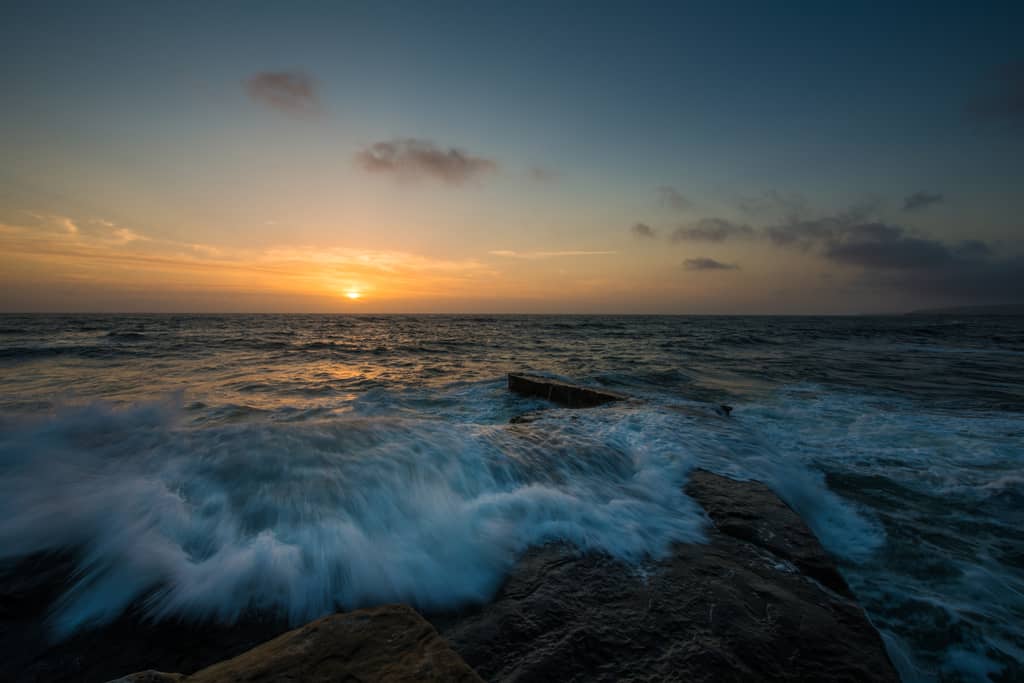
Sunset Cliffs Natural Park — from the San Diego Photographer's GuideSave
Sunset Cliffs Natural Park — sample reference photo from the San Diego Photographer’s Guide PDF

Before you shoot San Diego: the essentials

  • Free public access: Most coastal parks, Balboa Park grounds, Chicano Park, Gaslamp Quarter, Mission Bay, and Embarcadero are free. Cabrillo National Monument charges $20/vehicle. Torrey Pines charges $10–25/vehicle. USS Midway Museum admission required.
  • Commercial permits: Commercial photography in Balboa Park requires a City of San Diego Parks permit ($150+). Cabrillo National Monument requires NPS commercial filming/photography permits. Tripods allowed without permit at most public outdoor locations for personal use.
  • Best photography seasons: Spring (March–May) and Fall (September–November) for clearest skies; summer marine layer burns off by midday; winter offers rare sunsets from Cabrillo before 5 PM close
  • Blue hour notes: Blue hour occurs roughly 20–30 minutes after sunset or before sunrise. West-facing cliffs (Sunset Cliffs, Cabrillo) glow at blue hour with the Pacific as backdrop. East-facing Mission Bay and Embarcadero Marina Park South deliver the best blue-hour skyline reflections.
  • Drone policy: Most major U.S. cities restrict drone flight in airspace and via local ordinances. Check FAA + city rules before launching.
  • Local resource: Official visitor information

The full-resolution version of every map below — plus seasonal calendars, gear notes per location, sun-angle diagrams, and a complete photographer’s packing checklist — is inside the San Diego Photographer’s Guide PDF ($47).

1. Sunset Cliffs Natural Park

Sixty-eight acres of eroded sandstone bluffs drop 30–40 feet straight into churning Pacific surf, creating a natural stage for sunset drama unmatched in San Diego. Blowholes, sea caves, and natural arches in the rock provide foreground variety across a 1.5-mile stretch of coastline.

  • GPS: 32.7297, -117.2526
  • Elevation: 43 ft
  • Best time of day: golden hour — 30–60 minutes before sunset for dramatic orange Pacific light
  • Sun direction: Sun sets directly over the Pacific to the west-southwest; from October through March the sun sets slightly south of due west, producing sidelight on cliff faces. North-facing blowholes catch warm side-light at sunset. Arrive an hour early to scout the best cliff edge.
  • Access: Street parking on Sunset Cliffs Blvd and surrounding residential streets (free, no time limit after 6 PM). Open 24 hours, no entry fee. Restrooms absent at cliffs; nearest at Ocean Beach parking lot 0.5 mi north. MTS Bus route 923 stops nearby.
  • Difficulty: easy
  • Recommended settings: Golden Hour Landscape: f/11, 1/125 sec, ISO 100, 24mm  ·  Long Exposure Waves: f/16, 4 sec, ISO 50, 16mm (with ND filter)  ·  Backlit Silhouette: f/8, 1/500 sec, ISO 200, 35mm  ·  Blue Hour Static Water: f/11, 15 sec, ISO 200, 20mm

Shots to chase:

  • Wide-angle seascape with sandstone bluffs as leading lines into a glowing horizon
  • Long-exposure blowhole mid-spray with warm sky behind
  • Silhouette of lone surfer carrying board against orange-red sunset
  • Layered exposure showing tide pool reflections and cliffs above
  • Ultra-wide perspective from sea-cave mouth looking out to open Pacific

Pro tip: Park by 5 PM on weekends in summer; the lots fill quickly. Walk north of the main viewpoint toward Ladera Street for less-crowded cliff edges with equally dramatic compositions. A polarizing filter cuts glare from wet rock surfaces and deepens the blue of the Pacific.

Common mistake to avoid: Standing too close to the cliff edge — eroded sandstone crumbles without warning, so stay well back and use a telephoto to compress cliff and horizon. Arriving at sunset rather than before it means missing the 20 minutes of warm sidelight that make the rock faces glow amber.

2. La Jolla Cove

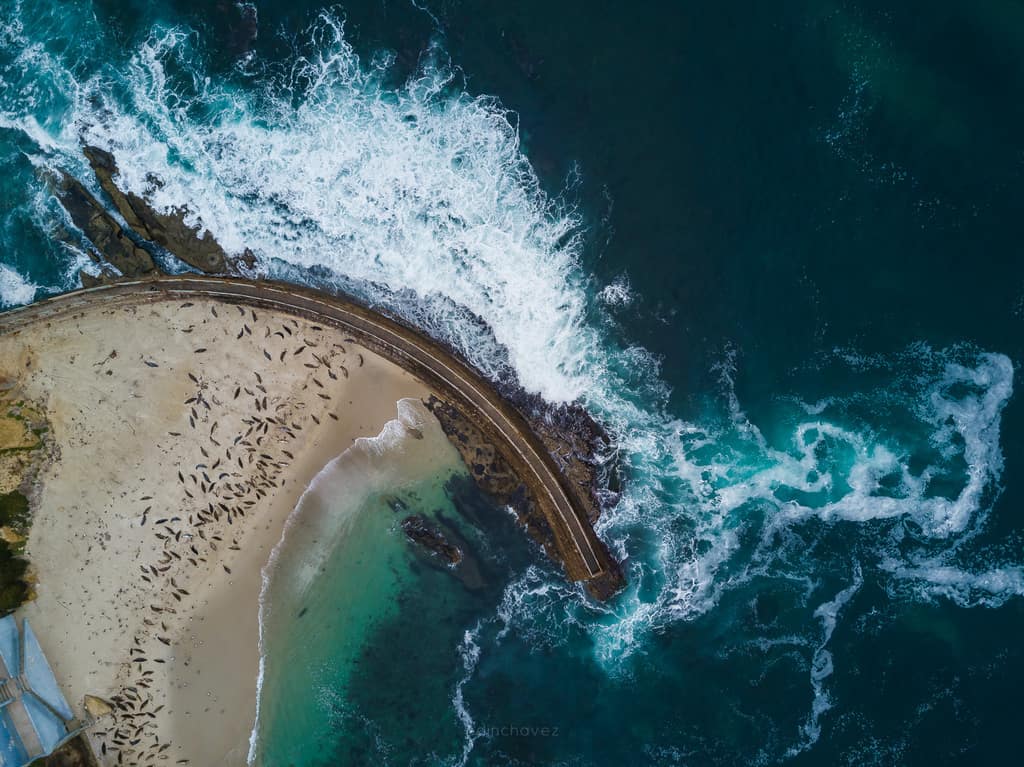
La Jolla Cove is one of California’s most biodiverse marine locations, where California sea lions haul out on the rocks year-round within arm’s reach of a paved boardwalk. The vivid turquoise water, sandstone cliffs, and barking pinniped colony create a wildlife photography opportunity found nowhere else in the urban US.

  • GPS: 32.8465, -117.2437
  • Elevation: 15 ft
  • Best time of day: early morning — sunrise through 9 AM for low crowds and sea lion activity on rocks
  • Sun direction: The cove faces roughly west-southwest; sunrise light comes from behind the land, painting the cliffs in warm reflected glow while the water stays shadowed — best for shooting toward the north cliffs. Mid-morning sun illuminates sea lions on Point La Jolla from a low southern angle. Golden hour at sunset puts the cove in shadow; shoot from the boardwalk facing north for backlit sea stacks.
  • Access: Street parking on Coast Blvd (2–3 hour limit; best to arrive before 9 AM). Free admission. Open 24 hours. MTS Bus 30 stops at Prospect St. Children’s Pool and Ellen Browning Scripps Park directly adjacent.
  • Difficulty: easy
  • Recommended settings: Wildlife Telephoto: f/5.6, 1/1000 sec, ISO 400, 300mm  ·  Cove Landscape: f/11, 1/200 sec, ISO 100, 24mm  ·  Sea Lion Portrait: f/4, 1/500 sec, ISO 200, 200mm  ·  Blue Hour Cove: f/8, 8 sec, ISO 400, 16mm

Shots to chase:

  • Telephoto portrait of sea lion mid-bark with surf spray behind
  • Wide-angle of turquoise cove framed by cliff walls from the north boardwalk
  • Kayakers paddling past rock formations with sea lions visible below surface
  • Low-angle shot along the sea wall with colony of lions stretching into distance
  • Silky long-exposure of wave surging into the small cove beach at dawn

Pro tip: Bring a 200mm or longer lens — approaching wildlife is illegal and unnecessary since the sea lions at Point La Jolla are photogenic from the boardwalk. Visit during late April–early June for peak seal pup season at Children’s Pool, just 10 minutes south on foot.

Common mistake to avoid: Shooting mid-afternoon when the cove is in shadow and crowds peak. Forgetting that sea lions leave to fish around midday, so a 7–10 AM visit dramatically increases the number of animals on rock. Do not step past the chain barriers near Point La Jolla — rangers issue citations.

3. Hotel del Coronado — Coronado Beach

The Hotel del Coronado, a National Historic Landmark built in 1888, is one of the last surviving wooden Victorian beachside resort hotels in America. Its red-conical turrets, white Victorian gingerbread woodwork, and location directly on a wide, uncrowded Pacific beach create an instantly recognizable architectural-meets-coastal composition.

  • GPS: 32.6809, -117.1784
  • Elevation: 10 ft
  • Best time of day: golden hour — 45 minutes before sunset for warm light on the Victorian turrets
  • Sun direction: Coronado Beach faces northwest; the sun sets into the Pacific just north of the hotel in summer, placing the Victorian red-roofed towers in full warm sidelight. In winter the sun sets south of the hotel, creating dramatic backlit silhouettes of the turrets against a colorful sky. Sunrise from the beach offers front-lit hotel facade photography with soft, diffused light.
  • Access: Public parking on Ocean Blvd and adjacent lots (metered, $2–3/hr). Hotel public grounds and beach are free to access. Coronado Ferry from Broadway Pier offers scenic approach. Open 24 hours for beach access.
  • Difficulty: easy
  • Recommended settings: Golden Hour Facade: f/8, 1/200 sec, ISO 100, 35mm  ·  Sunset Silhouette: f/11, 1/500 sec, ISO 100, 50mm  ·  Wide Beach Landscape: f/11, 1/125 sec, ISO 100, 16mm  ·  Blue Hour Lit Building: f/8, 4 sec, ISO 400, 24mm

Shots to chase:

  • Classic wide-angle with hotel facade reflected in wet sand at low tide
  • Tilt-shift or compressed telephoto of turrets against deep blue Pacific
  • Silhouette of hotel towers with surfers in foreground at sunset
  • Detail shot of ornate Victorian woodwork and red roof with warm side-light
  • Blue-hour scene with hotel exterior lights glowing and Coronado Bridge lit in background

Pro tip: Walk to the south end of the public beach for a diagonal composition that shows both the famous turret and the full beach sweep. The wet sand near waterline at low tide creates a natural mirror — check tide charts and aim for 1–2 hours before low tide.

Common mistake to avoid: Shooting straight-on from the hotel’s main entrance yields a flat, tourist-snapshot composition. The real photograph is from the beach to the south, looking north-northeast to capture the tower with the ocean behind it. Avoid visiting during the summer marine layer months of June–July when haze kills color.

4. Balboa Park — Botanical Building & Cabrillo Bridge

The Botanical Building is one of the world’s largest lath structures, built for the 1915 Panama-California Exposition; its 250-foot ornate lattice frame houses 2,100 plant species and is perfectly mirrored in the Lily Pond, creating one of San Diego’s most iconic architectural reflections. The adjacent Cabrillo Bridge offers a rare urban canyon composition, its seven arches framing the landmark California Tower above.

  • GPS: 32.7308, -117.1499
  • Elevation: 135 ft
  • Best time of day: golden hour — early morning or late afternoon for low-angle light on the lath structure and lily pond
  • Sun direction: The Botanical Building faces north, with the lily pond running north–south in front of it. Morning light from the east illuminates the left side of the building and puts warm reflections in the eastern half of the pond. Late-afternoon light from the west creates the most even, warm illumination across the facade. Cabrillo Bridge faces east and catches full sunrise light; shoot from below in Cabrillo Canyon for the arches framing the California Tower.
  • Access: Free parking in Balboa Park lots off Park Blvd and El Prado. Botanical Building open Friday–Wednesday 10 AM–4 PM, free admission. Cabrillo Bridge pedestrian access 24 hours. Balboa Park grounds free and always open. MTS Bus 7 serves the park.
  • Difficulty: easy
  • Recommended settings: Lily Pond Reflection: f/11, 1/60 sec, ISO 200, 24mm  ·  Bridge Arches Below: f/8, 1/125 sec, ISO 100, 16mm  ·  Interior Plant Macro: f/4, 1/60 sec, ISO 800, 90mm macro  ·  Blue Hour Facade: f/8, 6 sec, ISO 400, 24mm

Shots to chase:

  • Classic centered reflection of Botanical Building in still lily pond at dawn
  • Low-angle from Cabrillo Canyon looking up through bridge arches to California Tower
  • Detail shot of lotus or water lily with Botanical Building blurred behind
  • Wide panorama of El Prado promenade at golden hour with Spanish Colonial architecture flanking both sides
  • Night shot of Botanical Building exterior illuminated by landscape lighting at blue hour

Pro tip: Arrive at the lily pond before 8 AM on weekdays to avoid crowds and capture still-water reflections before foot traffic creates ripples. The best angle for bridge-and-tower composition is from the Cabrillo Canyon trail below the bridge — take the steps just west of the bridge railing.

Common mistake to avoid: Shooting the lily pond from standing height produces an uninspiring image; crouch or go prone for a low perspective that merges the pond surface and building into one frame. On weekends the Botanical Building queue starts early and the lily pond is crowded by 10 AM.

Want this in your pocket on the street?
The full-resolution version of every spot above — with full-page hero photography, GPS maps with gold location pins, sun direction diagrams, multi-season tables, and a complete safety + packing checklist — is inside the San Diego Ultimate Photographer’s Guide PDF ($47). Print it, save it offline, take it on the walk. Get the guide →

5. USS Midway Museum

USS Midway Museum San Diego photography sampleSave
USS Midway Museum — cinematic reference from the San Diego Photographer’s Guide PDF

At 1,001 feet long and home to 29 restored aircraft on deck, the USS Midway is the longest-serving 20th-century carrier in Navy history and presents a scale of industrial naval architecture that dwarfs any San Diego building. The aircraft deck provides unique aerial platforms for shooting the downtown skyline across the bay.

  • GPS: 32.7138, -117.1753
  • Elevation: 15 ft
  • Best time of day: golden hour — late afternoon for warm port-side light; sunrise for front-lit bow from Harbor Drive
  • Sun direction: The carrier is docked bow-south on Navy Pier; the port (left) side faces west and receives full warm afternoon light from about 3 PM to sunset. The starboard side faces east and catches clean morning light at sunrise. The ship’s island superstructure rises 65 feet and is best photographed from the south end of Harbor Drive with a telephoto lens compressing it against the downtown skyline.
  • Access: Museum admission required ($26 adults, $18 youth, free for active military). Exterior can be photographed free from Harbor Drive. Parking at Navy Pier lot ($10–20) or metered street parking on Harbor Dr. Open 10 AM–5 PM daily (last entry 4 PM). MTS Trolley Blue Line to America Plaza then walk 10 min.
  • Difficulty: easy
  • Recommended settings: Exterior Ship Golden Hour: f/8, 1/200 sec, ISO 100, 70mm  ·  Aircraft Deck Wide: f/11, 1/250 sec, ISO 100, 16mm  ·  Interior Hangar Deck: f/4, 1/60 sec, ISO 1600, 24mm  ·  Sunrise Bow Shot: f/8, 1/125 sec, ISO 200, 50mm

Shots to chase:

  • Low-angle from Harbor Drive with carrier’s bow looming overhead at golden hour
  • Telephoto compression of island superstructure with downtown skyline behind
  • Row of restored fighter jets on flight deck with bay and Coronado Bridge in background
  • Wide-angle hangar deck with aircraft, dramatic ceiling structure, and shafts of light
  • Dawn reflection of the full ship silhouette in the flat water of San Diego Bay

Pro tip: The best exterior shot is from the north end of the Embarcadero walkway, roughly 200 meters from the bow, using a 70–200mm lens to compress the carrier against the Convention Center. At golden hour from this position the ship is fully front-lit and the sky behind it turns deep amber.

Common mistake to avoid: Trying to photograph the entire ship at once from directly beside it — it is simply too long for any normal lens. Shoot from a distance and use focal length compression. Interior lighting is challenging; increase ISO to 3200+ and use image stabilization, as flash is not permitted.

6. Gaslamp Quarter at Night

The Gaslamp Quarter’s 16-block Victorian commercial district is one of the most intact 19th-century urban streetscapes on the West Coast, where ornate cast-iron facades now glow with neon bar signs, string lights, and restaurant lanterns that illuminate the historic brickwork. The mix of Victorian architecture and electric nightlife creates a cinematic, layered neon-and-history scene unique to San Diego.

  • GPS: 32.7133, -117.1607
  • Elevation: 30 ft
  • Best time of day: night — blue hour through midnight; 30 minutes after sunset provides best sky–neon balance
  • Sun direction: Fifth Avenue runs north–south; shooting south along 5th Ave at blue hour puts the fading sky at the end of the street-canyon for a dramatic leading-line composition. Shooting north captures the historic Gaslamp sign arch illuminated against the dark sky. Street neon reflects beautifully on wet pavement after light rain or street cleaning — check schedules.
  • Access: Free public street access 24 hours. Street parking metered until 8 PM (free after); parking garages available on Market St ($5–10 flat rate evenings). San Diego Trolley Blue/Orange/Green Lines stop at 12th & Imperial, 10-min walk to 5th Ave. Uber/Lyft drop-off on J St.
  • Difficulty: easy
  • Recommended settings: Blue Hour Street Canyon: f/8, 2 sec, ISO 400, 16mm (tripod)  ·  Handheld Neon Ambient: f/2.8, 1/60 sec, ISO 3200, 35mm  ·  Light Trails Traffic: f/11, 8 sec, ISO 100, 24mm (tripod)  ·  Storefront Detail: f/4, 1/30 sec, ISO 1600, 50mm

Shots to chase:

  • Long-exposure street canyon on 5th Ave showing light trails and Victorian facade glow
  • Silhouetted figures walking under the Gaslamp Quarter arch sign against purple-blue sky
  • Reflections of neon bar signs in wet pavement with Victorian ornamental ironwork above
  • Detail shot of ornate cast-iron facade illuminated by warm amber streetlight
  • Wide-angle intersection at J and 5th with multiple lighted facades converging

Pro tip: Thursday through Saturday the district is packed with bar patrons by 10 PM — ideal for street photography with natural human energy. For clean architecture shots, arrive at blue hour (about 30 minutes post-sunset) on a weekday morning or very late at night when foot traffic clears. A light mist or recent rain transforms pavement into a natural mirror for neon.

Common mistake to avoid: Shooting with a wide open aperture in high-contrast neon light blows out the light sources; use f/5.6–f/8 and expose for the midtones. Forgetting a tripod means missing the creamy long-exposure street-canyon shots that make Gaslamp distinctive.

7. Old Town San Diego State Historic Park

California’s first European settlement preserves a cluster of authentic 1821–1872 adobe structures, colorful Mexican marketplace plazas, and ornate Victorian Whaley House that together span 50 years of Spanish, Mexican, and American frontier history in a single walkable four-block area.

  • GPS: 32.7547, -117.1992
  • Elevation: 59 ft
  • Best time of day: golden hour — late afternoon for warm light on adobe walls and colorful market stalls
  • Sun direction: The park’s central plaza faces south-southwest; afternoon light from the southwest illuminates the adobe building facades and colorful market stalls directly from the front, producing even warm tones without harsh shadows. Morning light from the east creates dramatic raking shadows on textured adobe walls, excellent for architectural detail photography.
  • Access: Free parking in adjacent Caltrans Old Town Park Ride lot and along Congress St. Park grounds open daily 10 AM–5 PM (some historic structures); plaza and adobe exteriors accessible from sunrise to late evening. No entry fee. MTS Trolley Blue/Green Lines to Old Town station (adjacent).
  • Difficulty: easy
  • Recommended settings: Adobe Facade Golden: f/8, 1/200 sec, ISO 100, 35mm  ·  Market Stall Color: f/5.6, 1/250 sec, ISO 200, 50mm  ·  Interior Adobe Ambient: f/4, 1/60 sec, ISO 800, 24mm  ·  Fiesta Crowd Candid: f/2.8, 1/500 sec, ISO 400, 85mm

Shots to chase:

  • Arched adobe doorway with flower-pot foreground and tiled courtyard leading line
  • Colorful Bazaar del Mundo market stalls with painted tiles and hanging chilies
  • Wide plaza shot during Día de los Muertos or Cinco de Mayo festival with crowds in traditional dress
  • Morning raking light on rough-hewn adobe walls showing plaster texture
  • Victorian Whaley House facade at dusk with lantern light against deepening sky

Pro tip: The park hosts living history demonstrations on weekends — arriving at 10 AM means catching Mexican-era re-enactors in traditional dress against authentic adobe backdrops. The Bazaar del Mundo courtyard has richly colorful tiled walls ideal for portrait backgrounds.

Common mistake to avoid: Avoiding midday light entirely — the whitewashed adobe walls diffuse and bounce midday light in interesting ways, softening harsh shadows. Do not overlook the alley between Robinson-Rose House and Casa de Machado, which frames views of the old Mission-style bell tower.

8. Cabrillo National Monument

From 348 feet at Point Loma’s summit, Cabrillo National Monument commands the best 270-degree panoramic view in San Diego — sweeping from the Pacific Ocean and La Jolla cliffs north, across the entire bay and downtown skyline east, to Tijuana and Baja California south. The 1854 lighthouse is the oldest Pacific Coast lighthouse still standing at its original location.

  • GPS: 32.6722, -117.2416
  • Elevation: 348 ft
  • Best time of day: sunrise — first light from Point Loma summit for panoramic harbor and skyline views; November–January for rare sunset before 5 PM park close
  • Sun direction: The Point Loma overlook faces east-northeast toward downtown; sunrise paints the entire San Diego Bay and skyline in orange, with the Coronado Bridge as a right-frame anchor. The Old Point Loma Lighthouse (1854) faces south and catches morning sidelight. Bayside Trail on the west slope faces the Pacific; golden hour here creates dramatic cliffside light. Gray whale migration (December–February) adds moving subjects to ocean-view shots.
  • Access: $20 per vehicle, $10 pedestrian/bicycle; NPS Annual Pass accepted. Open 9 AM–5 PM daily (winter closing allows sunset Nov 19–Dec 17). 1800 Cabrillo Memorial Dr, San Diego, CA 92106. No public transit; drive or cycle only. Parking at summit and Bayside Trail trailhead.
  • Difficulty: moderate
  • Recommended settings: Panoramic Skyline Sunrise: f/11, 1/60 sec, ISO 200, 24mm  ·  Lighthouse Portrait: f/8, 1/250 sec, ISO 100, 35mm  ·  Bayside Trail Cliffside: f/11, 1/200 sec, ISO 100, 16mm  ·  Whale Watching Telephoto: f/6.3, 1/1000 sec, ISO 400, 400mm

Shots to chase:

  • Sunrise panorama of San Diego Bay from Point Loma summit with Coronado Bridge emerging from morning mist
  • Old Point Loma Lighthouse against blue sky with Pacific horizon below
  • Bayside Trail cliffside view of La Jolla coastline stretching north in golden light
  • Gray whale spout and flukes with Pacific horizon at telephoto compression
  • Tidepool macro at Cabrillo State Marine Reserve during minus tide — sea stars, anemones, hermit crabs

Pro tip: The park opens at 9 AM, which is typically 3–4 hours after sunrise — so sunrise photography requires arriving pre-opening on days when special access is granted or shooting from outside the gate. For interior park sunrise visits, check for NPS ranger-led dawn programs. November through January is the only window for in-park sunset photography before the 5 PM close.

Common mistake to avoid: Assuming the park is accessible for sunrise photography year-round — the 9 AM opening means most of the year you must wait for mid-morning. Budget extra drive time as the single-road Point Loma approach creates traffic jams on weekend mornings. Bring a telephoto for whale watching; 400mm minimum is recommended.

Want this in your pocket on the street?
The full-resolution version of every spot above — with full-page hero photography, GPS maps with gold location pins, sun direction diagrams, multi-season tables, and a complete safety + packing checklist — is inside the San Diego Ultimate Photographer’s Guide PDF ($47). Print it, save it offline, take it on the walk. Get the guide →

9. Mount Soledad National Veterans Memorial

Mount Soledad National Veterans Memorial San Diego photography sampleSave
Mount Soledad National Veterans Memorial — cinematic reference from the San Diego Photographer’s Guide PDF

At 822 feet, Mount Soledad is the highest easily accessible point in the San Diego metro and the only location offering a simultaneous 360-degree panorama of downtown San Diego, Mission Bay, the Pacific Ocean, La Jolla coastline, the Anza-Borrego mountains, and Tijuana on a clear day — all anchored by a 29-foot white cross surrounded by granite memorial walls.

  • GPS: 32.8399, -117.2525
  • Elevation: 822 ft
  • Best time of day: sunrise — 360-degree panoramic view catches Pacific glow west and city warm tones east
  • Sun direction: Mount Soledad sits at 822 feet with unobstructed views in all directions. At sunrise, light catches downtown San Diego and Mission Valley to the east while the Pacific glows silver-blue to the west. The 29-foot white cross is backlit by pre-dawn eastern sky for dramatic silhouette. At sunset the cross is front-lit from the west and turns warm gold with Pacific horizon behind it.
  • Access: Free admission. Gates open 7 AM–10 PM daily. 6905 La Jolla Scenic Dr S, La Jolla, CA 92037. Free parking in summit lot. No public transit; drive or cycle required.
  • Difficulty: easy
  • Recommended settings: Panoramic Sunrise: f/11, 1/60 sec, ISO 200, 16mm  ·  Cross Silhouette: f/8, 1/1000 sec, ISO 100, 35mm  ·  City Lights Predawn: f/8, 15 sec, ISO 800, 24mm (tripod)  ·  Telephoto Compression: f/8, 1/250 sec, ISO 100, 200mm

Shots to chase:

  • Pre-dawn city-lights panorama with La Jolla and Mission Valley glowing below
  • Cross silhouette against sunrise gradient from pale yellow to deep blue
  • 360-degree composite stitched panorama in full morning light showing Pacific to mountains
  • Telephoto shot looking south compressing downtown skyline against Coronado and the bay
  • Granite memorial wall detail with veterans’ photos and the cross in soft morning side light

Pro tip: Arrive 20 minutes before sunrise to capture city lights still active against a pre-dawn sky — the 7 AM gate opening in winter may align well with sunrise, but gates open before sunrise in summer. The 360-degree sweep means positioning shifts with season; use a sunrise app to determine which direction provides the most dramatic sky.

Common mistake to avoid: Only looking west at sunset and missing the equally dramatic eastern city-lights composition. Forgetting a tripod for the pre-dawn city-lights phase — handheld shots at needed exposures will be blurred. On summer mornings the marine layer can completely obscure the view until 11 AM.

10. Mission Bay — Crown Point Sunrise Shore

Mission Bay Park, covering 4,600 acres of water and parkland, is the largest man-made aquatic park in the US, and Crown Point’s protected eastern shore offers the city’s most reliable spot for long-exposure sunrise photography — glassy bay water, no ocean chop, palm tree silhouettes, and a downtown skyline glow visible in the distance create a uniquely serene San Diego dawn.

  • GPS: 32.785, -117.228
  • Elevation: 5 ft
  • Best time of day: sunrise — Crown Point’s east-facing shore provides perfect sunrise alignment over Mission Bay
  • Sun direction: Crown Point’s shoreline faces due east-northeast across the flat bay water; sunrise rises directly over Mission Bay Drive on the far shore, creating a perfect axis for shooting the rising sun reflected in still water. The bay is sheltered from ocean swells, so glassy mirror conditions are common in the first hour after sunrise before wind picks up.
  • Access: Free parking on Crown Point Dr (arrive by 5:30 AM for sunrise spots). No entry fee. Open 24 hours (Mission Bay Park). MTS Bus 27 serves the area. Restrooms at Crown Point Picnic Area. Path along shoreline is paved and wheelchair accessible.
  • Difficulty: easy
  • Recommended settings: Sunrise Reflection: f/11, 1/30 sec, ISO 200, 24mm  ·  Long Exposure Mirror: f/16, 4 sec, ISO 50, 16mm (ND filter)  ·  Palm Silhouette Sunrise: f/8, 1/1000 sec, ISO 100, 35mm  ·  Blue Hour Kayaker: f/5.6, 1/125 sec, ISO 800, 70mm

Shots to chase:

  • Mirror-calm bay reflection of orange sunrise with palm silhouettes framing edges
  • Long-exposure of early paddler’s kayak leaving a wake trail across glassy water
  • Ultra-wide pre-dawn blue hour with city glow reflected in the bay’s flat surface
  • Silhouette of Mission Bay bridge against fiery sunrise gradient
  • Fishermen on shoreline at first light with warm tones catching dock pilings

Pro tip: Crown Point’s east-facing shore is one of the few places in San Diego where you shoot sunrise over water rather than over land. Wind usually picks up after 8 AM, ending the glassy-mirror window — arrive early. The International Cottages at Crown Point Shores (0.3 mi north) add foreground architectural interest.

Common mistake to avoid: Arriving at actual sunrise time rather than 20 minutes before — the most dramatic color is in the pre-sunrise sky when deep magentas appear before the sun clears the horizon. Assuming any Mission Bay shore works equally well; the west-facing shores get no direct sunrise light.

11. Torrey Pines State Reserve — Razor Point & Beach Trail

Torrey Pines is the rarest pine tree on Earth — fewer than 9,000 exist, growing only here and on Santa Rosa Island — and their wind-sculpted silhouettes rising from 300-foot golden sandstone cliffs above the Pacific produce a landscape found literally nowhere else. The reserve’s combination of rare pines, tafoni rock sculptures, yucca, and coastal sage creates an otherworldly terrain at golden hour.

  • GPS: 32.9215, -117.2535
  • Elevation: 351 ft
  • Best time of day: golden hour — late afternoon for warm sidelight on sandstone formations and Torrey Pine silhouettes
  • Sun direction: The reserve cliffs face west over the Pacific; late afternoon sun from the west-southwest creates warm sidelight on the distinctive tafoni sandstone formations along Razor Point Trail. The sun sets into the Pacific, directly in front of the cliff viewpoints, from October through March. Broken Hill overlook faces northwest for a different angle on the coastline. Morning light illuminates the inland chaparral and east-facing park entry trails.
  • Access: $10–25 per vehicle depending on season; no walk-in fee. Open sunrise to sunset daily. 12600 N Torrey Pines Rd, La Jolla, CA 92037. Parking at South Beach lot and Visitor Center lot. Razor Point Trail closed during rain. No dogs on trails. MTS Bus 101 stops on Torrey Pines Rd.
  • Difficulty: moderate
  • Recommended settings: Cliff Golden Hour: f/11, 1/125 sec, ISO 100, 24mm  ·  Torrey Pine Silhouette: f/8, 1/500 sec, ISO 100, 50mm  ·  Tafoni Texture: f/11, 1/200 sec, ISO 200, 90mm  ·  Beach Long Exposure: f/16, 2 sec, ISO 50, 16mm (ND filter)

Shots to chase:

  • Wind-sculpted Torrey Pine silhouette against Pacific sunset on Razor Point
  • Tafoni sandstone honeycomb texture in warm sidelight with ocean visible through natural arch
  • Top-down view of Torrey Pines State Beach from cliffs with kelp-green surf
  • Hikers on Broken Hill overlook silhouetted against wide Pacific panorama
  • Telephoto of rare Torrey Pine canopy with Pacific horizon at compression

Pro tip: Walk Razor Point Trail (0.9 mi round trip) for the most dramatic tafoni formations and ocean panoramas. Arrive at the parking lot no later than 3 PM on summer weekends as it fills to capacity. The overlooks at Razor Point are unguarded and drop straight to the beach — stay well back from edges.

Common mistake to avoid: Visiting only the Visitor Center viewpoint rather than hiking Razor Point or Broken Hill, where the best landscape compositions are. Ignoring the Beach Trail down to Torrey Pines State Beach — the view looking back up at the cliffs from the sand at golden hour is exceptional.

12. Embarcadero Marina Park South — Downtown Skyline

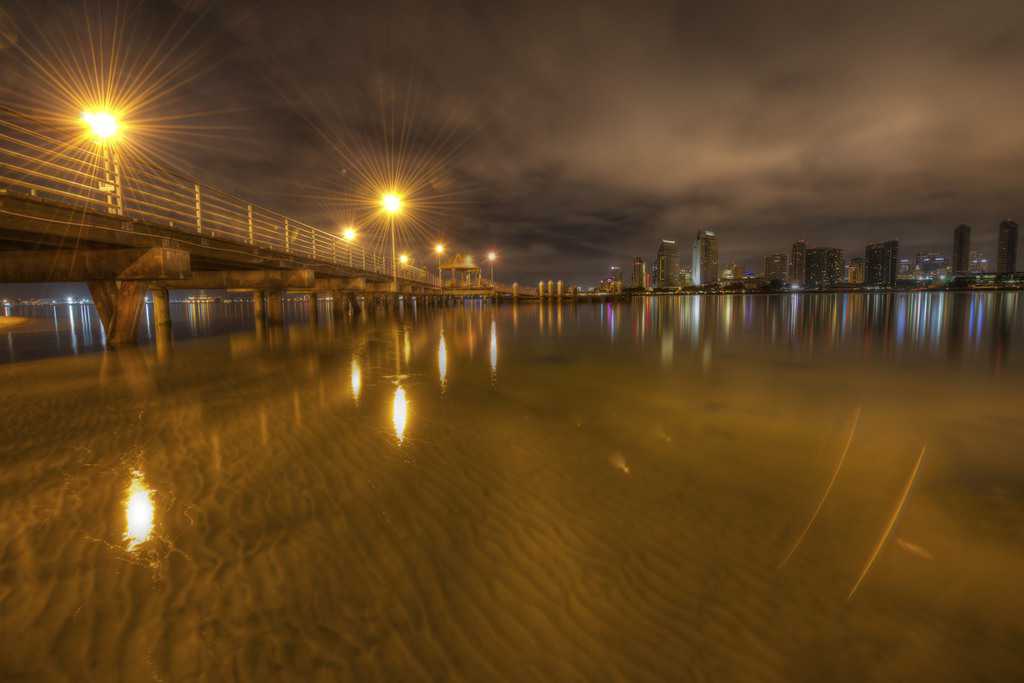
Embarcadero Marina Park South is the consensus best skyline viewpoint in San Diego, providing an unobstructed 180-degree view of the entire downtown skyline from the Coronado Bridge to the Convention Center, all reflected in the calm harbor waters of San Diego Bay — the definitive city portrait location.

  • GPS: 32.7042, -117.1644
  • Elevation: 7 ft
  • Best time of day: blue hour — 20–40 minutes after sunset for perfectly balanced skyline glow and deep blue sky
  • Sun direction: The park faces north-northeast directly toward the downtown San Diego skyline across the harbor; the Coronado Bridge sweeps in from the left (west) and the Convention Center anchors the right side. Blue-hour light after sunset paints the western sky purple-blue while building lights activate across the skyline. Sunrise is a mirror scenario — the eastern sky behind you brightens while building facades face west, catching no direct sun; instead, the glass towers reflect the sunrise sky in their windows.
  • Access: Free admission, open 24 hours. Free parking on Park Blvd and Harbor Drive. MTS Trolley Blue/Orange/Green Lines to Convention Center station (5-min walk). The park is fully ADA accessible with paved paths along the water.
  • Difficulty: easy
  • Recommended settings: Blue Hour Skyline: f/11, 8 sec, ISO 200, 24mm (tripod)  ·  Skyline Reflection: f/11, 15 sec, ISO 200, 16mm (tripod)  ·  Coronado Bridge Wide: f/8, 1/60 sec, ISO 400, 16mm  ·  Building Detail Telephoto: f/8, 1/30 sec, ISO 800, 200mm

Shots to chase:

  • 15-second blue-hour exposure with entire skyline reflected in glassy harbor, Coronado Bridge arching left
  • Ultra-wide panorama of Convention Center, skyline, and bridge in a single 16mm frame
  • Telephoto compression of lit glass towers against deep blue twilight sky
  • Pre-dawn city-lights shot showing glowing skyline with ferry boat creating light trail
  • Sunrise with San Diego skyline glass towers catching first eastern light in window reflections

Pro tip: Set up your tripod on the concrete fishing pier at the east end of the park for the cleanest unobstructed composition of bridge, skyline, and water. Arrive at least 10 minutes before blue hour and shoot for the full 40-minute window as color shifts from orange to deep blue. A calm day is essential — even light wind creates ripples that destroy the reflection.

Common mistake to avoid: Arriving at blue hour without a tripod — handheld exposures at the needed 8–20 seconds are impossible. Shooting only from the main lawn and missing the pier which provides 10 more meters into the bay and a dramatically improved reflection angle.

When to photograph San Diego: a year-round breakdown

San Diego is photogenic every month of the year — but the conditions differ radically by season. Here is what to expect:

Spring (March–May) and Fall (September–November) for clearest skies; summer marine layer burns off by midday; winter offers rare sunsets from Cabrillo before 5 PM close

Photographer safety in San Diego: read this

City photography has its own risks: gear visibility, neighborhood timing, traffic, weather. Read the briefing before you go.

  • Gear visibility: Use a discreet bag with no obvious camera branding. Keep a body strapped under a jacket on transit.
  • Neighborhood timing: Pre-dawn and post-sunset shoots reward early scouting. Cross-reference each location with current local guidance and choose well-lit transit routes.
  • Situational awareness: Headphones out. One eye in the viewfinder, one on the street.
  • Traffic: Bridges, medians, and bike lanes are not setup zones. Shoot from sidewalks and pedestrian areas only.
  • Weather: Summer storms move quickly; winter cold drains batteries. Layer up, keep gear dry, watch for ice on cobblestones at blue hour.

The complete safety briefing is inside the San Diego Photographer’s Guide PDF.

Take this guide into the city

This post is the complete field reference. The San Diego Ultimate Photographer’s Guide PDF is the field-deployable version: full-page resolution hero photography, GPS maps with gold pins for every location, multi-season shooting calendars, gear notes per location, sun-angle diagrams, the full city safety briefing, and a print-ready editorial layout in Framehaus black and gold. Save it offline. Print it. Take it on the walk.

San Diego Ultimate Photographer’s Guide
Downloadable PDF · 12 GPS-mapped locations · Multi-season calendar · City safety briefing · Packing checklist

Get the San Diego guide — $47

Combo Deal

Get the San Diego Guide + Preset Pack

Photograph it. Edit it. Done.

$66
$54
Save $12
PDF Guide Every spot, GPS, golden hour
Preset Pack 20 Lightroom presets
Book your tours & experiences in San Diego

All links go to Viator (a TripAdvisor company), the world’s largest marketplace for guided experiences. Tagged as affiliate per FTC.

Also on Amazon: gear that helps with this technique

Quick Amazon shortcuts to the gear most useful for this kind of shot. Use them if Prime shipping or Amazon credit makes more sense than B&H. As an Amazon Associate ShutYourAperture earns from qualifying purchases.

Take San Diego home in your pocket.

Every shot location, every angle, every time of day worth shooting. Printable PDF + GPS-tagged map.

Instant download. Works on phone, tablet, and printed.

Continue reading

← Back to U.S. Cities Photography Guides

Related guides nearby

Three more photography guides within striking distance — perfect for combining into one trip.

Browse all 78 guides → · Open the map

Save your trip-planning hours

The complete San Diego guide is $47

All vantage points above + 5 bonus secret spots, printable map, gear pack list, and editing recipes. One-time payment, instant download, lifetime updates.

Buy San Diego PDF →

Common questions about the San Diego guide

Is the San Diego photography guide worth $47?

For most photographers, yes. The guide saves 8-12 hours of trip-planning research and prevents the most common mistake of San Diego photography: shooting at the wrong time of day. If a single better frame is worth $47 to you, the guide pays for itself on day one. Buyers get every GPS coordinate, every golden-hour window, every cultural rule, and a printable shot list.

Does the San Diego guide include GPS coordinates?

Yes — every vantage point in the guide has Google Maps-ready GPS coordinates so you can pin them before you fly. The guide also includes a printable map showing all locations clustered by walking distance, so you can build efficient half-day routes.

What's in the San Diego PDF that isn't in this article?

The article shows the highlights. The PDF includes: 5 additional secret spots not published online, a 14-day itinerary with daily routes, the full camera-settings cheat sheet for every scenario in San Diego, a printable gear packing list, post-processing recipes with screenshot examples, and a list of local guides we trust for portrait commissions.

Do I get the Lightroom presets too?

The $47 guide is the PDF only. The matching San Diego preset pack is a separate $19 download — most buyers grab both as a bundle and save the editing time. Both are instant download, both work on Lightroom Classic and Lightroom Mobile.

Will the guide work for a San Diego trip in 2026?

Yes. The guide is updated annually as fees, restrictions, and new vantage points change. All buyers get free lifetime updates. The 2026 edition includes the latest drone rules, museum photography policies, and seasonal light data for the year.

Get the San Diego guide · $47