Adventure photography is the genre where you are part of the activity, not a spectator: shooting the climb from the rope, the rapid from the kayak, the summit because you hauled the camera up there. It asks more of you and your gear than almost any other kind of shooting. Here is the kit that survives it, the techniques that work, and the light to chase.
What makes adventure photography different
You are working in unpredictable conditions, often tired, sometimes cold or wet, with moments that happen once. The goal is authentic emotion and motion: the determined face, the chalked hands on the rock, the kayaker against the setting sun. Slower shutter speeds can add dynamism; fast ones freeze the peak of the action. Either way, participation is what separates these images from postcard shots.
 Save
Gear that survives the trip
- Camera. A weather-sealed mirrorless body is the default choice now: lighter in the pack, excellent image quality. Whatever you carry, sealing matters more than megapixels.
- Lenses. A 24-70mm f/2.8 covers most of the day; add a 70-200mm f/2.8 for distant action and a fast prime for low light. Fewer lenses, chosen well, beat a heavy bag.
- Drone. A compact folding drone adds the aerial perspective that sells the scale of a landscape. Know the local rules before you fly.
- Support. A lightweight tripod or monopod, and a remote release or timer for shake-free long exposures.
- Filters. A polarizer for glare and skies; neutral density for long exposures in bright conditions.
- Power and cards. Extra batteries (cold drains them fast), more memory cards than you think, and a power bank.
- Pack. A photo-specific backpack from a maker like Lowepro or Osprey, with fast side access and a rain cover.
Techniques that work in the field
- Change your angle. Get low for foreground drama or high for the panorama. The eye-level shot is usually the boring one.
- Use the rule of thirds. Subjects on the grid intersections read as intentional, and it emphasizes the scale of the environment.
- Find leading lines. Trails, rivers, and ridgelines pull the viewer into the frame.
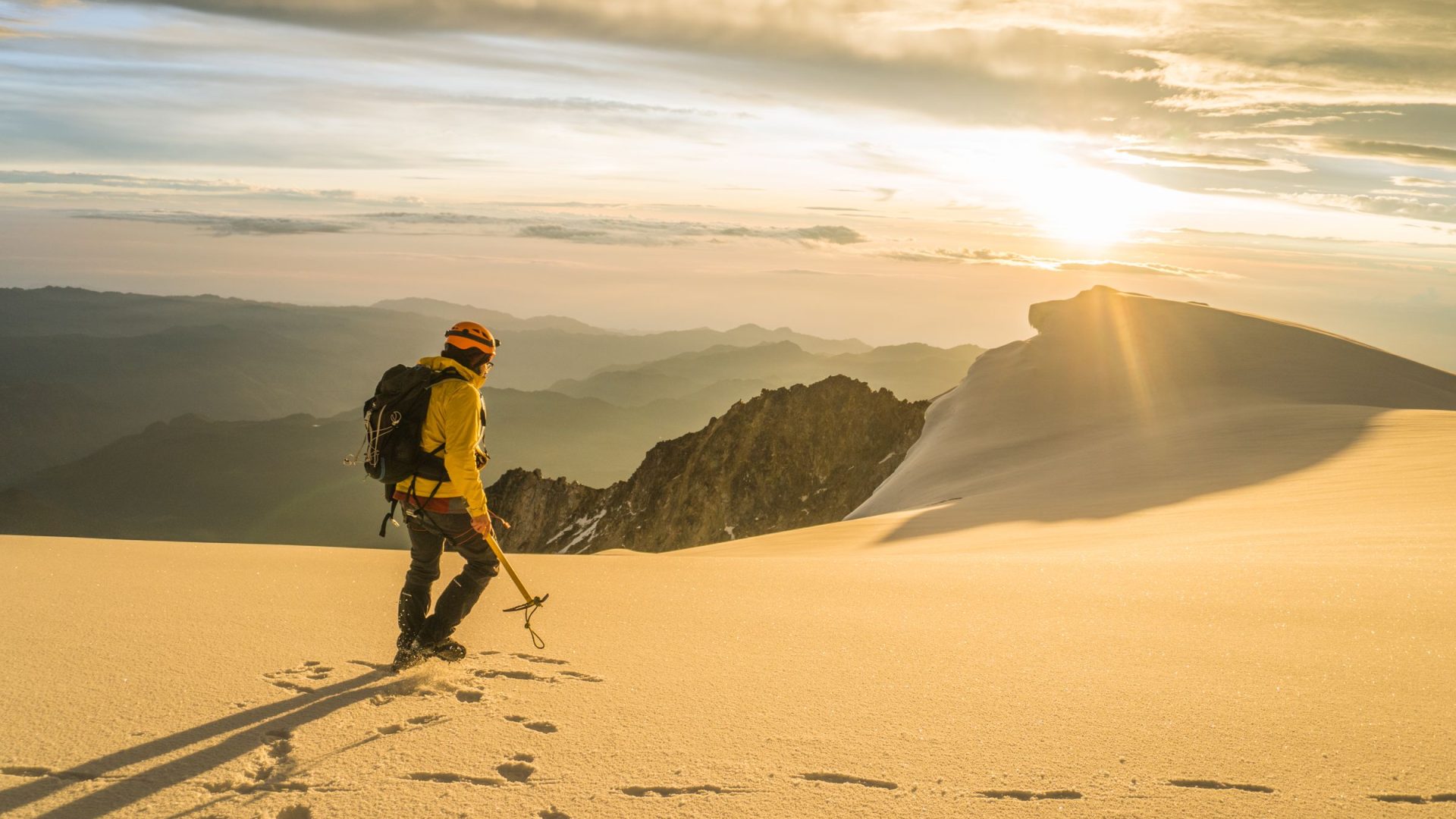
- Include a human for scale. A tiny tent under a huge sky tells the adventure story better than the empty landscape.
- Pick the right mode. Aperture priority for depth-of-field control, shutter priority for motion. Our guides to aperture and shutter speed cover both.
- Bracket your exposures. Bright skies and dark foregrounds are the norm outdoors; bracketing protects the highlights.
Want to go further? The ShutYourAperture Academy’s Wander & Capture: Travel Photography (7 modules, 28+ lessons) is built to help you cover the art and practice of photographing a place well.
Light and composition
Golden hour, just after sunrise and before sunset, gives you warm directional light and long shadows. Blue hour, just before sunrise and after sunset, adds the moody tones. Midday is for travel, scouting, and naps. Water is your compositional friend: lakes, rivers, even puddles double a sunrise with reflections; put the horizon on a third, not in the middle. And build every frame in layers: a foreground to walk the viewer in, a background for context, and a human element for scale. Then wait. The best light usually lasts minutes, and patience is the real technique.
When you are back at the computer with a card full of adventure, the Landscape, Cityscape and Drone presets are built for exactly this kind of file.
Carry the camera between frames
A black Peak Design Slide Lite camera strap, model SLL-BK-3, is one carry option between adventure photographs. Check the full camera-and-lens weight and attachment points before buying. Follow the attachment instructions and inspect the anchors. Secure the camera before a difficult section of trail and avoid loose straps near moving equipment. A camera strap is not climbing or personal safety equipment. Compare the current retailer specifications; no hands-on test, price or stock promise is being made here.
Compare Peak Design Slide Lite Camera Strap Black SLL-BK-3 on Amazon | Check Peak Design Slide Lite Camera Strap Black SLL-BK-3 at B&H
Affiliate disclosure: We may earn a commission from qualifying purchases through these gear links at no extra cost to you. As an Amazon Associate, Shut Your Aperture earns from qualifying purchases.